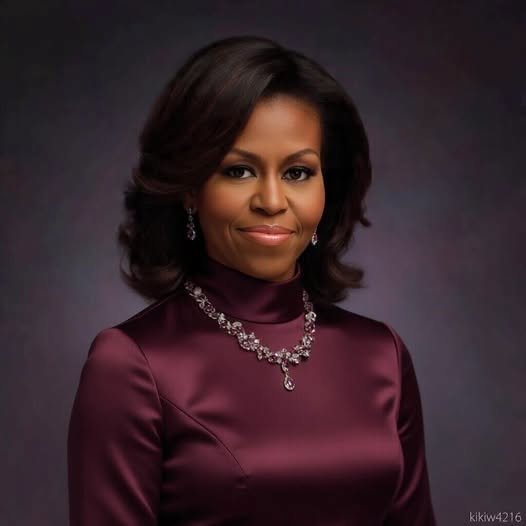
For Michelle Obama, life after the White House has brought something she did not always have during her years in public service: the freedom to make decisions simply because they are right for her.
In a series of candid interviews and podcast conversations, particularly throughout 2025, the former First Lady opened up about entering a very different stage of adulthood. With daughters Malia and Sasha now grown and living independently, Obama has described the experience as both liberating and challenging.
At 61, she has been reflecting on what it means to make choices based less on obligation and more on personal priorities.
That message became especially clear during conversations on Work in Progress, On Purpose with Jay Shetty, and her own IMO with Michelle Obama and Craig Robinson podcast. Rather than presenting this period as a perfect transformation, Obama has described it as a process of figuring out who she is when some of the roles that defined her for decades no longer require the same attention.
A New Kind of Freedom
One of Obama’s most striking reflections came in April 2025, when she discussed how different life feels now that her daughters are adults and her years as First Lady are behind her.
She explained that, for much of her adult life, decisions were shaped by responsibilities to other people. As a mother, wife, professional, and highly visible public figure, she often had to consider what her family, country, or public role required.
Now, she says, she has more room to ask a simpler question:
What do I actually want?
In her conversation with Sophia Bush on the Work in Progress podcast, Obama described this as a period in which her choices could finally be centered on herself. She also acknowledged that making those choices publicly has not always been easy, particularly because people sometimes interpret a woman’s independence as evidence that something is wrong.
That observation became particularly relevant when her decision not to attend several high-profile political and ceremonial events generated speculation about her marriage.
For Obama, however, the situation represented something much more personal: learning that she could say no without automatically feeling guilty.
The Empty-Nest Transition
Becoming an empty nester can be an emotional turning point for many parents, and Obama has spoken openly about experiencing that transition herself.
Her daughters, Malia and Sasha, are now adults with lives of their own. After years of placing family responsibilities at the center of her schedule, Obama has had to reconsider how she wants to spend her time.
That freedom can sound simple from the outside.
In reality, it can require considerable adjustment.
When a person spends decades being needed by other people, having fewer obligations can initially feel unfamiliar. Obama has suggested that this is part of what makes her current chapter so significant.
During her 2025 appearance on Jay Shetty’s On Purpose, she revealed that she was in therapy while navigating this transition. She described therapy as a kind of personal “tune-up” as she moved into the next stage of her life.
Rather than portraying therapy as evidence that something is wrong, she framed it as a way to understand herself better during a period of major change.
Why Therapy Became Part of the Conversation
Obama has discussed therapy before, but her 2025 comments placed it within a new context.
She was no longer simply dealing with the pressures of public life or motherhood. She was also confronting a question that many people eventually face:
Who am I when the responsibilities that once defined me begin to change?
For Obama, that question involved leaving behind the role of First Lady, watching her daughters become independent, and reconsidering expectations that had shaped her choices for years.
She has also connected personal growth with examining habits inherited from earlier generations.
The goal, as she has described it, is not to reject where she came from. Instead, it is to recognize which lessons remain useful and which patterns may no longer serve her.
That distinction makes her message particularly relatable. Personal growth does not necessarily require abandoning the past. Sometimes it means understanding the past well enough to make different choices in the present.
Michelle Obama and the Divorce Rumors
Michelle Obama and the Divorce Rumors
Few aspects of Obama’s recent public life have attracted more attention than speculation about her marriage to Barack Obama.
The rumors intensified in 2025 after Michelle Obama did not attend several major events where her husband appeared. Instead of treating those absences as evidence of marital problems, she explained that she was making more decisions for herself.
She specifically criticized the assumption that a woman choosing not to attend an event with her husband must be experiencing a relationship crisis.
The subject eventually came up directly on IMO.
In July 2025, Barack Obama appeared alongside Michelle and Craig Robinson on the podcast, where the couple joked about the divorce speculation. Michelle also spoke seriously about their long marriage, saying that despite difficult periods, she had never reached a point where she wanted to leave her husband.
Their comments offered an important distinction between having an imperfect marriage and having a failing marriage.
Long-term relationships naturally change. Couples experience stressful periods, disagreements, new responsibilities, and different stages of life.
Obama’s broader message has been that healthy relationships require communication, patience, and the willingness to grow together rather than expecting either partner to remain exactly the same.
Marriage After the Children Leave Home
The empty-nest stage also changes a marriage.
For decades, children can provide a shared focus around which family life revolves. Once they become independent, couples may suddenly have more time to reconnect as partners rather than primarily functioning as parents.
Obama has previously discussed the importance of accepting change within long-term relationships and communicating openly when both people evolve.
Her conversations about marriage have therefore not been presented as a perfect love story. Instead, they emphasize effort, honesty, communication, and the reality that even successful relationships require attention.
That message is one reason her discussions about marriage have resonated with so many listeners.
Breaking Old Patterns
Another recurring theme in Obama’s conversations is the idea of recognizing patterns inherited from previous generations.
She has spoken about growing up in a family that valued hard work, education, responsibility, and perseverance. Those qualities contributed significantly to her success.
But strengths can sometimes become burdens when they are taken too far.
A person who learns to be responsible for everything may struggle to rest. Someone who has always aimed for perfection may find it difficult to accept uncertainty. And someone taught to put everyone else’s needs first may need time to learn that personal needs matter too.
Obama’s current chapter appears to involve examining those patterns rather than automatically repeating them.
The idea is not to reject the values of previous generations. It is to decide which values should continue and which behaviors can evolve.
Learning to Say No
One of the most important lessons in Obama’s recent reflections is the value of boundaries.
During her 2025 interviews, she discussed choosing not to participate in certain events and accepting that those choices could attract criticism.
That can be particularly difficult for someone who spent eight years in the White House, where appearances and public obligations were rarely just personal decisions.
But Obama has increasingly emphasized that adulthood can include the right to make choices without seeking universal approval.
Saying no does not necessarily mean rejecting people.
Sometimes it means recognizing personal limits.
And for someone who spent decades balancing family, career, public service, and constant media attention, learning that distinction can represent a significant form of personal freedom.
Living Beyond the Public Image
Michelle Obama’s life has been unusually public.
As First Lady, nearly every appearance could become a news story. Her clothing, family life, speeches, friendships, travel, and political decisions were regularly analyzed.
Leaving the White House did not make that attention disappear.
Her 2025 interviews showed that public scrutiny can continue long after a person leaves office. Her choices regarding political events and family appearances were still interpreted through the lens of her marriage, her former position, and public expectations.
Rather than trying to control every interpretation, Obama has increasingly emphasized controlling what she can: her own choices.
That may be one of the clearest definitions of the freedom she has described.
IMO Continues the Conversation
Obama’s podcast with her brother Craig Robinson has provided a different setting for this chapter of her life.
IMO with Michelle Obama and Craig Robinson allows the siblings to discuss relationships, parenting, personal challenges, family experiences, and everyday questions with a more conversational tone than a traditional political interview. The podcast remained active throughout 2026, with episodes covering subjects ranging from relationships and emotional growth to family and personal development.
Craig’s presence also adds something distinctive.
Instead of speaking entirely from the perspective of a former First Lady, Michelle can also simply be a sister talking with her brother about family, memories, and the complicated process of growing older.
That balance of humor and seriousness has become an important part of the show’s appeal.
A Broader Message for Women
Although Obama’s experiences are extraordinary, many of the questions she is asking are surprisingly ordinary.
What happens when children no longer need the same level of attention?
How do you rediscover your interests?
How do you decide which obligations still matter?
How do you maintain a relationship while allowing both partners to change?
And perhaps most importantly:
How do you build a life that belongs to you, rather than one shaped entirely by other people’s expectations?
Obama’s answer has not been that there is one perfect formula.
Instead, her recent reflections suggest that self-discovery can happen gradually.
It can involve therapy, honest conversations, stronger boundaries, friendships, family connections, and the courage to make decisions that may not make sense to everyone else.
The Meaning of Michelle Obama’s New Chapter
Michelle Obama’s recent interviews are less about abandoning her old life than understanding it differently.
Her years as a mother, lawyer, author, public figure, First Lady, and wife of a former president remain fundamental parts of her story.
But they do not have to determine every decision she makes going forward.
That may be the central lesson behind her reflections on freedom.
Personal independence does not always arrive when responsibilities disappear completely. Sometimes it begins when a person realizes that they are allowed to make thoughtful choices for themselves.
For Obama, that realization appears to have arrived during a major transition: her daughters have grown up, her White House years are behind her, and she has more freedom to decide where her time and energy should go.
Her story therefore offers something more meaningful than another celebrity confession.
It offers a reminder that life can continue evolving long after the biggest milestones have passed.
And sometimes, the next chapter is not about becoming someone new.
It is about finally giving yourself permission to become more fully yourself.