
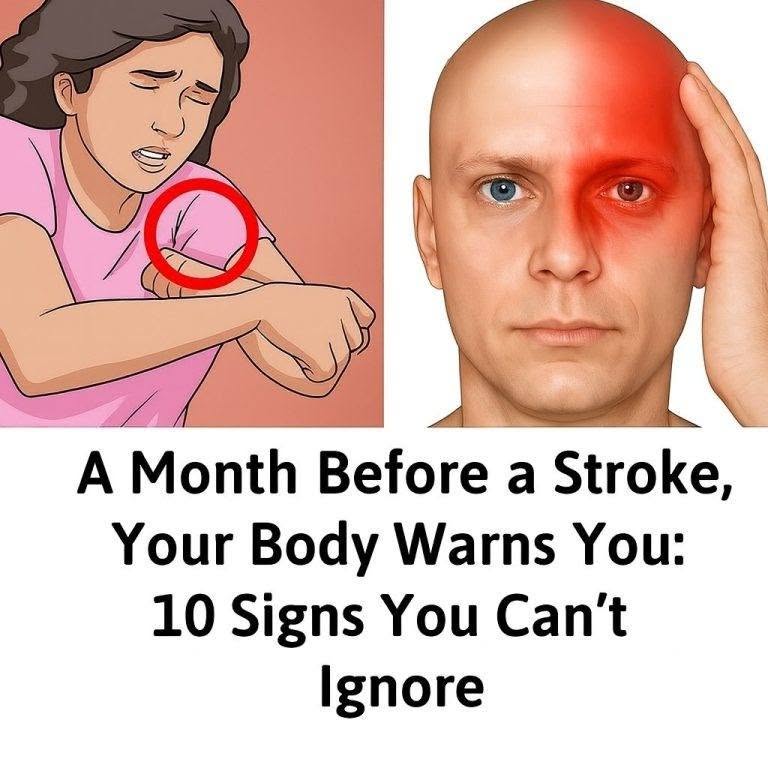
A stroke doesn’t always look the way people expect.
Sometimes it starts with an obvious emergency, such as a drooping face or sudden weakness in one arm. But other times, the first clue may be sudden dizziness, trouble seeing, confusion, or difficulty speaking.
And there’s one particularly dangerous mistake people make: assuming that a symptom isn’t serious because it disappears.
A temporary episode can be a transient ischemic attack, or TIA. Often called a “warning stroke,” a TIA can produce stroke-like symptoms that go away, but it still requires urgent medical attention.


First, Don’t Trust the “One Month Before” Claim
You’ve probably seen headlines saying that your body gives you exactly 10 warnings one month before a stroke.
That’s too specific.
There is no medically established countdown saying that everyone experiences the same 10 symptoms exactly 30 days before a stroke. Many strokes happen suddenly.
What doctors do recognize is that some people experience a TIA before a major stroke. The symptoms can be temporary, but they can signal an increased risk of a future stroke.
So instead of waiting for a particular “one-month warning,” it’s much more useful to recognize sudden neurological changes and know when to act.
1. Sudden Numbness or Weakness on One Side
One of the most recognizable stroke warning signs is sudden numbness or weakness involving the face, arm, or leg, particularly on one side of the body.
Someone might suddenly notice that one arm feels weak or heavy. Their hand may not work normally. One side of their face may feel different.
This can happen without warning.
Don’t assume you simply slept on your arm the wrong way if the change is sudden and unusual.
Sudden weakness or numbness, especially on one side, is a recognized stroke symptom.


2. A Sudden Drooping Face
Ask the person to smile.
Does one side of the face appear to droop?
Does the smile suddenly look uneven?
Facial weakness can be one of the first visible signs of a stroke.
The American Stroke Association includes facial drooping in the B.E. F.A.S.T. warning system, which is designed to help people recognize stroke symptoms quickly.
If facial drooping appears suddenly, don’t wait to see whether it improves.
3. Suddenly Having Trouble Speaking
A person may suddenly slur their words, struggle to find the right words, speak strangely, or have trouble understanding what someone else is saying.
Sometimes the person experiencing the problem realizes something is wrong.
Other times, a family member notices first.
Sudden trouble speaking or understanding speech is an important stroke warning sign.


4. Sudden Changes in Vision
Vision changes can be particularly easy to dismiss.
A person may suddenly experience blurred vision, double vision, or loss of vision in one or both eyes.
They may think they are simply tired or that something is wrong with their glasses.
But sudden vision changes can occur with stroke or TIA and deserve urgent attention.
If the change is sudden, don’t assume it will simply pass.
5. Sudden Dizziness or Loss of Balance
Everyone feels dizzy from time to time.
The concern is a sudden and unusual loss of balance or coordination.
Someone might suddenly have trouble walking normally, stumble, feel extremely unsteady, or become dizzy without an obvious explanation.
Sudden dizziness, loss of balance, or lack of coordination is included among the CDC’s recognized stroke symptoms.


6. Sudden Confusion
Imagine someone who normally follows a conversation easily suddenly becoming confused.
They may have trouble understanding simple sentences, answering questions appropriately, or communicating what they want to say.
Sudden confusion can have many causes, but when it appears alongside other sudden neurological symptoms, stroke becomes an important possibility.
The CDC lists sudden confusion and difficulty speaking or understanding speech among the major warning signs of stroke.
7. A Sudden, Severe Headache With No Known Cause
A severe headache that appears suddenly and is unlike a person’s usual headaches deserves attention.
Not every severe headache is a stroke.
There are many possible causes of headaches, including migraines and other conditions.
But the CDC specifically lists a sudden severe headache with no known cause among stroke warning signs.
If a severe, unusual headache occurs together with weakness, confusion, vision problems, speech difficulty, or balance problems, emergency evaluation is especially important.
8. Sudden Trouble Walking
A person who normally walks without difficulty may suddenly become unsteady.
They might stumble, veer to one side, have difficulty coordinating their movements, or feel unable to walk normally.
Sudden trouble walking can be especially concerning when it appears with dizziness, vision problems, weakness, or speech changes.
It is one of the symptoms included in the CDC’s B.E. F.A.S.T. stroke warning system.
9. Symptoms That Disappear After a Few Minutes
This may be one of the most dangerous symptoms to ignore.
Imagine that someone suddenly develops weakness in one arm and difficulty speaking.
Then, ten minutes later, they feel completely normal.
It can be tempting to think:
“Whatever it was, it’s gone now.”
But temporary stroke-like symptoms can be caused by a TIA.
A TIA is considered a warning stroke because it can signal a risk of a future major stroke. The American Stroke Association says people should get help immediately even when the symptoms disappear.


10. Several Sudden Symptoms Appearing Together
One symptom by itself may have many possible explanations.
But imagine these happening suddenly:
- One side of the face droops
- One arm becomes weak
- Speech becomes strange
- The person becomes dizzy
- Their vision suddenly changes
That’s not a situation to monitor at home.
The combination of sudden neurological symptoms makes emergency evaluation particularly important.
Remember B.E. F.A.S.T.
If you remember nothing else from this article, remember this:
B = Balance
Sudden loss of balance or coordination.
E = Eyes
Sudden vision changes.
F = Face
One side of the face droops.
A = Arms
One arm becomes weak or drifts downward.
S = Speech
Speech becomes slurred, strange, or difficult to understand.
T = Time
Call 911 immediately.


Don’t Wait for the Symptoms to Become Worse
One of the biggest mistakes people make during a possible stroke is waiting.
They may think:
“Let’s see if it goes away.”
“Maybe it’s just exhaustion.”
“Maybe they need something to eat.”
“We’ll call the doctor in the morning.”
That’s not the safest approach when sudden stroke symptoms appear.
The CDC recommends calling 911 immediately when stroke symptoms occur. It also advises noting the time the symptoms first appeared because that information can help medical professionals determine treatment.
And if the symptoms disappear?
Don’t assume you’re safe.
A TIA can be temporary while still signaling a serious risk.
Why Every Minute Matters
During a stroke, part of the brain may be deprived of oxygen.
The longer the interruption continues, the greater the potential for brain injury.
That’s why stroke treatment is time-sensitive. Some treatments work best when given quickly after symptoms begin, and emergency medical services can start care while transporting someone to the hospital.
That’s also why it is better to call for emergency help unnecessarily than to wait during a genuine stroke.
What Can Lower Stroke Risk?
Knowing the warning signs is important, but prevention matters too.
Several stroke risk factors can be managed.
These include:
- High blood pressure
- Diabetes
- Smoking
- Physical inactivity
- Certain heart conditions
- Previous stroke or TIA
- Some other medical conditions
The CDC recommends working with your healthcare team to manage medical conditions and risk factors that can increase the chance of stroke.
Healthy eating, regular physical activity, not smoking, maintaining a healthy weight, and taking prescribed medications as directed can also help reduce risk.
The Most Important Thing to Remember
There isn’t a reliable rule saying that everyone receives exactly 10 warning signs one month before a stroke.
But sudden neurological symptoms should never be brushed aside.
Sudden weakness, facial drooping, trouble speaking, vision changes, dizziness, loss of balance, confusion, or an unexplained severe headache can be warning signs of stroke.
And when symptoms disappear after a few minutes, that doesn’t necessarily mean the danger has passed. It could be a TIA, which requires urgent medical evaluation.
If you think you or someone else is having a stroke, call 911 immediately. Don’t wait for the symptoms to become worse.







