
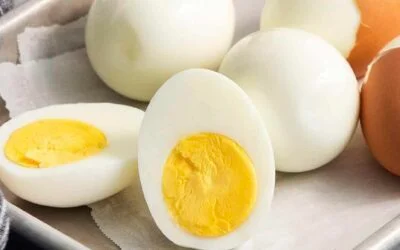
You crack the shell, peel it away, and there it is: one of the simplest foods in your kitchen. But that little boiled egg has a few surprises hiding behind its shell.
From why some eggs peel beautifully while others seem impossible to shell, to how long you can safely keep them in the refrigerator, hard-boiled eggs are more interesting than they look.
Here are 11 useful facts worth knowing.
1. A Hard-Boiled Egg Packs Complete Protein
A large egg provides roughly 6 grams of protein and contains all nine essential amino acids, making it a complete protein source.
That makes hard-boiled eggs an easy addition to breakfast, salads, sandwiches or a quick snack.
And because boiling doesn’t require added butter or oil, it’s a particularly simple way to prepare them.
2. Eggs Provide More Than Just Protein
The protein gets most of the attention, but the yolk contains several other nutrients, including choline, vitamin B12, vitamin A, lutein and zeaxanthin.
So if you normally remove the yolk because you think the egg white contains everything important, you’re leaving out a significant portion of the egg’s nutrients.


3. The Cholesterol Story Is More Complicated Than It Used to Be
Eggs have spent decades being associated with cholesterol concerns.
The more nuanced view is that eggs can fit into a healthy eating pattern for many people, but individual circumstances matter. Dietary cholesterol doesn’t affect everyone in exactly the same way, and what you eat alongside the eggs also matters.
So it would be misleading to call eggs either a “heart-health miracle” or a food that everyone should avoid.
For people with specific cholesterol or cardiovascular concerns, dietary advice should be individualized.
4. Boiling Keeps the Preparation Simple
One reason hard-boiled eggs are so convenient is that they don’t require added cooking fat.
You’re essentially cooking the egg in water and then chilling it, rather than frying it in butter or oil.
That doesn’t automatically make every boiled egg “healthy,” of course. What you serve with it still matters.
A boiled egg alongside vegetables and whole grains is a very different meal from one surrounded by heavily processed, high-sodium foods.
5. Why Are Some Eggs So Difficult to Peel?
If you’ve ever boiled eggs only to lose half the white while peeling them, you’re not alone.
The egg white can cling tightly to the membrane beneath the shell, making peeling frustrating.
One factor is freshness: very fresh eggs can be harder to peel because the chemistry inside the egg changes as it ages.
That’s why eggs that have spent some time in the refrigerator may peel more easily than eggs that were laid very recently.
6. An Ice Bath Can Make Peeling Easier
After cooking, quickly cooling the eggs in ice water is a popular technique for easier peeling.
The sudden temperature change can help separate the cooked egg from the shell and also stops the cooking process.
Another useful trick is to gently crack the shell all over, then peel under running water.
There isn’t one guaranteed method for every egg, but combining proper cooling with a gentle peeling technique can make the job much easier.


7. Hard-Boiled Eggs Don’t Last as Long as Raw Eggs
This is one fact you really don’t want to overlook.
According to the USDA, hard-cooked eggs can be kept in the refrigerator for about one week. Raw eggs in their shells can last considerably longer under proper refrigeration.
Once you’ve cooked a batch, label or remember the cooking date so you don’t accidentally keep them for too long.
And don’t leave cooked eggs sitting at room temperature for extended periods. The USDA advises refrigerating perishable foods within two hours.
8. Egg Safety Still Matters After Cooking
Hard-boiling doesn’t mean you can ignore food safety.
Raw eggs can contain Salmonella, which is why proper handling, cooking and refrigeration remain important.
After cooking:
- Refrigerate eggs promptly.
- Keep your refrigerator at 40°F (4°C) or below.
- Don’t leave cooked eggs out for more than two hours.
- Use refrigerated hard-boiled eggs within one week.
These simple habits matter more than any peeling trick.
9. Hard-Boiled Eggs Are Surprisingly Versatile
A boiled egg doesn’t have to be eaten straight from the shell.
You can slice it over:
- Green salads
- Grain bowls
- Potato salads
- Toast
- Sandwiches
- Wraps
You can also mash it into an egg salad or use it to add protein to a simple lunch.