For many women, body image struggles begin at an early age. During adolescence, some girls feel pressure to have a fuller chest because of beauty standards promoted by fashion, entertainment, and social media. Padded bras, push-up styles, and clothing choices can sometimes become ways to achieve an appearance they believe society expects.
However, as women grow older, many begin to see their bodies differently. Features they once considered disadvantages may turn out to offer practical benefits in everyday life.
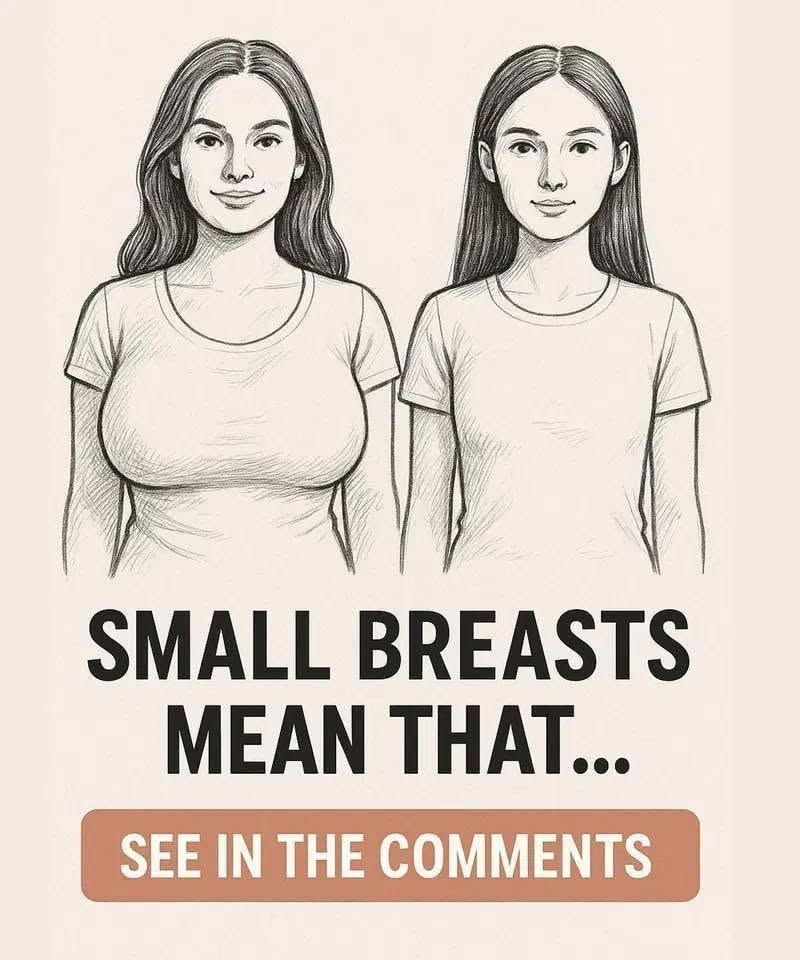
Breast size varies naturally from person to person, and there is no single ideal shape or measurement. Small breasts are perfectly normal, just as larger breasts are. Although some commonly repeated claims about breast size are not supported by strong scientific evidence, there are several potential advantages worth exploring.
Here are 13 reasons why having smaller breasts can be a positive experience.
1. Greater Comfort During Physical Activity
One practical advantage of having smaller breasts is that certain physical activities may feel more comfortable. Running, jumping, cycling, and high-impact workouts can cause breast movement and discomfort, particularly for women with larger breasts.
Smaller breasts may require less support during exercise, making some movements feel easier. However, a properly fitted sports bra can improve comfort for women of every breast size.
2. Less Weight on the Shoulders and Back
Breast size can influence physical comfort, particularly when larger breasts place additional weight on the upper body.
Some women with larger breasts experience neck discomfort, shoulder pressure, or back pain. Smaller breasts generally involve less weight, which may reduce this particular source of strain.
That does not mean every woman with a larger chest will experience pain or that breast size is the only factor affecting posture. Fitness, muscle strength, daily habits, and individual anatomy also matter.
3. More Clothing Options Without Complicated Adjustments
Finding comfortable clothing can sometimes be challenging when shirts and dresses are designed around standard measurements.
Women with fuller chests may experience stretched buttons, gaps between shirt panels, or dresses that fit the waist but feel tight across the bust.
Smaller breasts can make certain clothing styles easier to wear without alterations. Button-down shirts, fitted blouses, tailored jackets, and minimalist dresses may sit more smoothly against the body.
4. More Freedom When Choosing Lingerie
Smaller breasts can offer additional flexibility when selecting lingerie.
Soft bralettes, lace designs, bandeau tops, and lightweight wireless bras may provide enough comfort and support for everyday activities. Some women also prefer going without a bra when appropriate for their comfort and clothing choices.
Of course, lingerie preferences are personal. Women of every breast size can choose whatever feels comfortable and suits their individual needs.
5. Easier Styling With Summer Clothing
Warm-weather fashion often includes strapless dresses, halter tops, backless outfits, and lightweight tops.
For some women with smaller breasts, these styles can be easier to wear because they may require less structural support. This can make putting together summer outfits simpler and more comfortable.
The same applies to swimsuits and bikinis, although the best choice always depends on fit, personal preference, and the level of support desired.
6. Potentially Less Breast Movement During Exercise
Breast movement during physical activity can be uncomfortable, especially during running or jumping.
Research into breast biomechanics has shown that breast movement varies with factors such as breast size, tissue composition, activity level, and the support provided by clothing.
Smaller breasts may move less during certain activities, although individual differences are significant. Choosing a suitable sports bra remains one of the most effective ways to improve exercise comfort.
7. A Different Experience of Breast Sensitivity
Breast sensitivity varies considerably between individuals. Some women experience heightened sensitivity, while others notice very little sensation.
It is sometimes claimed that smaller breasts are automatically more sensitive because of differences in fatty and glandular tissue. However, breast size alone does not reliably predict sensitivity.
Nerve distribution, hormones, genetics, age, and individual anatomy all contribute. The important point is that sensitivity is personal and should not be judged by appearance or cup size.
8. Less Concern About Certain Clothing-Related Discomforts
Women with larger breasts sometimes report difficulties with bra straps digging into their shoulders, tight bands, or finding garments that provide enough support.
Smaller breasts may reduce some of these challenges, particularly when choosing everyday clothing and lightweight bras.
This does not mean smaller breasts eliminate all clothing discomfort. An incorrect bra size, unsuitable fabric, or poorly designed garment can cause problems for anyone.
9. A Variety of Fashion Looks Can Be Easy to Achieve
Fashion trends have never followed one single body shape.
During the 1920s, for example, flapper fashion popularized a straighter silhouette, with loose dresses and dropped waistlines that moved away from earlier, more structured styles.
Today, minimalist fashion, tailored outfits, vintage-inspired clothing, and certain runway looks also celebrate different body shapes.
Smaller breasts can make some of these styles easier to wear, but fashion is not limited to one figure. Personal style is ultimately about choosing clothes that make you feel comfortable and confident.
10. Less Dependence on Heavily Structured Bras
Some women prefer bras with underwire, reinforced cups, and wide support bands. Others enjoy lightweight designs that offer a more natural feel.
For women with smaller breasts, lightly structured bras or bralettes may provide sufficient support for everyday use.
There is no medical requirement for every woman to wear a bra, and there is also no strong evidence that wearing or avoiding one determines whether breasts will sag. Comfort, activity, and personal preference are more useful considerations.
11. Potentially Fewer Support Challenges When Traveling
Travel often involves long periods of sitting, walking through airports, carrying luggage, and wearing clothing for extended hours.
For some women with smaller breasts, finding comfortable travel clothing and suitable everyday bras may be relatively straightforward.
Lightweight tops and less structured garments can make packing easier, particularly for warm-weather destinations. Still, comfort depends on the individual and the clothing selected rather than breast size alone.
12. Breast Shape Changes Naturally With Age
Breasts change throughout a woman’s life. Pregnancy, breastfeeding, aging, hormonal changes, genetics, and fluctuations in body weight can all influence their appearance.
Smaller breasts may experience less downward pull from their weight, which can affect how their shape changes over time.
However, breast size does not determine whether someone will experience sagging. Smaller breasts can change with age, too, and there is no guaranteed way to preserve a particular shape.
13. An Opportunity to Build Confidence Beyond Appearance
Perhaps the most important advantage has nothing to do with clothing or physical comfort.
Many women spend years comparing their bodies with celebrities, models, or images they see online. These comparisons can create unrealistic expectations and make natural differences seem like problems that need to be fixed.
Learning to appreciate your body can help shift attention away from measurements and toward health, comfort, personality, and personal goals.
Small breasts are not a disadvantage, and larger breasts are not a measure of beauty or femininity. Confidence comes from feeling comfortable in your own body rather than trying to meet someone else’s expectations.
The Bottom Line: Every Body Shape Is Different
Having smaller breasts can offer practical benefits, including easier clothing choices, greater comfort during certain activities, and more flexibility with lingerie and summer outfits.
At the same time, not every claimed advantage is supported by scientific research. Breast sensitivity, sagging, posture, and physical comfort depend on many factors beyond breast size.
The most important thing to remember is that there is no perfect breast size. Every body is different, and natural variation is completely normal.
Rather than measuring your appearance against changing beauty standards, focus on what helps you feel healthy, comfortable, and confident. Your body does not need to fit a particular ideal to deserve appreciation.