
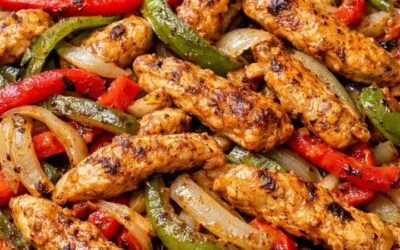
When dinner needs to be on the table without a sink full of dishes, a sheet-pan meal can feel like a small miracle. This chicken fajita trick takes four main ingredients, puts almost everything on one pan, and lets the oven handle the cooking while you get on with the rest of the evening.
The original recipe uses thinly sliced chicken, bell peppers, onion, and a store-bought fajita or taco seasoning blend. Everything roasts together, creating browned edges and tender vegetables without standing over a skillet.

Why This Dinner Hack Works
The beauty of this recipe isn’t just the short ingredient list.
It’s the method.
Instead of cooking the chicken separately, sautéing the peppers, and then cleaning multiple pans, you slice everything, season it, spread it across a sheet pan, and roast it together.
That means:
- Very little prep
- One main cooking pan
- No complicated sauce
- Easy cleanup
- Plenty of leftovers
- Flexible serving options
The original recipe makes 4 servings and calls for 1½ pounds of chicken, three medium bell peppers, one large onion, and three tablespoons of fajita or taco seasoning.
Ingredients
For about 4 servings:
- 1½ pounds boneless, skinless chicken breasts, sliced into thin strips
- 3 medium bell peppers, preferably a mixture of red and green, sliced into strips
- 1 large yellow or white onion, sliced into strips
- 3 tablespoons fajita or taco seasoning, plus more to taste
Those are the four ingredients in the original recipe.
For serving, you can add tortillas, shredded cheese, salsa, sour cream, lime, or another topping you already have available. Those aren’t necessary for the basic four-ingredient recipe.
1. Heat the Oven and Prepare the Pan
Preheat your oven to 425°F.
Line a large rimmed sheet pan with foil or parchment for easier cleanup.
If you’re using foil, make sure it is suitable for oven use and stays flat against the pan.
2. Slice Everything Evenly
Slice the chicken into thin, relatively uniform strips.
Do the same with the peppers and onion.
Try not to make some pieces dramatically thicker than others. Thin, even pieces cook more predictably and help the chicken and vegetables finish at roughly the same time.


3. Season the Chicken and Vegetables
Place the chicken, peppers, and onion on the prepared sheet pan.
Sprinkle the fajita or taco seasoning over everything.
Toss thoroughly so the seasoning coats the chicken and vegetables rather than collecting in a few spots.
Spread everything into an even layer.
This part matters more than it looks.
If you pile everything into a thick mound, the ingredients will release steam and can cook more like a braise than a roasted fajita filling.
Give the pieces some breathing room whenever your pan allows.
4. Roast Until the Chicken Is Cooked Through
Place the sheet pan in the preheated oven.
Roast until the chicken is fully cooked and the peppers and onions are tender with some browned edges.
Because the thickness of the chicken strips, the size of the pan, and individual ovens can vary, use appearance as a guide for browning—but use a food thermometer to verify the chicken’s internal temperature.
The USDA recommends cooking poultry to a minimum internal temperature of 165°F.


The Trick to Getting Better Browning
Don’t overcrowd the pan.
This is probably the biggest difference between roasted fajitas and vegetables that come out soft and watery.
Chicken and vegetables naturally release moisture as they cook. When they’re packed tightly together, that moisture has less opportunity to evaporate.
An oversized sheet pan is ideal.
If everything looks crowded, divide the mixture between two pans rather than piling it into one deep layer.
Should You Stir Everything During Cooking?
You can give the mixture a quick toss partway through if you want more even browning.
But you don’t need to constantly disturb it.
Leaving the ingredients in contact with the hot pan gives the bottoms a chance to brown.
The goal is tender vegetables, fully cooked chicken, and some caramelized edges.
How to Serve These Chicken Fajitas
The easiest option is to spoon the hot chicken and vegetables into warm tortillas.
Classic Fajita Style
Serve with:
- Flour or corn tortillas
- Shredded cheese
- Salsa
- Sour cream
- Lime wedges
These are suggested serving options in the original recipe.
Over Rice
For a heartier bowl, spoon the fajita mixture over cooked rice.
Add black beans, salsa, avocado, or cheese if you have them.
Fajita Salad
Pile the warm chicken and vegetables over lettuce for a quick salad.
A squeeze of lime or a simple salsa-based dressing works well.
Sheet-Pan Nachos
Leftover fajita mixture can also be scattered over tortilla chips and topped with cheese before briefly reheating.


How to Keep the Chicken Juicy
Chicken breast is convenient, but it can become dry if it’s cooked much longer than necessary.
A few things help:
Cut the strips evenly
Very thin pieces can finish long before thick ones.
Don’t automatically add extra cooking time
Once the chicken reaches 165°F, it has reached the USDA’s recommended safe minimum temperature for poultry.
Don’t wash the raw chicken
USDA advises against washing poultry because splashing can spread bacteria around the kitchen. Cooking it thoroughly is the appropriate way to make it safe.
What If the Vegetables Are Done Before the Chicken?
This can happen if the chicken pieces are thicker than the vegetables.
Rather than leaving the vegetables in the oven long enough to become overly soft, check the chicken’s temperature as it cooks.
Next time, cut the chicken into slightly thinner strips or the vegetables into somewhat larger pieces so their cooking times are closer.
What If the Pan Looks Watery?
Don’t panic.
Chicken, onions, and peppers all contain water, and some liquid will collect as they cook.
If there’s a lot of liquid:
- Make sure the ingredients aren’t crowded.
- Use a larger pan next time.
- Spread everything into one layer.
- Let the food continue roasting so excess moisture can evaporate.
For especially crowded batches, dividing the ingredients between two pans is usually more effective than simply roasting one crowded pan for longer.
Can You Use Chicken Thighs?
Yes.
Boneless, skinless chicken thighs can work well and tend to stay juicy because they contain more fat than breast meat.
Just remember that the original recipe is written for chicken breasts, so the cooking time and final texture may differ.
Whatever cut you use, verify poultry reaches 165°F internally.
Can You Use Frozen Peppers?
Fresh peppers are preferable for the roasted texture in this recipe.
Frozen peppers contain more surface moisture and may release additional liquid as they cook.
If that’s what you have, they can still work, but expect a softer result and potentially more moisture on the pan.
Easy Ways to Change the Flavor
Use Different Peppers
Red, green, yellow, and orange bell peppers all work.
A mixture gives the finished dish more color and slightly different levels of sweetness.
Add Jalapeño
For heat, add thinly sliced jalapeño before roasting.
Finish With Lime
A squeeze of fresh lime after cooking can brighten the smoky seasoning and roasted vegetables.
Add Fresh Cilantro
A little chopped cilantro gives the finished fajitas a fresh contrast.
These additions aren’t required for the original four-ingredient version—they’re simply easy ways to personalize it.
Common Mistakes to Avoid
Crowding the Sheet Pan
This is the biggest one.
Crowding traps moisture and reduces browning.
Cutting the Chicken Too Thick
Large pieces take longer to cook and can finish after the vegetables are already soft.
Using Too Much Seasoning
Seasoning blends vary in saltiness.
Start with the recommended amount and add more only if needed.
Guessing When the Chicken Is Done
Color isn’t a reliable substitute for temperature.
Use a food thermometer and verify 165°F in the thickest pieces.
Forgetting That Toppings Aren’t Part of the Four Ingredients
The basic recipe itself uses four ingredients. Tortillas, cheese, salsa, sour cream, and other toppings are optional serving additions.
How to Store Leftovers
Transfer leftover chicken and vegetables to a shallow covered container and refrigerate promptly.
USDA advises refrigerating perishable foods within 2 hours, or within 1 hour when the surrounding temperature is above 90°F.
The leftovers work especially well for:
- Fajita bowls
- Salads
- Quesadillas
- Wraps
- Nachos
For reheating, warm only the portion you plan to eat rather than repeatedly reheating the entire batch.
Frequently Asked Questions
Can I make these fajitas with chicken thighs?
Yes. Boneless, skinless thighs are a good alternative and can be more forgiving if you’re concerned about dry chicken.
Can I use a different seasoning?
Absolutely. Taco seasoning works well, as does a homemade fajita blend. Just remember that different blends contain different amounts of salt and spices.
Do I have to use red and green peppers?
No. Use whatever bell peppers you enjoy. A colorful mixture simply makes the finished dish more appealing.
Can I prepare the ingredients ahead of time?
Yes. You can slice the vegetables and chicken ahead and keep the raw chicken refrigerated separately from ready-to-eat foods. Assemble and season when you’re ready to cook.
Why aren’t my fajitas browned?
The usual culprit is excess moisture or overcrowding. Give the ingredients more room on the pan and avoid piling them on top of each other.
What temperature should the chicken reach?
Chicken should reach a minimum internal temperature of 165°F, measured with a food thermometer.
The Bottom Line
This is the kind of dinner hack worth keeping because it solves several weeknight problems at once. Four main ingredients, one sheet pan, very little hands-on cooking, and plenty of ways to serve the leftovers.
The real trick isn’t some complicated technique. It’s cutting the ingredients evenly, spreading them out instead of overcrowding the pan, and checking the chicken with a thermometer rather than guessing.
Serve the roasted mixture in warm tortillas for classic fajitas, spoon it over rice, or turn leftovers into salads and nachos. Either way, you get a satisfying dinner without turning the kitchen into a full evening project.







