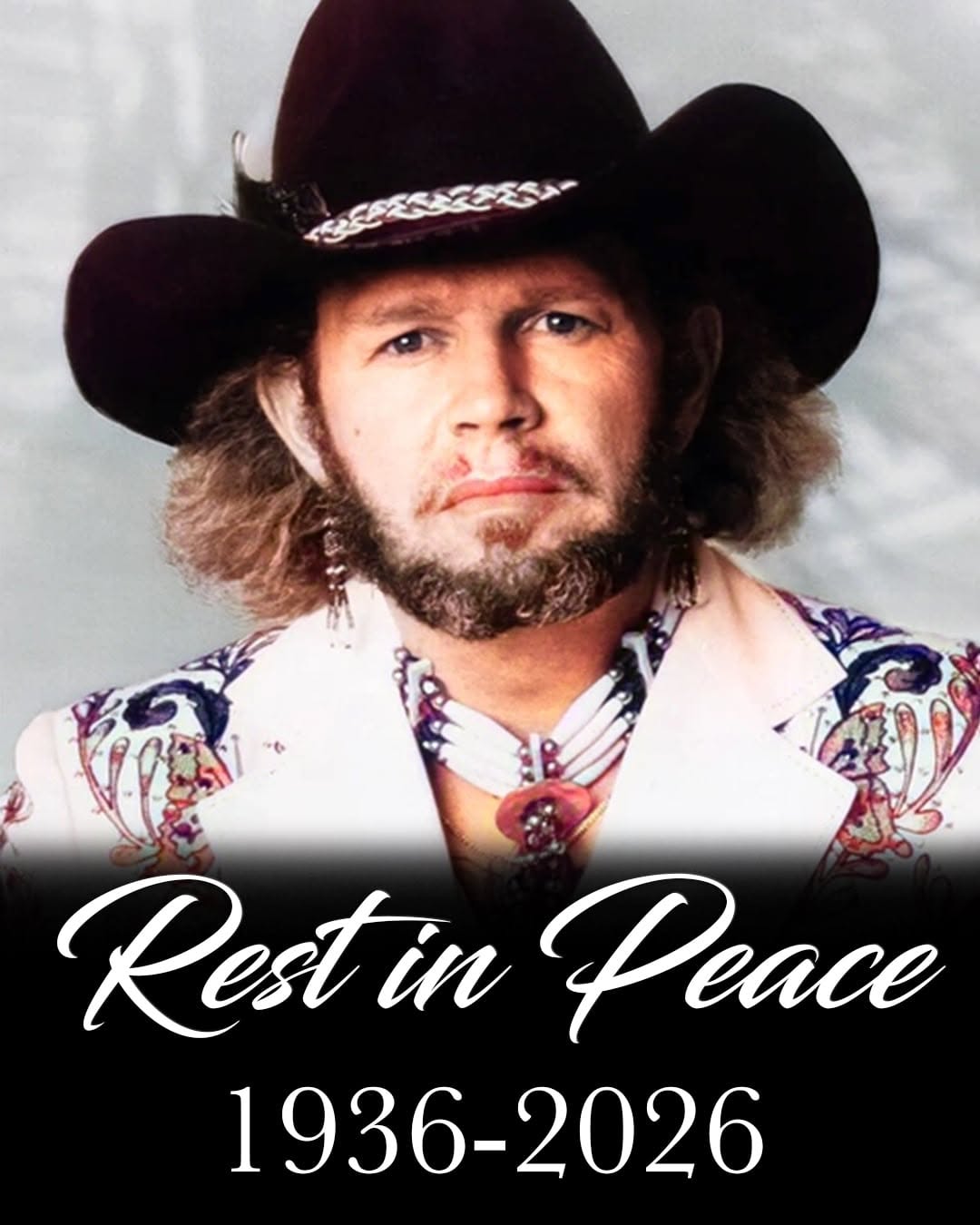
Country music has said goodbye to one of its most unpredictable and controversial performers. David Allan Coe, the singer-songwriter whose rough-edged voice and rebellious personality helped shape the outlaw country movement, has died at 86.
For decades, Coe occupied a place unlike almost anyone else in Nashville. He wrote songs that touched listeners deeply, created music that became part of country history, and built a reputation for refusing to follow the industry’s expectations.
His passing marks the end of a remarkable musical journey, but his legacy is not a simple one.
Behind the familiar songs was a man whose life included difficult beginnings, extraordinary musical achievements, and controversies that continued to follow him throughout his career.
For fans who remember hearing his music on the radio, one question now stands out: How did this unconventional performer become such an important figure in country music?
A Difficult Beginning Before the Fame
David Allan Coe was born in Akron, Ohio, in 1939. His early years were far removed from the comfortable lifestyle many people associate with successful recording artists.
He spent much of his youth in reform schools and correctional institutions. Those experiences became part of the complicated personal history he later brought into his music.
Rather than following a conventional route into the entertainment business, Coe arrived in Nashville in the late 1960s determined to establish himself as a songwriter and performer.
His early years in the city were difficult. He reportedly spent time living out of his car while trying to find opportunities in the music industry.
But he refused to abandon his ambitions.
In 1969, he released his debut album, Penitentiary Blues, introducing listeners to a sound that was considerably rougher than the polished country music that dominated much of the industry.
It was the beginning of a career that would eventually make him famous far beyond Nashville.
The Song That Helped Make Him a Country Music Name
Coe’s success did not come from performing alone. His songwriting ability became one of his greatest strengths.
One of the most important songs associated with his career was Would You Lay With Me (In a Field of Stone).
The song became a major success for Tanya Tucker, helping establish her as a country music star. It also demonstrated that Coe could write emotional material capable of connecting with audiences far beyond his own fan base.
Then came another song that would become familiar to millions of Americans.
In 1975, Coe released You Never Even Called Me by My Name, a recording that became one of his best-known performances.
The song’s distinctive storytelling and memorable humor helped it stand out among country recordings of the period.
But perhaps his most recognizable songwriting achievement came two years later.
In 1977, Coe wrote Take This Job and Shove It, which became a major hit for Johnny Paycheck.
The song captured the frustration of ordinary working people who had reached their breaking point with a job they no longer wanted.
Its rebellious message connected with listeners across the country. Even people who did not regularly follow outlaw country could recognize its attitude.
That was one of Coe’s greatest contributions: he knew how to turn everyday frustrations and emotions into songs people remembered.
The Outlaw Country Movement Found One of Its Most Unusual Characters
During the 1970s, country music was experiencing an important transformation.
A group of performers began challenging the polished Nashville sound, favoring a more independent approach to songwriting, recording, and performing.
This movement became known as outlaw country.
Artists such as Waylon Jennings and Willie Nelson helped define its identity. They wanted greater creative freedom and music that reflected their own personalities rather than industry expectations.
Coe fit naturally into this environment.
He developed an unmistakable stage image, sometimes appearing in elaborate rhinestone clothing and presenting himself as the mysterious, unpredictable performer audiences had come to expect.
His 1974 album The Mysterious Rhinestone Cowboy reflected that unusual image.
He later appeared in Heartworn Highways, the influential 1976 documentary that captured several important musicians associated with the outlaw country scene.
The film helped preserve a particular moment in American music history, showing a side of country music that was less polished and more personal.
Coe was not simply another singer trying to imitate the movement.
He became one of its distinctive personalities.
His Music Could Be Tender, Rebellious, and Deeply Divisive
There was another reason David Allan Coe remained such a complicated figure.
His musical personality could change dramatically from one recording to another.
He was capable of writing emotional country ballads, but he also released material containing provocative language and offensive stereotypes.
Some of his independent recordings attracted serious criticism, particularly Nothing Sacred and Underground Album.
The controversy surrounding those releases became a lasting part of his public reputation.
While some listeners defended his rebellious approach, others objected strongly to the language and content.
This division followed him for years.
Coe never became an artist whose legacy could be discussed without acknowledging those disagreements. His influence on outlaw country existed alongside the criticism directed at some of his work.
That complicated reputation is an important part of understanding why his name continued to generate strong reactions.
The Ride Became Another Defining Moment
Although Coe had already established himself as a songwriter, his own recordings continued to produce memorable moments.
One particularly important song was The Ride, released in 1983.
The recording became one of his signature performances and reached the top of the Cashbox Country Singles chart.
Its storytelling approach helped distinguish it from many other country songs of the period.
The song follows a mysterious encounter involving a young musician traveling toward Nashville and an older performer who seems to know far more than he initially reveals.
For country music fans, it became one of those recordings that could be recognized within moments.
Coe also continued releasing albums and performing live, maintaining a loyal audience even as musical trends changed around him.
He was not always part of the mainstream country establishment, but that never meant he lacked devoted supporters.
A Career That Continued Through Changing Times
As the 1980s progressed, country music moved into another era.
The popularity of the urban cowboy style brought a different sound and image to the industry.
Coe, however, largely maintained his independent approach.
His career included performances, recordings, collaborations, and appearances alongside other well-known musicians.
He also developed a longtime friendship with Willie Nelson, one of the central figures of outlaw country.
Over the years, Coe’s music reached different generations of listeners.
Some discovered him through the original recordings. Others became familiar with his songs through performances by Johnny Paycheck, Tanya Tucker, and other country artists.
That ability to leave a mark through both his own performances and songs written for others helped secure his place in country music history.
The News of His Passing
Reports of Coe’s death brought renewed attention to his extraordinary and complicated career.
His wife, Kimberly Hastings Coe, confirmed his passing. According to reporting by the Associated Press, his representative said he died on a Wednesday, although a cause of death was not publicly disclosed.
The Los Angeles Times also reported his death at age 86, describing him as a controversial pioneer of outlaw country.
His passing prompted renewed interest in the recordings that helped define his musical identity.
For longtime listeners, the news also brought back memories of a different period in country music, when performers such as Coe, Jennings, and Nelson were challenging established expectations.
It is difficult to separate those memories from the songs themselves.
A familiar melody can bring back an entire period of someone’s life, whether it reminds them of a road trip, a favorite radio station, or evenings spent listening to country music at home.
Coe’s recordings became part of those memories for many listeners.
A Legacy That Will Not Be Easily Forgotten
David Allan Coe leaves behind a musical legacy that is both influential and controversial.
His songwriting produced recordings that became major country hits. His performances helped give outlaw country some of its unmistakable character.
He also remained a deeply divisive figure because of material that many listeners considered offensive.
Remembering his career means acknowledging both sides rather than pretending that one cancels out the other.
His influence can be heard in the songs he wrote, the artists who recorded his material, and the outlaw country tradition that challenged Nashville’s established conventions.
For those who grew up listening to country music during the 1970s and 1980s, his name will remain connected to a distinctive chapter in American musical history.
His story was never conventional, and neither was his music.
Although David Allan Coe is gone, the recordings that made him famous will continue to introduce new listeners to one of country music’s most complicated personalities.
And perhaps that is the most fitting way to remember a performer who spent so much of his career refusing to fit into a single category.
Did you ever listen to David Allan Coe’s music? Which of his songs do you remember most?
Editorial Disclaimer
This article is provided for general informational and entertainment purposes. It is based primarily on the supplied source, with additional biographical and reporting context from the publications listed above.
Information about David Allan Coe’s death, career, and personal history has been presented according to available reporting. His reported cause of death was not publicly disclosed in the cited Associated Press coverage.
The article does not intend to endorse controversial material associated with the artist or dismiss the concerns expressed by people who found some of his recordings offensive.
Readers interested in further details should consult the original reporting and the publications cited above.