
Before you reach for an expensive jewelry-cleaning product, take a look at what you already have at home. A few simple household ingredients can help remove everyday dirt, oils, and buildup from many types of jewelry.
But there’s an important catch: not every homemade cleaning method is safe for every gemstone or metal.
That’s why the safest approach is to know what you’re cleaning before you start.


Why Does Jewelry Lose Its Shine?
Jewelry comes into contact with much more than you might realize.
Skin oils, sweat, lotions, perfume, soap, dust, and everyday grime can gradually build up on rings, necklaces, earrings, and bracelets.
Gold may start looking dull.
Silver can tarnish.
Gemstones can lose some of their sparkle when dirt accumulates around the setting.
The good news is that regular gentle cleaning can often make a noticeable difference.
The Simple Homemade Cleaning Method
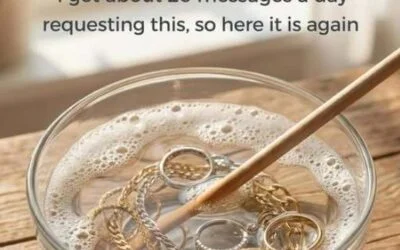
For many durable pieces of jewelry, a mild mixture of warm water and a small amount of gentle dish soap is one of the simplest options.
Here’s how to do it.
Step 1: Prepare the Solution
Fill a small bowl with warm—not boiling—water.
Add a few drops of mild dish soap and mix gently.
You don’t need a strong concentration.
More soap doesn’t mean cleaner jewelry.
Step 2: Let the Jewelry Soak
Place suitable jewelry into the solution and allow it to sit for several minutes.
This gives the warm soapy water time to loosen oils and surface dirt.
For delicate pieces, however, don’t automatically assume soaking is appropriate.
Some jewelry should be cleaned much more carefully.
Step 3: Gently Brush Away Dirt
Use a very soft toothbrush or a soft jewelry brush.
Gently work around the setting and other areas where dirt collects.
Don’t scrub aggressively.
The goal is to loosen the buildup—not scratch the metal or damage a stone.


Step 4: Rinse Carefully
Rinse the jewelry with clean water to remove any remaining soap.
Be extremely careful around the sink.
A tiny ring can disappear down a drain in seconds.
A bowl or a plugged sink is much safer than rinsing a small piece directly over an open drain.
Step 5: Dry Thoroughly
Pat the jewelry dry with a soft, lint-free cloth.
Allow it to air-dry completely before putting it away.
This helps prevent moisture from remaining in small spaces around settings and chains.
What About Baking Soda?
Baking soda is often recommended online as a homemade jewelry cleaner.
But this is where you should slow down.
Baking soda is mildly abrasive.
That means rubbing it directly against jewelry can potentially scratch certain surfaces or finishes.
So don’t assume that because baking soda is a common household ingredient, it’s automatically suitable for every piece.
For valuable, delicate, antique, plated, or easily scratched jewelry, a gentle soap-and-water method—or professional cleaning—is the safer choice.
Can You Use Vinegar?
Vinegar appears in many DIY cleaning recipes, but jewelry isn’t the place to experiment blindly with acidic solutions.
Different gemstones, metals, coatings, and treatments can react differently.
Some stones are particularly sensitive to acids or moisture.
So rather than creating a strong vinegar mixture and hoping for the best, identify the jewelry first.
If you don’t know what the stone or treatment is, don’t experiment on an expensive piece.
Jewelry You Should Treat With Extra Care
Not every piece belongs in a homemade cleaning bowl.
Be especially cautious with:
- Pearls
- Opals
- Emeralds
- Turquoise
- Amber
- Coral
- Porous gemstones
- Antique jewelry
- Costume jewelry
- Gold-plated or silver-plated pieces
- Jewelry with loose stones


Some gemstones are porous or treated, while plated jewelry can lose its finish if exposed to overly aggressive cleaning.
If you’re unsure, check the manufacturer’s instructions or have the piece evaluated by a professional jeweler.
Never Scrub Your Jewelry Like Household Metal
This is an easy mistake.
Jewelry may look sturdy, but its surface can be surprisingly delicate.
Avoid aggressive scrubbing, rough brushes, scouring powders, and harsh household chemicals.
A gentle cleaner used consistently is usually better than a powerful cleaner used occasionally.
A Simple Cleaning Schedule
You don’t necessarily need to deep-clean your jewelry every few days.
For pieces you wear frequently, a gentle cleaning when they start looking dull can help prevent heavy buildup.
You can also make a habit of wiping jewelry with a soft cloth after wearing it.
That removes some oils and residue before they accumulate.
Keep Jewelry Away From These Everyday Products
One of the easiest ways to keep jewelry looking better is to prevent unnecessary exposure in the first place.
Try to put jewelry on after applying:
- Perfume
- Hairspray
- Lotion
- Sunscreen
- Makeup
- Other beauty products
And remove jewelry before activities that expose it to excessive moisture, chemicals, or physical impact.
This is especially useful for rings and bracelets that are constantly exposed to soap and cleaning products.
Don’t Forget the Jewelry Box
Cleaning the jewelry itself isn’t the whole story.
If you throw clean pieces into a dusty or damp jewelry box, they’ll quickly collect residue again.
Keep jewelry somewhere clean and dry.
Store pieces separately when possible so chains don’t become tangled and harder surfaces don’t rub against one another.
Silver pieces can also benefit from appropriate anti-tarnish storage.
The Safest DIY Rule
Here’s the rule worth remembering:
Know the jewelry before choosing the cleaner.
For a simple, durable piece of jewelry made from materials known to tolerate gentle cleaning, mild soap and warm water can be a practical starting point.
For valuable, delicate, antique, porous, treated, or unknown pieces, don’t gamble with a homemade chemical mixture.
A professional jeweler can tell you exactly how the piece should be cleaned.
Final Thoughts
You don’t always need an expensive jewelry-cleaning kit to freshen up everyday jewelry.
A bowl of warm water, a few drops of mild soap, a soft brush, and a little patience can be enough for many durable pieces.
But don’t fall into the trap of thinking that one DIY recipe works for every ring, necklace, bracelet, or gemstone.
Some jewelry needs special care.
Clean gently, avoid harsh chemicals, protect delicate stones, and when you’re unsure about a valuable piece, ask a professional before experimenting.
That’s the best way to bring back the shine without accidentally damaging the jewelry you’re trying to protect.