
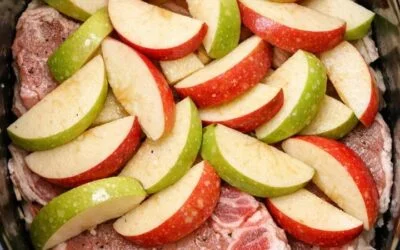
There’s something especially satisfying about a dinner that can be assembled in a few minutes and then left to cook while you get on with the rest of the day. These slow cooker pork chops and apples bring together tender pork, sweet-tart apples, and a simple apple sauce for a comforting meal without a long ingredient list.
The combination may sound almost too simple, but pork and apples work beautifully together. The key is choosing apples that hold their shape reasonably well and checking the pork with a thermometer rather than cooking it far beyond the point of doneness.


Why Pork Chops and Apples Work Together
Pork has a mild, savory flavor that pairs naturally with fruit. Apples add sweetness and a little acidity, while applesauce helps keep the cooking mixture moist.
The result is a dinner that tastes comforting without needing a complicated sauce or a long list of seasonings.
It also leaves plenty of room for customization. A tart apple creates more contrast, while a sweeter variety makes the dish feel softer and more mellow.
Ingredients
Serves 4
- 4 boneless or bone-in pork chops
- 4 medium apples
- 1 cup unsweetened applesauce
- 1 teaspoon kosher salt
Black pepper is optional if you don’t need the recipe to stay strictly four ingredients.
Choosing the Pork Chops
Both boneless and bone-in pork chops can work.
Bone-in chops tend to have a little more flavor and can be a good choice for slow cooking.
Boneless chops are convenient and easy to serve, but lean chops can become dry if they’re cooked much longer than necessary.
Whatever cut you choose, thickness matters. Very thin chops will generally cook faster than thick ones.
Choosing the Apples
Look for apples that stay reasonably firm during cooking.
Good choices include:
- Granny Smith
- Honeycrisp
- Pink Lady
- Gala
Granny Smith gives you a noticeably tart contrast against the pork. Honeycrisp and Gala create a sweeter, gentler flavor.
How to Make Slow Cooker Pork Chops and Apples
1. Prepare the Apples
Core the apples and slice them into moderately thin pieces.
You can leave the peels on if you like their texture and color. If you prefer softer, more uniform apples, peel them first.
Avoid slicing them extremely thin because they can break down completely during cooking.
2. Create the Apple Base
Place the sliced apples in the bottom of the slow cooker.
Spread the applesauce over them and gently mix the two together.
The applesauce provides moisture and creates a simple sauce as the apples soften.
3. Season the Pork
Pat the pork chops dry.
Season both sides with the salt. If you’re using black pepper, add it now.
You don’t need a heavy coating of seasoning because the apples and applesauce provide most of the flavor.
4. Add the Pork Chops
Arrange the pork chops over the apple mixture.
Try to keep them in a single layer so they cook as evenly as possible.
Spoon a little of the apple mixture over the chops if necessary, then put the lid on the slow cooker.


5. Cook Until the Pork Is Done
A reasonable starting point is:
- LOW: 4–6 hours
- HIGH: 2–3 hours
Cooking times can vary considerably between slow cookers and different chop thicknesses, so treat these as guidelines rather than an exact finish time.
The most important test is internal temperature.
Pork chops should reach 145°F in the thickest part, followed by a 3-minute rest. USDA recommends this temperature for whole cuts of pork.
6. Let the Pork Rest
Once the chops reach the proper temperature, transfer them to plates and let them rest for at least 3 minutes.
Spoon some of the warm apples and cooking juices over each chop before serving.


How to Keep the Pork Tender
The biggest mistake with this recipe is assuming that longer cooking automatically means more tender pork.
That’s not always true with lean pork chops.
Once the center reaches the recommended temperature, continuing to cook thin chops for hours can leave them dry.
A thermometer is much more useful than judging doneness by color or by the clock.
Common Mistakes to Avoid
Using Sweetened Applesauce
Sweetened applesauce combined with sweet apples can make the dish overly sugary.
Unsweetened applesauce gives you much better control over the final flavor.
Cutting the Apples Too Thin
Very thin slices can dissolve into the cooking liquid.
Use moderately thick slices if you want recognizable pieces of apple alongside the pork.
Overcooking the Pork
Don’t leave the pork cooking simply because the recipe says “4–6 hours.”
Start checking the temperature as it approaches doneness, especially if your chops are thin.
Using Extremely Soft Apples
Very soft apples may break down quickly.
That’s perfectly fine if you want an almost applesauce-like topping, but choose firmer apples if you want slices that retain their shape.
How to Make the Dish More Savory
If you don’t want the meal to taste particularly sweet, choose a tart apple such as Granny Smith and use unsweetened applesauce.
Serve the pork with a savory side such as:
- Green beans
- Roasted Brussels sprouts
- Mashed potatoes
- Sautéed greens
The contrast keeps the apple flavor from dominating the plate.
How to Make It Sweeter
For a sweeter version, choose Honeycrisp or Gala apples.
You generally don’t need to add extra sugar. The apples and applesauce already provide plenty of sweetness.
If you’re serving the dish to children, a sweeter apple can make the flavor especially approachable without adding another ingredient.
What to Serve With Pork Chops and Apples
This dinner pairs well with simple sides that don’t compete with the apple flavor.
Mashed Potatoes
Creamy mashed potatoes are an especially good match because they give you something savory to pair with the sweet apple juices.
Green Beans
Steamed or roasted green beans add freshness and a little crunch.
Roasted Vegetables
Carrots, Brussels sprouts, or broccoli can balance the softer texture of the pork and apples.
Simple Salad
A crisp green salad with a light vinaigrette gives the meal some acidity and freshness.
Can You Use Boneless Pork Chops?
Yes.
Boneless chops are convenient and work well, but keep an especially close eye on their temperature because lean boneless chops can dry out when overcooked.
Check the thickest part with a food thermometer and remove them once they reach 145°F, then let them rest for 3 minutes.
Can You Use Bone-In Pork Chops?
Absolutely.
Bone-in chops can add more flavor and are a good option when you want a heartier presentation.
Arrange them so they aren’t tightly stacked, and use internal temperature rather than cooking time alone to determine when they’re ready.
Can You Prepare This Dinner Ahead?
You can prepare the apples ahead of time and refrigerate them until you’re ready to cook.
Keep raw pork refrigerated until you’re ready to use it, and keep it separate from foods that won’t be cooked.
Once the meal is cooked, refrigerate leftovers promptly.
USDA recommends using refrigerated cooked leftovers within 3–4 days.
How to Reheat Leftovers
Reheat only the amount you’re planning to eat.
Place the pork with some of the apple mixture so the meat doesn’t dry out as easily.
If the pork has become firm after refrigeration, slicing it before reheating can make it easier to warm evenly.
For food safety, reheated leftovers should reach 165°F.
Can You Freeze Pork Chops and Apples?
You can freeze the cooked pork, although the apples will usually become softer after thawing.
If you’re mainly concerned with convenience, freezing individual portions can make this an easy make-ahead meal.
For the best texture, however, the dish is better when freshly prepared or eaten after a short period in the refrigerator.
A Simple Dinner With Four Main Ingredients
The appeal of these slow cooker pork chops isn’t complicated.
You get a satisfying combination of savory pork and naturally sweet apples, with applesauce helping bring everything together.
The recipe is particularly useful on days when you want a homemade dinner without spending much time actively cooking.
Just remember the one detail that matters most: use a food thermometer and cook the pork to 145°F, then let it rest for 3 minutes.
That keeps the recipe simple while giving you a much more reliable way to know when the pork is ready.







