
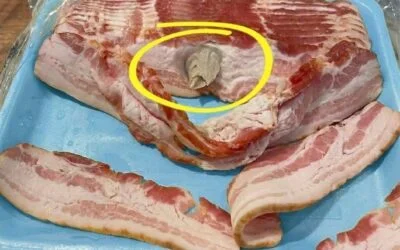
You open a package of bacon and notice a strange white lump sitting on one of the slices. It can look alarming at first, but in many cases, there’s a simple explanation: it’s just solidified pork fat.
Bacon naturally contains both lean meat and fat. When it is kept cold, the fat becomes firm, opaque, and noticeably white. A small lump can therefore look very different from the rest of the slice even though the bacon is perfectly normal.
Still, not every white substance on bacon is harmless. Mold and spoilage can also change the appearance of meat, so it’s important to look at the texture, smell, color, and storage history before deciding whether to cook it.

The Most Common Explanation: Solidified Bacon Fat
If the white material is smooth, firm, waxy, and appears to be part of the fatty portion of the bacon, it is most likely ordinary pork fat.
Cold temperatures make bacon fat much firmer. That’s why a slice taken straight from the refrigerator can have bright white sections that become softer and translucent once heated.
You may notice the white area looks like a little lump, streak, or thick patch. As long as the bacon otherwise looks and smells normal, this appearance alone isn’t a reason to panic.
Why Does Bacon Have So Much White Fat?
Bacon is made from pork belly or other cuts containing varying amounts of fat and lean meat.
The white portion is largely fat, while the pink or reddish portion is lean meat. The exact ratio varies depending on the cut and how the bacon was processed.
When the bacon is cold, the fat becomes solid. When the bacon is cooked, that fat gradually renders into the pan.
That’s why a white patch that looks unusually large when the bacon is cold may practically disappear during cooking.
How Can You Tell Fat From Mold?
This is the important distinction.
Normal bacon fat is generally:
- Smooth
- Firm when cold
- Waxy or solid
- White or creamy in color
- Attached naturally to the fatty portion of the meat
Mold is more likely to look unusual in texture. It may appear fuzzy, powdery, irregular, or like something growing on the surface rather than being part of the bacon itself.
If you see something that genuinely looks like mold, don’t simply scrape it away and cook the rest of the package.


A Smooth White Lump Is Different From Fuzzy Growth
One of the easiest ways to distinguish ordinary fat from possible mold is to look closely at the texture.
A smooth white lump that blends into the fatty portion of the bacon is generally consistent with normal fat.
A fuzzy spot that seems to sit on top of the meat is much more concerning.
USDA advises consumers to discard moldy bacon rather than simply cutting away the visible mold. Mold can extend below the surface even when you can’t see it.
So don’t rely on the idea that cooking the bacon will automatically make moldy meat safe.
What About a White Powdery Film?
A powdery or unusual coating deserves more caution.
Sometimes food can develop harmless surface changes during storage, but bacon is a perishable meat product, so you shouldn’t automatically assume that every white substance is harmless fat.
Look at the entire package.
Ask yourself:
Does the substance look like the normal fat on the bacon?
Is it smooth rather than fuzzy?
Does the bacon smell normal?
Is the texture normal?
Has it been refrigerated properly?
The answers to those questions are more useful than the color alone.
Check the Smell
Fresh bacon has a recognizable smoky, salty, meaty smell.
Spoiled bacon may develop a sour, rancid, rotten, or otherwise unpleasant odor.
If the package smells noticeably wrong when you open it, don’t try to mask the smell with seasoning or cooking.
One important precaution: if you can see obvious mold, don’t deliberately put your nose close to it. You don’t need to smell mold to decide whether visibly moldy food should be discarded.
Look at the Texture
Texture can provide another useful clue.
Normal chilled bacon can feel firm and somewhat greasy because the fat has hardened.
That’s different from bacon that feels:
- Slimy
- Extremely sticky
- Coated with an unusual film
- Noticeably different from the rest of the package
If an unusual white area appears together with a slimy texture or unpleasant smell, it’s better not to eat the bacon.
Pay Attention to the Color of the Meat
Normal bacon typically has pink or reddish lean portions surrounded by white or creamy fat.
A little extra white fat isn’t unusual.
However, significant discoloration—particularly when combined with an unpleasant smell or altered texture—is a reason to be cautious.
Don’t focus on one tiny spot while ignoring the condition of the entire package.
How Long Does Bacon Last in the Refrigerator?
Storage time is an important part of the decision.
Raw bacon should be kept refrigerated at 40°F or below. USDA guidance recommends using raw bacon within about 7 days in the refrigerator or freezing it for longer storage.
Cooked bacon can generally be refrigerated for about 4–5 days.
These are useful guidelines, but they’re not permission to eat meat that has obvious signs of spoilage.
If the bacon smells bad, feels slimy, or has visible mold, discard it even if the package hasn’t reached the recommended storage limit.


What If the Bacon Was Frozen?
Freezing can change the appearance of bacon.
When meat is frozen and later thawed, fat can become more noticeable and the texture can change slightly. You may also see areas that look whiter or drier than they did before freezing.
That doesn’t automatically mean the bacon is spoiled.
What matters is whether it was kept frozen properly and whether it develops signs of spoilage after thawing.
If it was continuously frozen and looks normal apart from changes associated with freezing, a little extra white fat isn’t necessarily a problem.
Should You Wash Bacon Before Cooking?
No.
There’s generally no reason to rinse raw bacon before cooking it.
Washing raw meat can spread bacteria around your sink, countertop, and nearby surfaces. It also doesn’t provide a reliable food-safety benefit.
If you’re worried about a white lump, washing the bacon won’t tell you whether it is fat or spoilage.
Instead, examine the appearance, smell, texture, and storage history.
Don’t Try to Cook Spoiled Bacon “Safe”
This is one of the most important points.
High heat is part of safely cooking raw meat, but it shouldn’t be treated as a way to rescue meat that has already spoiled.
If bacon has visible mold, an abnormal odor, a slimy texture, or obvious spoilage, don’t assume frying it until it’s extra crispy will solve the problem.
When in doubt about clearly spoiled bacon, throw it away.
Why Balsamic-Looking or White Crystals Can Sometimes Appear
Some cured meat products can develop surface changes during storage. Salt and other components can sometimes become more visible as moisture changes.
But bacon should still be judged as a whole.
A small smooth white area that’s clearly part of the fat is one thing.
A new coating, fuzzy growth, strange discoloration, or multiple spoilage signs is another.
If you can’t confidently identify what you’re seeing, it’s safer not to eat it.
How to Store Bacon Properly
Keep bacon refrigerated at 40°F or below.
Once opened, keep the remaining slices tightly wrapped or place them in an airtight container.
If you know you won’t use the bacon within the recommended refrigerator period, freeze it instead.
It can also help to label opened packages with the date. That makes it much easier to know how long the bacon has been sitting in the refrigerator.
A Simple Bacon Safety Check
Before cooking bacon that looks unusual, run through this quick checklist.
1. Look
Is the white area smooth and similar to the bacon’s normal fat?
2. Check the texture
Is the bacon firm and slightly greasy rather than slimy?
3. Consider the smell
Does it smell like normal bacon rather than sour or rancid meat?
4. Check the color
Does the meat still have its normal pink or reddish appearance?
5. Think about storage
Has it stayed properly refrigerated, and is it still within the recommended storage period?
If everything looks normal except for a smooth white lump, there’s a good chance you’re simply looking at hardened fat.
If several warning signs appear at once, don’t take the risk.
Can You Remove the White Fat?
Absolutely—but you don’t have to.
If you prefer leaner bacon, you can trim away some of the visible fat before cooking.
Most people simply leave it in place because the fat is what renders during cooking and contributes much of bacon’s characteristic flavor.
A large white section doesn’t necessarily mean the bacon is defective. It may simply mean that particular slice contains more fat than the others.
Why Does the White Fat Melt During Cooking?
Bacon fat changes dramatically with heat.
When chilled, it is firm and opaque.
As the temperature rises, the fat melts and becomes liquid. This is called rendering.
That’s why a slice that looks heavily covered in white fat can look completely different after several minutes in a skillet.
The melted fat also helps brown the lean portions of the bacon and contributes to its familiar crisp texture.
Frequently Asked Questions
Is a white lump in bacon always mold?
No. A smooth, solid white lump is often simply pork fat. Mold tends to have a different appearance, such as fuzzy or irregular growth, and should be treated as spoilage.
Can I eat bacon with a lot of white fat?
Yes. White pork fat is a normal part of bacon. The amount varies from slice to slice.
What does mold on bacon look like?
Mold may appear fuzzy, powdery, or irregular and may develop in different colors. If you suspect that you’re seeing mold rather than normal fat, the safest option is to discard the bacon.
Can bacon spoil before the expiration date?
Yes. A date on the package isn’t a guarantee that the food will remain safe under every storage condition. Temperature, handling, package condition, and how long the bacon has been opened all matter.
How long can raw bacon stay refrigerated?
USDA recommends using raw bacon within about 7 days when properly refrigerated at 40°F or below.
Can I freeze bacon?
Yes. Freezing is a practical way to extend its storage life. Wrap it well to protect the quality and prevent freezer burn.
Should I throw away the whole package if one slice looks strange?
If the slice shows clear signs of mold or spoilage, don’t simply remove that slice and assume the rest is safe. With moldy bacon, the safest approach is to discard it.
The Bottom Line
A strange white lump in your bacon can look concerning, but if it’s smooth, firm, and clearly part of the bacon’s fatty portion, it’s usually just solidified pork fat.
The things that should make you stop are fuzzy growth, unusual discoloration, sliminess, a strong unpleasant odor, improper storage, or bacon that has been kept too long.
So before throwing away perfectly good bacon, take a closer look. A white lump isn’t automatically a sign that something is wrong.
But when the bacon shows multiple signs of spoilage—or you simply can’t tell what you’re looking at—it’s better to throw it away than take a chance with food safety.







