

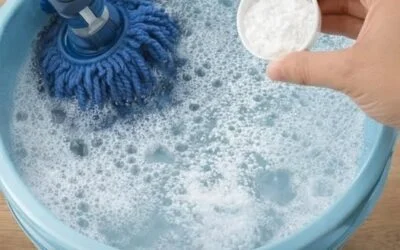
You mop the floor, admire that clean shine, and then somehow the dust seems to return almost immediately. If that sounds familiar, the problem may not be that you’re cleaning too little—it may be what you’re putting in the bucket.
A popular homemade floor-cleaning trick combines warm water, baking soda, white vinegar, and a small amount of dish soap. The original recipe claims it can leave floors clean, fresh-smelling, and easier to maintain.
But there’s an important detail: not every floor should be treated with the same homemade mixture.


The Simple Homemade Floor-Cleaning Mixture
The recipe from the source uses:
- 4–5 liters of warm water
- 1 tablespoon of baking soda
- 1 tablespoon of white vinegar
- 1 tablespoon of mild dish soap
- Optional: 5–10 drops of essential oil
The idea is straightforward: use a diluted mixture to clean everyday dirt and odors without relying on a large amount of commercial cleaner.
But before you mix everything together, there’s something worth knowing.
Don’t Assume Vinegar Is Safe for Every Floor
This is where many homemade cleaning hacks go wrong.
Vinegar is acidic, and repeated exposure can be unsuitable for certain materials, particularly natural stone such as marble, limestone, and travertine.
If you’re not sure what your floor is made of, check the manufacturer’s care instructions first.
For sealed ceramic or porcelain tile, cleaning requirements can be very different from those for hardwood, laminate, vinyl, or natural stone.
The safest cleaning recipe is always the one that’s compatible with your particular floor.


Why the Mixture May Feel Effective
The individual ingredients each have a familiar household-cleaning role.
Baking Soda
Baking soda can help with odors and light grime. Because it’s mildly abrasive, however, rubbing it aggressively isn’t appropriate for every surface.
Dish Soap
A small amount of mild dish soap can help loosen greasy residue.
The important word is small. Too much soap can leave a film that attracts dirt and makes a freshly cleaned floor look dull.
White Vinegar
Vinegar is acidic and can help dissolve certain mineral deposits and residues.
However, its usefulness depends heavily on the surface you’re cleaning. It shouldn’t automatically be treated as an all-purpose floor cleaner.
Essential Oils
A few drops can provide fragrance, but they aren’t necessary for cleaning.
And because essential oils can leave residues or cause problems on some materials, they’re best considered optional rather than essential.
How to Use a Homemade Floor Cleaner More Safely
Instead of immediately covering the entire floor with a new mixture, take a cautious approach.
1. Remove Loose Dirt First
Sweep or vacuum before mopping.
Otherwise, you’re simply pushing dust, hair, and grit around with a wet mop.
2. Test a Small Area
If you’re trying a homemade solution for the first time, test it somewhere inconspicuous.
Look for discoloration, dullness, residue, or any change in the finish.
3. Don’t Soak the Floor
A wet floor isn’t necessarily a cleaner floor.
Use enough solution to clean effectively, but avoid leaving excess water sitting on the surface—especially with wood-based flooring.
4. Don’t Leave Soap Behind
Continue Reading For More Helpful Tips →
Continue Reading →
Continue Reading For More Helpful Tips →
Continue Reading →You Might Also Like...