Air India Flight AI171: The Devastating Crash That Shocked the World
On June 12, 2025, a passenger aircraft departing from Ahmedabad, India, crashed just moments after takeoff, turning an ordinary travel day into one of the most devastating aviation disasters in recent history. The flight, operated by Air India and bound for London Gatwick Airport, was carrying passengers and crew members from several countries.
The Boeing 787-8 Dreamliner crashed into an area near the airport that included buildings associated with a medical college. Emergency crews rushed to the scene as thick smoke rose above the neighborhood, and hospitals prepared to receive injured people.
The tragedy quickly attracted international attention. Families waited desperately for information, investigators began examining the wreckage, and aviation authorities faced the difficult task of determining what had happened during the aircraft’s brief flight.
Although the disaster occurred in June 2025, the story continues to matter because of the lives lost, the questions raised about aviation safety, and the investigation into the circumstances surrounding the crash.
A Flight That Never Reached Its Destination
Air India Flight AI171 was scheduled to travel from Ahmedabad’s Sardar Vallabhbhai Patel International Airport to London Gatwick in the United Kingdom.
The aircraft was a Boeing 787-8 Dreamliner, a long-haul passenger jet used by airlines on international routes. It departed Ahmedabad at approximately 1:38 p.m. local time on June 12, 2025.
According to reports from aviation authorities and the airline, the aircraft was carrying 242 people: 230 passengers and 12 crew members.
The departure initially appeared to be a routine part of the flight’s journey. However, the aircraft encountered trouble shortly after takeoff. Air traffic control received a Mayday call, indicating a serious emergency, before communication with the aircraft ceased.
The plane then crashed into a residential area close to the airport.
The short interval between departure and impact left little time for a response that could bring the aircraft safely back to the ground. Investigators would later need to examine the available flight data, communications, and physical evidence to understand the sequence of events.
The Crash Site and Emergency Response
The impact caused extensive destruction at the crash site. The aircraft struck buildings in a populated area, including part of a medical college complex.
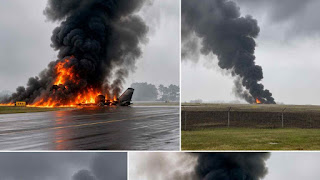
Images from the scene showed smoke, debris, damaged structures, and emergency workers moving through the affected area. Firefighters worked to control the blaze, while police and rescue personnel attempted to reach victims and secure the surrounding streets.
Because the aircraft came down in an inhabited area, the disaster affected more than the people aboard the flight. Individuals on the ground were also killed or injured, and nearby residents faced the consequences of the impact.
Medical teams worked to treat injured people and transport them to hospitals. Authorities also had to coordinate rescue operations, identify victims, communicate with relatives, and preserve evidence for the investigation.
Such operations are complicated after a major aircraft crash because responders must manage fire risks, unstable wreckage, damaged buildings, and the possibility of additional hazards.
The emergency response was therefore focused not only on the passengers and crew but also on the wider community affected by the aircraft’s impact.
The Human Cost of the Disaster
Air India confirmed that 241 of the 242 people aboard the aircraft died. One passenger survived.
The victims included Indian nationals, British nationals, Portuguese nationals, and a Canadian national. Their deaths left families and communities across several countries grieving.
The sole surviving passenger became a central part of international coverage of the disaster. His survival drew attention because of the severity of the crash and the limited number of people who escaped alive.
However, the tragedy extended far beyond the people traveling on the aircraft. People on the ground also lost their lives, bringing the overall death toll to approximately 260.
Behind those figures were individual lives, families, friendships, careers, and plans that ended without warning.
For relatives waiting for information, the hours after the crash were filled with uncertainty. Authorities had to work through the difficult process of identifying victims and notifying families. Air India also announced support measures for those affected by the disaster.
The loss of so many people in a single incident left a lasting impact on the families involved and on the communities connected to them.
What Caused the Aircraft to Crash?
One of the most urgent questions after the disaster was why the aircraft lost the ability to continue its flight.
In the immediate aftermath, the precise cause was not established. Investigators began collecting evidence to reconstruct what happened between takeoff and impact.
Aviation accident investigations typically examine several sources of information. These may include the flight data recorder, which records aircraft performance and system information, and the cockpit voice recorder, which captures sounds and conversations in the cockpit.
Investigators can also review air traffic control recordings, aircraft maintenance records, weather conditions, engine and system performance, and physical evidence recovered from the wreckage.
Witness accounts and video recordings may help establish the timing and sequence of events, but they cannot independently answer every technical question.
It is important not to confuse early speculation with a verified finding. Mechanical problems, system failures, operational factors, and other possibilities may be considered during an investigation, but a cause should not be declared without supporting evidence.
The purpose of the investigation is to determine what happened, identify any contributing factors, and establish whether changes could reduce the risk of similar accidents in the future.
Why Aviation Investigations Take Time
After a major aircraft accident, the public often expects immediate answers. Yet determining the cause of a complex aviation disaster can require months or longer.
Investigators must examine large amounts of technical information and determine how different systems behaved during the flight. They may need to test components, analyze recorder data, compare maintenance documentation, and reconstruct the aircraft’s final moments.
Evidence must also be interpreted in context. A warning signal or system abnormality, for example, may be important, but investigators need to understand when it occurred and how it related to other events.
International accidents can involve cooperation among several organizations. In the Air India crash, Indian authorities led the investigation, while specialists from other countries provided assistance.
The aircraft’s manufacturer and other technical organizations may also contribute information relevant to understanding the event.
A careful investigation is not simply about assigning blame. Its findings can help airlines, manufacturers, regulators, and flight crews identify risks and improve safety procedures.
Until investigators publish reliable conclusions, claims about the exact cause should be treated cautiously.
What the Disaster Means for Aviation Safety
Commercial aviation remains one of the most closely regulated forms of transportation, but no complex system can be considered completely free of risk.
Major accidents often lead to renewed examination of aircraft systems, maintenance practices, operational procedures, emergency training, and regulatory oversight.
The Air India disaster prompted international attention because it involved a modern long-haul aircraft and occurred shortly after takeoff. The investigation was therefore important not only to the airline and the families affected but also to the wider aviation industry.
Safety improvements depend on understanding the evidence rather than drawing conclusions from the severity of an accident alone.
If an investigation identifies a technical problem, authorities may consider inspections, repairs, design changes, or revised procedures. If operational factors contributed, training and procedures may also be examined.
The appropriate response depends on the findings. It would be premature to assume that one particular fault or action caused the crash without reliable confirmation.
The broader lesson is that aviation safety relies on continuous monitoring, technical analysis, communication, and a willingness to learn from accidents.
How Air India Responded
Following the crash, Air India expressed condolences to the victims’ families and announced support for those affected. The airline also confirmed information about the people aboard the aircraft and cooperated with authorities investigating the disaster.
The company and its parent group announced financial assistance measures for victims’ families and the survivor. Support was also provided to families dealing with arrangements, information, and the consequences of the tragedy.
For an airline, a major accident creates responsibilities that extend beyond its immediate operations. It must communicate with affected families, coordinate with authorities, respond to questions, and address the needs of those whose lives have been changed by the event.
The airline’s response was part of a wider effort involving government agencies, emergency services, medical teams, and other organizations.
Even with assistance, the practical and emotional consequences of such a disaster cannot be resolved quickly. Families may face a long period of grieving, and investigations may continue long after the emergency response has ended.
Why Accurate Reporting Matters
The Air India crash also illustrates why dates, passenger counts, and official information matter when reporting major disasters.
Online headlines sometimes reuse older events while presenting them as breaking news. A report may describe a plane carrying more than 244 people as having “just crashed,” even though its wording resembles coverage of an earlier incident.
The original Air India disaster happened on June 12, 2025. It should not be described as a newly occurring crash in June 2026 without evidence of a separate event.
Readers can check aviation reports by looking for the airline, flight number, location, date, and confirmation from reliable news organizations or aviation authorities.
These details are especially important when a story includes claims about deaths, survivors, or the possible cause of an accident. Sharing inaccurate information can cause unnecessary fear and distress among people who believe someone they know may have been aboard.
Responsible reporting preserves the distinction between confirmed facts and speculation while treating victims and their families with respect.
The Lasting Impact of Flight AI171
The crash of Air India Flight AI171 was a profound tragedy that affected passengers, crew members, people on the ground, and families across several countries.
Its consequences extended beyond the immediate destruction. The disaster prompted questions about the aircraft’s final moments, the effectiveness of emergency responses, and the lessons that could emerge from the investigation.
The loss of 260 lives, including people on the ground, remains the central fact of the tragedy. Any discussion of the crash should begin with the people who died and the families who continue to live with the consequences.
Investigations into aviation disasters are difficult, but their findings can play an important role in improving safety and preventing future accidents.
The public deserves clear information about what is known, what remains uncertain, and what investigators ultimately establish.
The Bottom Line
Air India Flight AI171 crashed shortly after takeoff from Ahmedabad on June 12, 2025, while traveling to London Gatwick. The aircraft was carrying 242 people, and all but one person aboard died. People on the ground were also killed, bringing the overall death toll to approximately 260.
The disaster led to an extensive emergency response and a complex investigation into the circumstances surrounding the crash.
Although the incident continues to attract attention, it is important to distinguish the real 2025 tragedy from online headlines that misleadingly present it as a new crash.
Accurate reporting, careful investigation, and respect for the victims are essential to understanding what happened and ensuring that the lessons learned contribute to safer air travel.