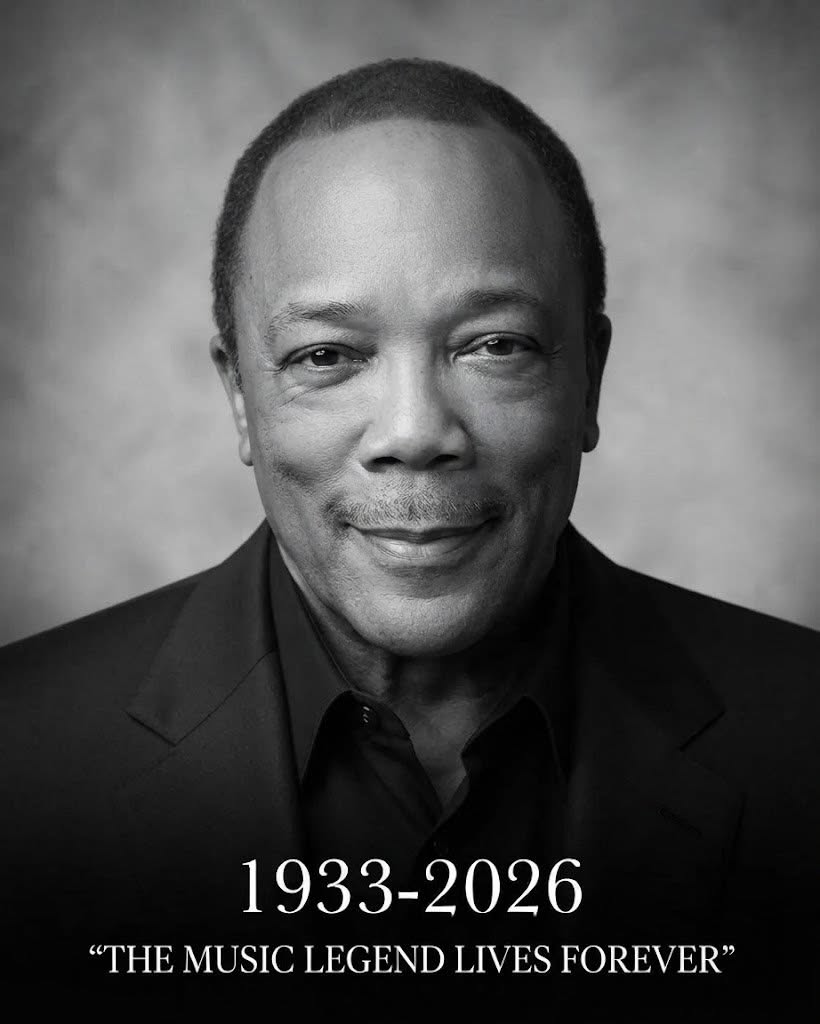
Quincy Jones was one of the most influential music producers, composers, arrangers, and musicians in American history. Throughout a career that spanned more than seven decades, he helped shape the sound of jazz, pop, soul, and R&B while working with some of the most celebrated artists in the world.
From producing landmark albums for Michael Jackson to collaborating with Frank Sinatra and organizing the charity anthem “We Are the World,” Jones made a lasting contribution to music and entertainment. His achievements extended beyond the recording studio into film, television, and philanthropy, establishing him as a pioneering figure whose influence reached generations of artists.
Although Quincy Jones passed away on November 3, 2024, at the age of 91, his music and creative legacy continue to inspire audiences around the world.
Early Life and Musical Beginnings
Quincy Delight Jones Jr. was born on March 14, 1933, in Chicago, Illinois. His family later moved to Washington State, where his interest in music developed during his teenage years.
Growing up, Jones discovered the trumpet and began exploring different musical styles. He also developed an interest in arranging and composing, skills that would eventually distinguish him from many of his contemporaries.
During his youth, Jones formed an important friendship with Ray Charles, who was also developing his musical career. Their shared passion for music helped encourage Jones to pursue his ambitions.
After attending Seattle University, Jones continued his musical education at what was then known as Schillinger House, later renamed Berklee College of Music. However, his professional opportunities soon began to grow, leading him to leave formal studies and gain experience as a working musician.
These early experiences helped him develop the technical knowledge, discipline, and creative vision that would become central to his career.
Building a Reputation in Jazz
During the 1950s, Jones established himself as a talented trumpet player, arranger, and bandleader. He worked with respected musicians, including Lionel Hampton, Count Basie, and Dizzy Gillespie, gaining valuable experience in orchestration and live performance.
In 1956, he joined Gillespie’s band and later served as its musical director during international tours. The experience strengthened his leadership abilities and expanded his understanding of music across different cultures.
Jones also spent time in Paris, where he studied composition with renowned music teacher Nadia Boulanger. His European experience allowed him to explore orchestral writing and refine his approach to arranging.
As his reputation grew, Jones became known for combining technical precision with an innovative musical sensibility. Rather than limiting himself to one genre, he explored opportunities to bring different sounds and traditions together.
This versatility would become one of the defining characteristics of his work.
Breaking Barriers in the Music Industry
Quincy Jones achieved another important milestone when he advanced into executive leadership at Mercury Records. He became one of the first Black executives to hold a senior position at a major American record company, helping open doors in an industry where opportunities for Black professionals were often limited.
His work at Mercury demonstrated that his talents extended far beyond performance. Jones understood the creative and commercial sides of music, including artist development, production, and the importance of connecting recordings with audiences.
In the 1960s, he also began making a significant impact as a film composer. His work included scores for movies such as The Pawnbroker, In the Heat of the Night, and The Italian Job.
He later contributed music to television productions, including the acclaimed miniseries Roots, for which he received an Emmy Award.
These achievements established Jones as a versatile creative professional who could move confidently between jazz clubs, recording studios, film sets, and television productions.
Quincy Jones and Michael Jackson: A Historic Partnership
One of the most celebrated chapters of Jones’s career was his collaboration with Michael Jackson.
The two first worked together on the 1978 film The Wiz, in which Jackson appeared alongside Diana Ross. Their professional relationship continued when Jones produced Jackson’s solo album Off the Wall, released in 1979.
The album helped establish Jackson as a major solo star, blending pop, disco, funk, and R&B into a distinctive sound. Jones’s production brought together musicians, songwriters, and arrangers to create a cohesive collection of songs that appealed to a broad audience.
Their partnership reached another level with Thriller, released in 1982. The album became a landmark in popular music, producing several internationally recognized songs and helping transform the role of music videos in the entertainment industry.
Jones and Jackson later worked together on Bad, released in 1987, continuing a collaboration that shaped the sound of mainstream pop during the era.
Jones’s contribution involved more than recording songs. He helped guide arrangements, coordinate musicians, refine performances, and bring together the many creative elements required to produce a successful album.
Their work remains an important part of music history and continues to influence producers and performers.
“We Are the World” and His Humanitarian Work
In 1985, Jones played a central role in organizing the recording of “We Are the World,” a charity song written by Michael Jackson and Lionel Richie.
The project brought together a remarkable group of prominent American musicians and singers to raise money for famine relief in Ethiopia. Coordinating so many well-known performers required careful planning, strong leadership, and an ability to manage different personalities in a demanding recording environment.
Jones’s experience as a producer and arranger made him particularly well suited to the task. The song became a major international success and demonstrated how the music industry could unite around a humanitarian cause.
His commitment to charitable work continued throughout his life. Jones supported initiatives connected to education, cultural exchange, and opportunities for young people, using his public profile to encourage positive change.
For him, music was not simply a form of entertainment. It could also serve as a bridge between communities and a way to bring attention to important social issues.
Success Beyond Music: Film and Television
Jones’s creative ambitions extended well beyond music production. He became an influential figure in film and television, helping develop projects that reached audiences around the world.
One of his major film achievements was his involvement in The Color Purple, the 1985 film directed by Steven Spielberg. The production received significant attention and earned numerous Academy Award nominations.
In television, Jones became closely associated with The Fresh Prince of Bel-Air, the popular sitcom that helped launch Will Smith’s acting career. Through his entertainment company, Jones helped bring the series to audiences and expanded his influence as a producer.
He also contributed to other television projects and entertainment ventures, demonstrating his ability to recognize creative opportunities across different media.
Beyond production, Jones helped shape the business side of entertainment through record labels, publishing projects, and partnerships that supported artists and creative talent.
His career illustrated how a musician could build a lasting presence throughout the entertainment industry without being confined to a single role.
Awards and Major Achievements
Quincy Jones received widespread recognition for his contributions to music, film, and television.
Over his lifetime, he earned 28 Grammy Awards from 80 nominations, placing him among the most celebrated figures in Grammy history. He also received the Grammy Legend Award and the Recording Academy’s MusiCares Person of the Year honor.
Other major recognitions included the National Medal of Arts, which he received in 2010, and his induction into the Rock & Roll Hall of Fame in 2013.
Jones also earned an Emmy Award for his work on Roots and received multiple Academy Award nominations throughout his career. In 2024, the Academy of Motion Picture Arts and Sciences honored him with an honorary Oscar recognizing his extraordinary contributions to filmmaking.
These honors reflected the breadth of his achievements and the respect he earned from professionals across the entertainment world.
Quincy Jones’s Personal Life and Family
Alongside his demanding professional life, Jones built a large family and maintained relationships that were important to him.
He was the father of seven children, including actress and filmmaker Rashida Jones and fashion designer Kidada Jones. His children pursued careers in different creative fields, reflecting the artistic environment in which they grew up.
Although his public career frequently placed him in the spotlight, Jones also spoke about the importance of learning, personal development, and maintaining curiosity throughout life.
His experiences gave him a broad perspective on creativity, leadership, and collaboration. Over the years, he shared lessons from his career through interviews, public appearances, and writing, encouraging aspiring artists to keep learning and remain open to new ideas.
The Passing of a Musical Icon
Quincy Jones died on November 3, 2024, at his home in Los Angeles, California. He was 91 years old.
News of his passing prompted tributes from musicians, actors, cultural institutions, and industry organizations. Many remembered not only his remarkable body of work but also his role as a mentor and collaborator who helped other artists develop their talents.
His career crossed generations and musical boundaries. From the jazz orchestras of the 1950s to the pop recordings that dominated the 1980s and the entertainment projects that followed, Jones continually adapted to changing audiences and technologies.
His death marked the end of an extraordinary life, but it did not diminish the significance of his contributions.
The Lasting Legacy of Quincy Jones
Quincy Jones helped redefine what a music producer could accomplish. He combined musical knowledge with business insight, creative experimentation, and an exceptional ability to bring talented people together.
His work with Michael Jackson influenced generations of pop artists, while his jazz arrangements and film scores demonstrated the possibilities of combining different musical traditions. His contributions to television and film expanded his cultural reach, and his humanitarian projects showed how entertainment could support causes beyond the stage.
For aspiring musicians and producers, his career offers important lessons about versatility, collaboration, persistence, and the value of continued learning.
More than a celebrated producer, Jones was a creative force whose work connected genres, generations, and cultures. His influence remains present in the recordings he helped create, the artists he inspired, and the many people who continue to discover his music.
Quincy Jones’s legacy is a reminder that great music can do more than entertain. It can shape culture, bring people together, and leave a lasting mark on the world.