
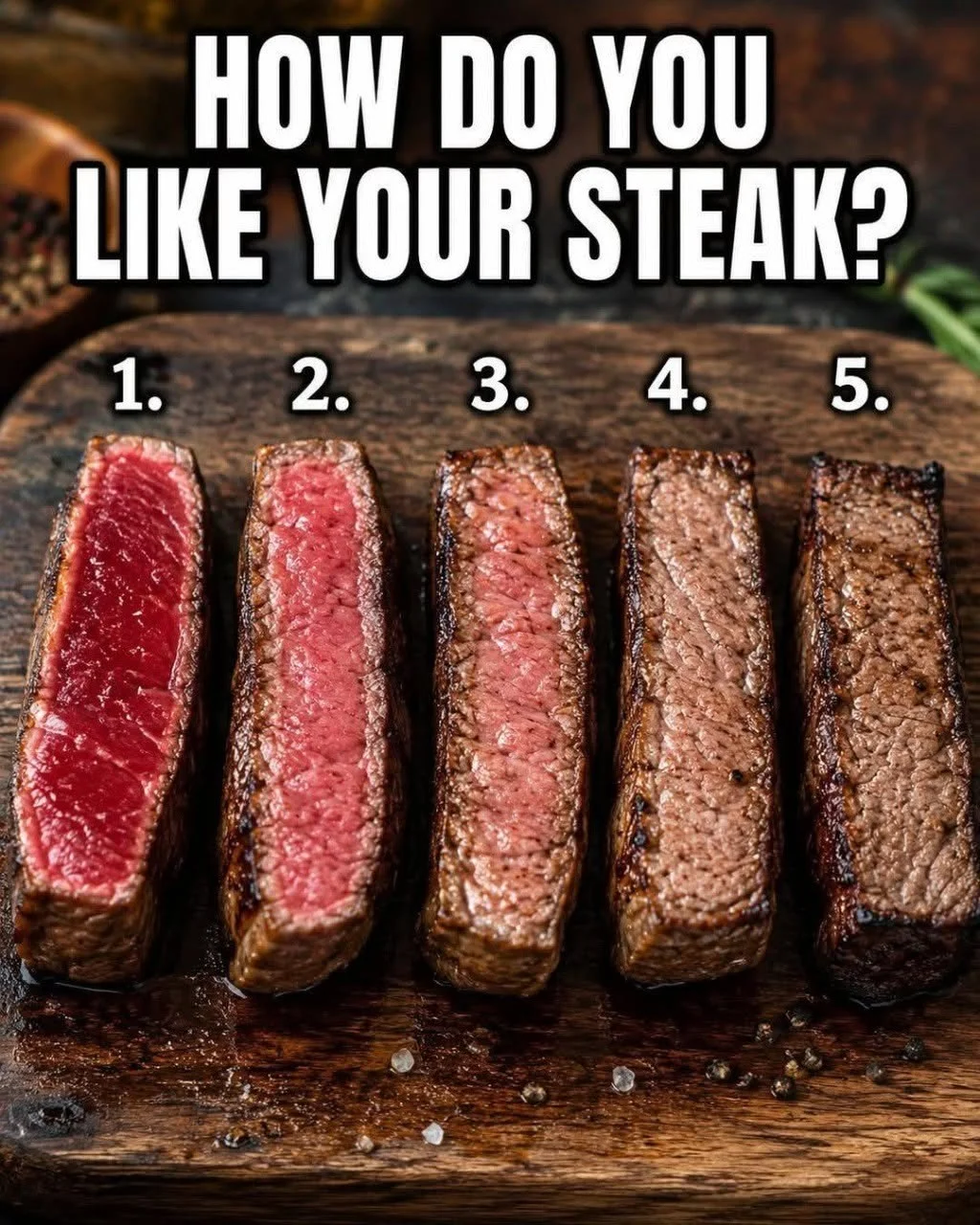
Ask five people how they like their steak, and you may get five completely different answers.
One person wants a deep red center and a quick sear. Another wants that classic warm pink middle. Someone else won’t touch a steak unless it’s cooked all the way through.
And honestly, that’s the fun of steak.
There isn’t one doneness that’s right for everyone. The trick is knowing what changes as the steak cooks—and how to get the result you actually want.
Here’s what to expect from rare through well done, plus a few simple tips for getting a steak that’s browned on the outside and cooked the way you like it inside.
1. Rare
Rare steak has a deeply browned exterior while the center remains red and relatively cool.
Typical cooking target: around 120–125°F before any additional temperature rise from resting.
What it feels like
- Very soft texture
- Very juicy center
- Deep red interior
- Strong beef flavor
- Minimal internal cooking
Rare is especially popular with people who prioritize a very tender, soft bite.
Naturally tender cuts such as filet mignon can work particularly well at lower doneness levels because the meat doesn’t need prolonged cooking to become tender.
One important point: color isn’t a reliable food-safety test. If you’re cooking for safety, use an instant-read thermometer rather than judging the center by appearance.
2. Medium Rare
For many steak lovers, medium rare hits a particularly appealing balance.
The outside develops a rich brown crust while the center remains warm and red to reddish-pink.
Typical cooking target: around 130–135°F before resting.
Why it’s so popular
Medium rare gives you:
- A nicely browned crust
- A warm, juicy center
- A tender bite
- Plenty of beef flavor
- A good balance between browning and moisture
Ribeye, strip steak, and sirloin are all popular choices for this style of cooking.
If someone tells you they want a “classic steakhouse-style” steak, medium rare is often what they have in mind.
3. Medium
Medium steak has a noticeably pink center, but it’s warmer and firmer than medium rare.
Typical cooking target: around 140–145°F.
This is a good middle ground for people who enjoy some pink but don’t want a red center.
It’s also useful when you’re cooking for a family or group where preferences vary. Medium is far enough from rare to feel more fully cooked while still retaining some juiciness.
4. Medium Well
Medium well has only a small amount of pink remaining in the center.
Typical cooking target: around 150–155°F.
The texture becomes firmer as more moisture is lost during cooking.
If you like a steak that’s mostly cooked through but don’t want it completely well done, medium well can be a comfortable compromise.
Because there’s less internal moisture, sauces, compound butter, sautéed mushrooms, or a flavorful pan sauce can make a medium-well steak especially enjoyable.
5. Well Done
A well-done steak is cooked through with no visible pink center.
Typical cooking target: 160°F or higher.
The longer cooking time can make steak firmer and drier, particularly with leaner cuts.
That doesn’t mean well-done steak has to be boring.
A flavorful sauce, mushroom topping, caramelized onions, or garlic-herb butter can add moisture and richness.
If well done is how you enjoy your steak, that’s your steak.
🌡️ Don’t Judge Doneness by Color Alone
This is one of the biggest mistakes people make when cooking steak.
A steak can look pink for reasons that don’t necessarily tell you its exact internal temperature.
Likewise, cutting into the steak repeatedly just to check the color can release juices and make cooking less precise.
An instant-read thermometer is much more reliable.
Insert the thermometer into the thickest part of the steak, approaching from the side if possible.
And remember that the steak can continue cooking slightly after you remove it from the heat.
That’s known as carryover cooking.
⚠️ A Quick Food-Safety Note
There’s an important distinction between traditional steak-doneness preferences and food-safety recommendations.
The USDA recommends cooking whole cuts of beef to 145°F (63°C) and allowing them to rest for at least 3 minutes.
That means traditional rare or medium-rare temperatures are below the USDA’s recommended minimum internal temperature for whole cuts of beef.
If you’re cooking for someone who is more vulnerable to foodborne illness, it’s especially important to follow food-safety guidance rather than relying on appearance or personal preference.
🔥 How to Get a Better Steak at Home
Doneness is only part of the equation.
A perfectly cooked steak can still be disappointing if the outside never develops a good crust.
1. Pat the Steak Dry
Before cooking, use paper towels to remove excess surface moisture.
A dry surface browns more effectively than a wet one.
2. Season Simply
You don’t need a complicated spice mixture.
Salt and freshly ground black pepper are enough for a great steak.
Season evenly rather than dumping a large amount of seasoning in one spot.
3. Preheat Your Pan or Grill
A hot cooking surface helps create the deep brown crust that gives steak so much of its flavor.
A cast-iron skillet works particularly well for stovetop cooking.
4. Don’t Keep Flipping It Constantly
You don’t need to fuss over the steak every few seconds.
Give the cooking surface enough time to develop good browning, then turn the steak when appropriate.
5. Use a Thermometer
If you’re serious about getting the doneness you want consistently, this is probably the most useful tool you can have.
Instead of guessing whether the steak is medium or medium rare, check the internal temperature.
6. Let It Rest
Once the steak comes off the heat, give it a few minutes to rest before slicing.
This also gives the internal temperature a chance to settle.
🥩 Which Cut Works Best?
Different cuts bring different qualities to the table.
Ribeye: Richly marbled and flavorful. Excellent when you want a juicy, beefy steak.
New York strip: A great balance of tenderness and beef flavor.
Filet mignon: Exceptionally tender and relatively lean, with a mild flavor.
Sirloin: Generally more affordable and versatile for everyday steak dinners.
T-bone: Gives you two different eating experiences because it contains both strip and tenderloin.
The best doneness can also depend on the cut.
A heavily marbled ribeye may remain enjoyable at a higher doneness because of its fat content, while a leaner steak can become dry more quickly.
🧈 Easy Ways to Finish Your Steak
Once your steak is cooked, you don’t need much to make it special.
Try:
- Garlic-herb butter
- Sautéed mushrooms
- Caramelized onions
- Peppercorn sauce
- Roasted garlic
- Chimichurri
- Creamy mashed potatoes
- Roasted asparagus
- Crispy roasted potatoes
For a classic comfort-food dinner, sliced steak with mashed potatoes and mushroom sauce is hard to beat.
Steak Doneness at a Glance
| Doneness | Typical Target | Center |
|---|---|---|
| Rare | 120–125°F | Red and cool |
| Medium Rare | 130–135°F | Warm, red-pink |
| Medium | 140–145°F | Warm, pink |
| Medium Well | 150–155°F | Slightly pink |
| Well Done | 160°F+ | Cooked through |
Important: These are commonly used doneness targets, not a substitute for food-safety guidance. The USDA recommends whole cuts of beef reach 145°F followed by at least a 3-minute rest.
So, What’s the Best Steak Doneness?
The honest answer is simple:
The best doneness is the one you actually enjoy.
Some people love the tenderness of rare steak. Others prefer the balance of medium rare. Medium offers a familiar middle ground, while medium well and well done appeal to people who prefer less pink.
There’s no prize for choosing the “right” answer.
What matters more is learning how temperature changes the texture and moisture of the steak—and then cooking it intentionally instead of guessing.
Now I’m Curious…
If you had these five steaks sitting in front of you, which one would you reach for first?
🥩 1 — Rare
🥩 2 — Medium Rare
🥩 3 — Medium
🥩 4 — Medium Well
🥩 5 — Well Done
Drop your number in the comments. I’m curious which one your readers choose most often.







