
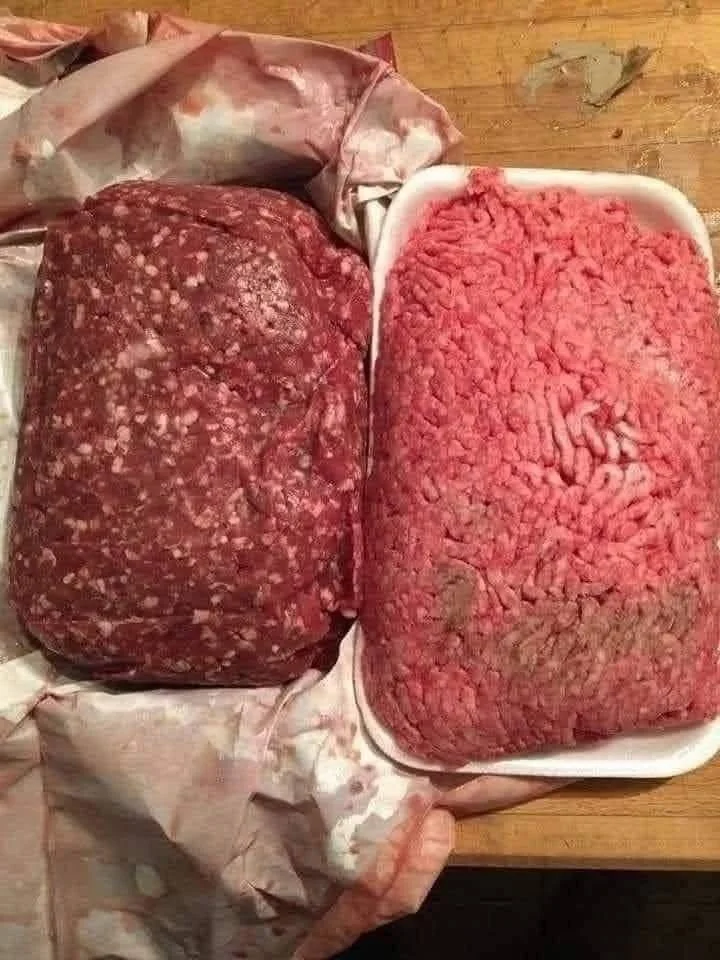
You pick up a package of ground beef at the supermarket and see a familiar question in the back of your mind: How do I really know what I’m buying?
Online rumors about “mystery meat,” condemned animals, foreign meat being secretly relabeled, or even horse meat can make an ordinary trip to the meat aisle sound suspicious.
But the reality is more reassuring—and more complicated—than those viral claims suggest.
In the U.S. and Canada, federally regulated meat production operates under inspection systems designed to determine whether animals and meat are suitable for human consumption. That doesn’t mean the food system is perfect, but it does mean that the idea of ordinary supermarket meat being routinely made from unidentified or condemned animals doesn’t match how regulated production is supposed to work.


How Meat Is Inspected in the United States
In the United States, the USDA’s Food Safety and Inspection Service (FSIS) is responsible for federal inspection of commercial meat products.
Federal law requires inspection of meat from cattle, sheep, swine and goats intended for human consumption. Animals are examined before slaughter, and carcasses are inspected afterward. Meat that does not meet the requirements cannot simply be marked as inspected and passed for human consumption.
That distinction is important.
A claim such as “anything can end up in supermarket meat” ignores the inspection and disposition system that exists before meat reaches the retail shelf.
Canada Has Its Own Inspection System
Canada uses the Canadian Food Inspection Agency, or CFIA, for federal oversight of meat produced in federally regulated establishments.
CFIA procedures include ante-mortem inspection before slaughter and post-mortem inspection of carcasses and their parts. Animals showing abnormalities can be held for veterinary assessment, separated, or condemned depending on the circumstances.
In other words, the process isn’t simply “animal arrives → meat goes into packages.”
There are inspection points designed to identify animals or carcasses that should not enter the edible food supply.


So, Is Ground Beef “Mystery Meat”?
Not in the way the phrase is often used online.
Ground beef can contain meat from multiple cattle, and processors may combine different cuts and trimmings to produce a particular fat-to-lean ratio.
That doesn’t mean the contents are unidentified or secretly substituted with another species.
The meat used in regulated production is subject to applicable inspection and labeling requirements.
And there’s another important point: grinding doesn’t automatically make meat lower quality or unsafe. The important questions are where it came from, how it was handled, whether it was inspected when required, and whether it has been stored and cooked safely.
What About the Horse-Meat Story?
Horse meat is one of those subjects that repeatedly appears in viral posts about supermarket beef.
There have been genuine cases of horse meat being fraudulently sold as other meat in international food supply chains. But those scandals should not automatically be presented as evidence that ordinary U.S. supermarket ground beef routinely contains horse meat.
A past food-labeling scandal in Europe is not proof that the same thing is happening in regulated U.S. or Canadian retail beef today.
The stronger claim needs stronger evidence.
What Does “Product of USA” Actually Mean?
This is one area where the original article needs an important update.
USDA rules for the voluntary “Product of USA” claim were changed. Under the current rule, the claim can be used on eligible single-ingredient FSIS-regulated products when the product is derived from animals born, raised, slaughtered and processed in the United States.
That’s more specific than simply saying that meat was packaged or processed somewhere in the United States.
So if country of origin matters to you, don’t assume that every U.S.-sounding label means exactly the same thing. Read the wording carefully.


What Does “Natural” Mean?
The word natural can also be misunderstood.
For USDA-regulated meat and poultry products, “natural” does not mean:
- Organic
- Grass-fed
- Hormone-free
- Antibiotic-free
- Humanely raised
Instead, USDA’s definition generally relates to the product being minimally processed and containing no artificial ingredients or added color, with the label explaining what the claim means.
So “natural” shouldn’t be treated as a complete description of how an animal was raised.
Organic Is a Different Claim
Organic certification is a separate standard.
If you’re specifically looking for certified organic meat, look for the appropriate organic labeling rather than assuming that “natural” means organic.
The same principle applies to other production claims. Statements such as “raised without antibiotics” or “raised without added hormones” have specific meanings and supporting requirements under USDA labeling rules.
What About Antibiotics?
This is a legitimate area of public-health concern, but it needs to be separated from the “mystery meat” story.
Antibiotic use in food-producing animals and the broader issue of antimicrobial resistance are real subjects of scientific and public-health discussion.
If this is something you care about when shopping, look for an appropriate verified label claim rather than assuming that every package was produced under the same conditions.
The important thing is not to turn a legitimate concern about antibiotic resistance into an unsupported claim that supermarket meat is inherently unsafe.
Are There Still Things Consumers Should Watch?
Absolutely.
Government inspection doesn’t mean that every possible food-safety problem disappears.
Food can still become contaminated through improper handling, storage or preparation. Recalls can still happen. Labels can still be confusing. And food companies can make mistakes.
That’s why recall systems and consumer food-safety practices matter.


The existence of a recall doesn’t prove that the entire meat supply is unsafe. In fact, recalls are one of the mechanisms used to remove potentially unsafe products from the marketplace.
How to Shop More Confidently
You don’t need to become a food-industry expert every time you buy meat.
A few simple habits can help:
- Read the package rather than relying on viral claims.
- Check the country-of-origin or production claims if they matter to you.
- Understand the difference between “natural,” “organic” and antibiotic-related claims.
- Look for intact packaging.
- Keep raw meat properly refrigerated.
- Follow the package’s safe-handling instructions.
- Cook ground meat to a safe internal temperature.
- Pay attention to official recall notices.
If you’re buying from a butcher counter, you can also ask where the meat comes from and how it was processed.
The Bigger Picture
The supermarket meat system isn’t flawless, and consumers are right to ask questions.
But there’s a major difference between reasonable skepticism and believing that ordinary retail meat is secretly filled with condemned animals or unidentified species.
In federally regulated U.S. facilities, meat intended for commercial sale is subject to inspection requirements, while Canada’s federal system similarly includes ante-mortem and post-mortem inspection and procedures for dealing with suspect or condemned animals.
That doesn’t guarantee that every package will be perfect.
It does mean that the sensational version of the story leaves out a very important part of the picture.
The Bottom Line
Supermarket meat deserves attention—but not panic.
Ground beef can come from multiple animals without being “mystery meat.” A product labeled “natural” isn’t automatically organic, and a U.S.-origin claim has a specific regulatory meaning. Meanwhile, genuine food-safety concerns such as contamination, recalls and antimicrobial resistance are much more useful things for consumers to understand than unsupported rumors.
The smartest approach is simple:
Check the label, understand what the claims actually mean, follow safe food-handling practices, and rely on official recall information rather than viral fear.
Curiosity is useful.
But when it comes to what’s actually in your shopping cart, evidence is much more useful than suspicion.