
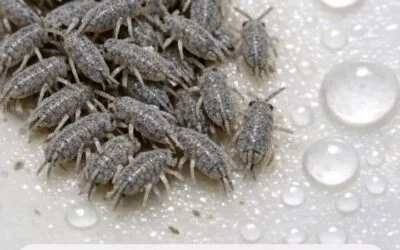
If you’ve noticed what looks like a layer of tiny gray specks moving around your bathtub, sink, or shower—and then suddenly jumping when you disturb them—there’s a good chance you’re looking at springtails. They can appear in surprisingly large numbers, which makes them look much more alarming than they really are.
The important part is this: the little creatures usually aren’t the real problem. Moisture is. Springtails are strongly associated with damp environments, so finding them indoors is a useful reason to look for excess moisture, condensation, organic debris, or a hidden leak.


What Are Those Tiny Gray Bugs?
Springtails are extremely small creatures, generally around 1–2 millimeters long, and they can be gray, black, white, or other colors depending on the species.
Their most noticeable feature is their ability to jump or fling themselves away when disturbed. They don’t have wings, and they aren’t capable of flying.
That jumping behavior is often what makes someone notice them in the first place.
You may wipe the side of a sink and see nothing unusual, only to notice dozens of tiny specks moving again a few minutes later.
Why Are They in the Bathtub or Sink?
Springtails need moisture.
Bathrooms provide plenty of it through:
- Wet sinks and tubs
- Condensation
- Damp grout or caulk
- Poor ventilation
- Moisture beneath cabinets
- Plumbing leaks
- Damp organic material
University extension specialists specifically note that springtails are commonly found around sinks, bathtubs, and other moist indoor areas.
They can also enter from outdoors when conditions change. For example, outdoor soil may become too dry, encouraging springtails to move toward a building where moisture is easier to find.
So seeing them around a drain doesn’t automatically mean they’re living inside your plumbing.
Does This Mean You Have a Plumbing Leak?
Not necessarily.
A plumbing leak is one possibility, but it isn’t the only explanation.
Springtails can show up simply because a bathroom stays humid or because water doesn’t dry quickly enough. They can also come indoors from moist soil, mulch, houseplants, cracks, or gaps around the structure.
Still, if you’re seeing hundreds of them repeatedly, it’s worth investigating the moisture source rather than simply cleaning them away.
Check Under the Sink
Look around:
- Supply lines
- Shutoff valves
- Drain connections
- The bottom of the cabinet
- Nearby flooring
- The wall behind the plumbing
Feel for dampness and look for staining, swelling, peeling material, or a musty smell.
Check Around the Tub and Shower
Pay attention to:
- Cracked or deteriorating caulk
- Damp flooring
- Water collecting outside the tub
- Persistent condensation
- Areas that stay wet long after bathing
You don’t need to assume there’s a major hidden leak. You’re simply looking for places where moisture is lingering.
Why Are There So Many of Them?
Springtails can occur in very large numbers when conditions are favorable.
They feed on things such as fungi, algae, pollen, and decaying organic material, so a damp area that also has suitable food can support them.
That explains why you might see a few one day and suddenly find what looks like hundreds of tiny jumping specks later.
The number can be unsettling, but the population itself doesn’t necessarily indicate that the insects are damaging your house.
Are Springtails Dangerous?
For most homeowners, this is the reassuring part:
Springtails do not bite or sting people, and they aren’t considered a threat to household furnishings or property.
They’re primarily a nuisance when they turn up indoors.
Their presence is more useful as a clue about moisture than as a reason to panic about an infestation.
How to Get Rid of Them
The most effective approach isn’t simply killing the visible bugs.
It’s making the area less attractive to them.
1. Remove the Visible Ones
For a small number, you can simply wipe them up or vacuum them.
Utah State University Extension recommends vacuuming springtails that enter buildings.
This gives you an immediate cleanup without introducing unnecessary insecticide into a bathroom.
2. Dry the Area Thoroughly
After bathing or showering, allow the room to dry as much as practical.
Use the bathroom exhaust fan when appropriate, improve airflow, and don’t leave wet items sitting on the floor.
If humidity is consistently high, a dehumidifier can also help. Moisture reduction is one of the most important steps for controlling springtails indoors.
3. Look for the Moisture Source
If they keep coming back, this step matters more than repeated cleaning.
Check for:
- Leaking plumbing
- Condensation
- Wet flooring
- Damp cabinets
- Water getting behind the tub or shower
- Moisture around windows
- Overwatered houseplants nearby
If you find an actual plumbing leak, repair it rather than treating the insects as the main problem.
4. Clean Damp Areas
Remove accumulated dirt, organic debris, and anything that is staying wet.
Springtails can feed on fungi, algae, and decaying organic material, so keeping the affected area clean and dry removes some of the conditions they favor.
5. Check Around the Outside of the House
Continue Reading For More Helpful Tips →
Continue Reading →
Continue Reading For More Helpful Tips →
Continue Reading →