
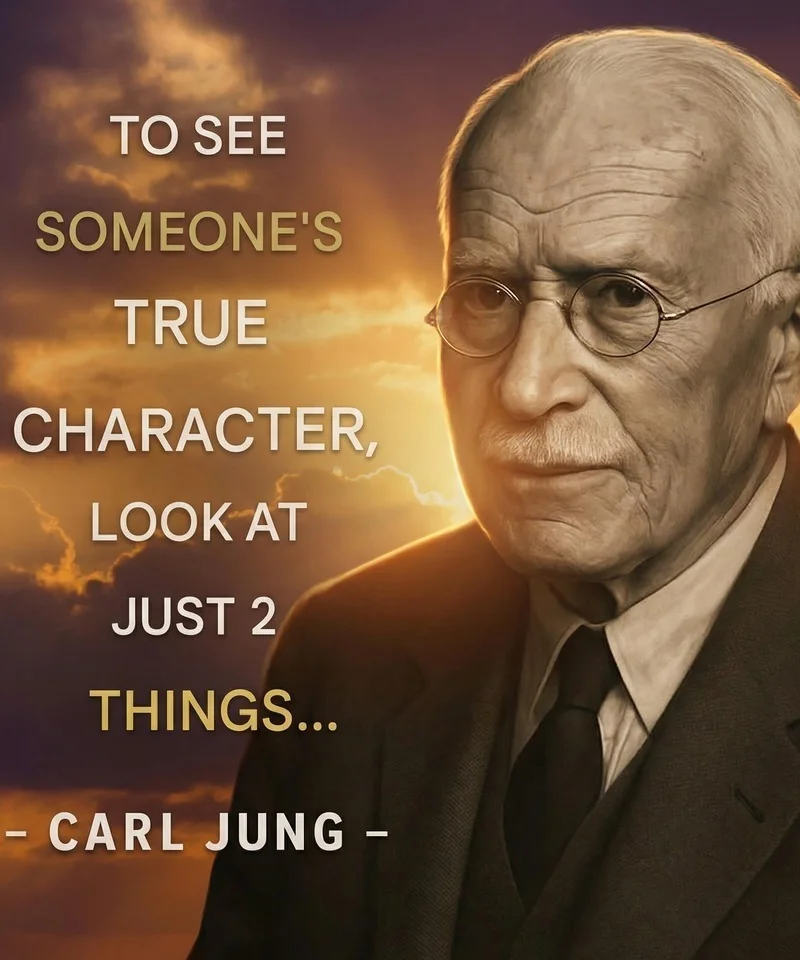
You can know someone for years and still misunderstand who they really are. Then, in one ordinary moment, something happens: a waiter makes a mistake, plans fall apart, or the person doesn’t get what they expected.
Suddenly, you see a side of them that polite conversations never revealed.
That doesn’t mean one bad reaction defines an entire personality. But everyday behavior—especially when there is nothing to gain—can provide useful clues about someone’s character.


1. Watch How They Treat People Who Can’t Give Them Anything
One of the clearest clues is how someone behaves toward people they don’t need to impress.
Pay attention to interactions with waiters, cashiers, cleaners, strangers, receptionists, or people who have less social or professional power.
Does the person remain polite when nobody important is watching?
Do they say thank you?
Do they become impatient over small mistakes?
Do they speak to people as equals, or only show respect when there’s something to gain?
These moments can tell you something about their habits and values.


Someone who consistently treats others with patience and basic dignity may be showing genuine consideration rather than simply performing good manners for an audience.
But there’s an important caveat: one awkward interaction isn’t enough to judge somebody’s entire character.
Everyone has bad days.
The useful clue is the pattern.
2. Watch What Happens When Things Don’t Go Their Way
The second revealing moment comes when frustration enters the picture.
A delayed flight, a canceled plan, a mistake at work, losing a game, getting stuck in traffic—small disappointments can reveal how someone manages difficult emotions.
Do they immediately blame someone else?
Do they insult people?
Do they become aggressive?
Or can they pause, acknowledge the problem and look for a solution?


Emotional self-control doesn’t mean never becoming angry or disappointed.
A healthy response can still include frustration. The difference is often what happens after the emotion appears.
Someone might say, “I’m really annoyed about this,” take a moment, and then continue calmly.
Another person might turn that frustration into insults, blame or intimidation.
That difference can tell you considerably more than whether someone is usually charming.
Why These Moments Can Be So Revealing
When everything is going smoothly, most people can present themselves well.
They know how to smile, make conversation and say the right things.
Pressure changes the situation.
When there is no obvious reward for being kind—or when something goes wrong—people may fall back on their established habits.
That’s why small, ordinary moments can sometimes be more informative than impressive speeches about someone’s values.
How They Talk About Other People Matters Too
Listen to the way someone talks about people who aren’t present.
Do they constantly ridicule friends, coworkers and strangers?
Do they share private information for entertainment?
Or can they talk about someone they disagree with without turning the conversation into a personal attack?


Again, context matters.
Occasional criticism or frustration doesn’t automatically indicate bad character. What matters is whether contempt, gossip or cruelty becomes a consistent pattern.
Pay Attention to How They Listen
Conversation isn’t just about speaking.
Someone who regularly interrupts, dismisses everything you say or immediately turns every story back to themselves may be showing a very different communication style from someone who genuinely listens.
Good listening doesn’t mean agreeing with everything.
It means giving the other person enough attention to understand what they’re actually saying.
That can be a surprisingly useful clue when you’re getting to know someone.
Watch What They Do With Power
There’s another situation worth observing: what happens when someone has authority.
A person may be extremely polite when speaking with a boss but completely different when dealing with someone who works for them.
That’s why power dynamics can be revealing.
Does authority make them more respectful and responsible, or does it make them feel entitled to treat others poorly?


The same principle applies outside work—to relationships, families and everyday situations.
What About Carl Jung?
The original idea attributes these observations directly to Carl Jung and presents them as a specific two-point test for revealing character.
That attribution should be treated cautiously.
Jung certainly wrote extensively about personality, the unconscious, the “shadow,” projection and the parts of ourselves that may not appear in our conscious self-image. But the exact claim that he identified these two behaviors as the definitive way to reveal someone’s true character should not be presented as a verified Jung quotation without a reliable primary source.
The underlying observations can still be useful as practical reflections—but they shouldn’t be turned into a fake psychological rule simply because attaching a famous name makes the idea sound more authoritative.
Don’t Turn Two Behaviors Into a Personality Diagnosis
This is perhaps the most important point.
Someone being rude once doesn’t prove they’re a cruel person.
Someone staying calm once doesn’t prove they’re emotionally mature.
And someone being charming doesn’t prove they’re trustworthy.
Human behavior is influenced by stress, culture, personality, circumstances, relationships and countless other factors.
Instead of asking, “What kind of person is this?” after one interaction, ask:
“What pattern am I seeing over time?”
Patterns are much more informative than isolated moments.
The Two Clues Worth Remembering
If you’re trying to understand someone’s character, pay attention to:
How they treat people who have nothing to offer them.
That can reveal something about respect, empathy and entitlement.
How they behave when things go wrong.
That can reveal something about emotional regulation, accountability and resilience.
Then look beyond those two moments. Notice how they listen, how they talk about others and how they use whatever power or influence they have.


The Bottom Line
You don’t need to spend years analyzing someone to notice useful clues about their character.
Sometimes the revealing moments are surprisingly ordinary: how someone treats a person who can’t help them, and how they behave when life doesn’t go according to plan.
Just don’t confuse a clue with a verdict.
Real character is better understood through consistent behavior over time, not a single bad day, one awkward conversation or a viral personality test.
And perhaps that’s the most useful lesson of all: watch what people repeatedly do, not only what they tell you about themselves.







