
Your towels used to feel soft and fluffy. Now they feel rough, stiff, or strangely less absorbent—even after a fresh wash. Before blaming the towels, take a closer look at what has been building up in the fibers.
Detergent residue, fabric softener, and minerals from hard water can gradually affect how towels feel and absorb water. That’s one reason white vinegar has become such a popular laundry trick.
But there’s an important catch: vinegar isn’t a miracle whitening product, and putting it directly into every washing machine may not be a good idea.
Here’s what vinegar can realistically do, how to use it more carefully, and which popular laundry claims need a little correction.
Why Towels Can Become Rough and Less Absorbent
Towels have a lot of surface area, which means they can hold onto residue more easily than many other fabrics.
Using too much detergent can leave behind a film when the machine doesn’t rinse it away completely. Hard water can make the problem worse because minerals can combine with detergent ingredients and form deposits on the fabric. Fabric softener can also leave a coating that changes how towels absorb water.
That can leave towels feeling less fluffy, even though they’re technically clean.


What Vinegar Can Actually Do
Distilled white vinegar contains acetic acid, which can help dissolve certain mineral and detergent deposits.
This is particularly relevant when towels have developed a crusty buildup, especially in hard-water conditions. Clorox specifically recommends vinegar as a soak for this type of towel buildup and notes that removing the deposits can improve the towel’s feel and absorbency.
So vinegar’s most realistic role is helping with certain types of buildup, rather than magically making every load whiter and softer.
Does Vinegar Really Whiten White Clothes?
This is where the popular laundry hack often goes too far.
Vinegar may help remove some residue that makes fabric look dull, but it isn’t a powerful substitute for a dedicated whitening product.
For actual stain removal and whitening, bleach products are considerably more effective, according to Clorox.
So if your white towels have stubborn stains, don’t expect vinegar alone to restore them to their original brightness.
How to Use Vinegar More Carefully
If you’re considering vinegar for a particular garment or towel, start by checking the care label.
For spot treatment or soaking, Maytag recommends diluting vinegar with water, testing the solution on an inconspicuous area first, and rinsing the item thoroughly before washing it.
However, there’s an important point that viral laundry recipes often leave out:
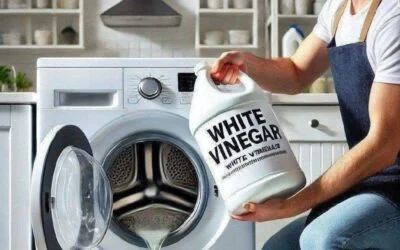
Don’t assume that putting vinegar directly into your washing machine is safe for every appliance.
Some manufacturers warn against it because repeated exposure to acidic vinegar can damage rubber seals, hoses, and other internal components. Maytag, for example, advises against pouring vinegar directly into the washer drum or running it through the machine.
Your washer’s owner’s manual should therefore come first.
Never Mix Vinegar With Bleach
This rule is non-negotiable.
Never combine vinegar and chlorine bleach.
Mixing an acid such as vinegar with chlorine bleach can produce chlorine gas, which is hazardous to breathe.
If you’re using bleach in a load, keep vinegar out of it.
What About Fabric Softener?
If your towels have become less absorbent, fabric softener may be worth reconsidering.
Fabric softeners are designed to leave conditioning agents on fibers, and that coating can interfere with the absorbency you want from a towel. Excess detergent can also contribute to residue buildup.
Instead of continually adding more products to make towels feel softer, it can be more useful to focus on getting them thoroughly rinsed.
A Simple Routine for Better Towels
You don’t need a complicated laundry routine.
Start with the basics:
- Use the amount of detergent recommended for your load.
- Don’t pack the washer too tightly.
- Give towels enough room to rinse properly.
- Be careful with fabric softener if absorbency matters.
- Follow the care label for washing and drying.
- If you have hard water, pay attention to mineral buildup.
- Check your washing machine manual before using vinegar inside the appliance.
If towels remain stiff or musty despite better washing habits, the problem may not be something vinegar can solve.


Is Vinegar a Laundry Disinfectant?
No.
This is another claim worth correcting.
Vinegar shouldn’t be treated as a reliable disinfectant for laundry. Clorox notes that vinegar isn’t an effective laundry disinfectant and doesn’t meet the standard expected of a product intended to kill disease-causing microorganisms.
So use it for what it can reasonably do rather than expecting it to sanitize everything.
The Bottom Line
White vinegar can have a useful place in laundry, particularly when you’re dealing with certain mineral or detergent deposits on towels.
But the viral version of the trick makes it sound more universal than it really is.
It won’t magically whiten every stain, it isn’t a laundry disinfectant, and you shouldn’t automatically pour it into your washing machine without checking whether your appliance manufacturer allows it.
The biggest improvement may actually come from something much simpler: using less detergent, avoiding unnecessary buildup, giving towels a proper rinse, and treating hard-water residue when it becomes a problem.
Sometimes the secret to softer towels isn’t adding more to the wash.
It’s getting rid of what shouldn’t be there in the first place.