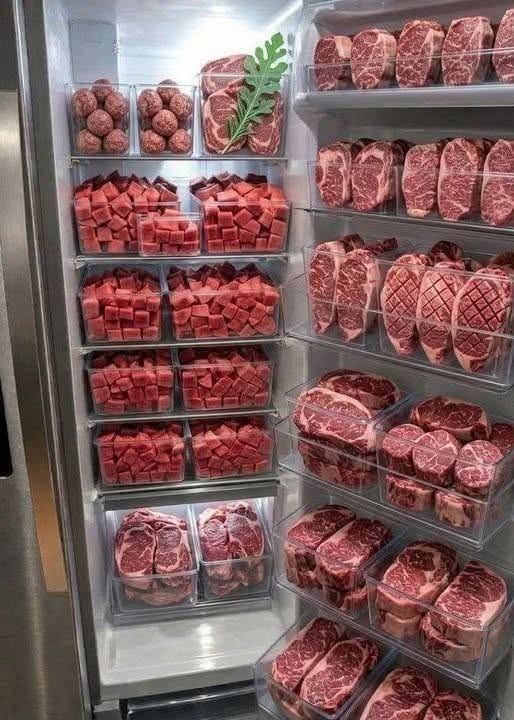
There is something interesting about opening someone’s refrigerator for the first time. Before you even look at the individual groceries, you probably form an impression.
Is it completely packed with food? Are the shelves neatly organized? Are there containers of leftovers, fresh vegetables, bottles of drinks, or perhaps surprisingly little inside?
A refrigerator can tell a small story about the people who live in a home. It can offer clues about their cooking habits, shopping routines, favorite foods, and even the way they organize everyday life.
But here’s something worth considering: a refrigerator that looks perfectly organized isn’t necessarily the most practical one, and a refrigerator filled with groceries isn’t automatically a sign of good planning.
The real difference often comes down to how the food is stored and whether the household can actually use what it buys.
So, before judging the next refrigerator you see, take a closer look. Some of the most interesting details are hiding behind the refrigerator door.
The Refrigerator Is More Than Just a Place to Store Food
For most households, the refrigerator is one of the busiest appliances in the kitchen.
It is opened early in the morning for breakfast ingredients, several times throughout the day for drinks and snacks, and again in the evening when someone starts thinking about dinner.
Over time, it becomes a reflection of everyday routines.
A family that enjoys cooking from scratch might have fresh vegetables, eggs, dairy products, herbs, and ingredients for several meals.
Someone with a busy schedule might keep prepared dishes, convenient snacks, and ready-to-use ingredients on hand.
Another household might prefer shopping several times a week, keeping only a modest amount of food inside.
None of these arrangements is automatically better than the others.
What matters is whether the refrigerator suits the household’s needs.
And that brings us to the first thing people often notice.
1. A Refrigerator Filled From Top to Bottom
Some people feel immediately comfortable when they see a refrigerator filled with groceries.
There are vegetables ready for dinner, fruit for breakfast, drinks for visitors, and leftovers waiting to become another meal.
It can give the impression that the household is prepared for almost anything.
For people who grew up in large families, a well-stocked refrigerator may even bring back memories of family gatherings and busy kitchens.
But there is another side to having too much food.
When shelves become crowded, smaller containers can disappear behind larger packages. Leftovers may be forgotten, and ingredients purchased with good intentions can eventually spoil.
A full refrigerator is useful only when its contents remain accessible and properly stored.
The goal isn’t to fill every available space. It’s to have enough food without making everything difficult to find.
2. An Almost Empty Refrigerator
At the opposite end of the spectrum is a refrigerator with plenty of open shelves.
Some people immediately assume that an empty-looking refrigerator means the household doesn’t shop regularly.
But that isn’t necessarily true.
A person who lives alone may prefer purchasing smaller quantities of fresh food. Someone who enjoys visiting the grocery store frequently may buy only what is needed for the next few days.
People who travel often or spend time away from home may also keep fewer groceries.
There is another possibility: the household may rely more heavily on pantry ingredients, frozen foods, or meals prepared shortly before eating.
An almost empty refrigerator doesn’t tell the entire story.
Sometimes, it simply reflects a different approach to shopping.
3. A Refrigerator Filled With Leftovers
Look closely at the shelves, and you may find something that reveals a lot about a household’s cooking routine: leftovers.
Some families regularly prepare larger meals and save portions for the following day.
This can be a practical way to save time, especially when several people have different schedules.
A container of cooked vegetables, a little leftover chicken, or yesterday’s soup can make the next meal easier.
However, leftovers need proper attention.
When containers accumulate without dates or labels, it becomes difficult to remember when each dish was prepared.
A simple habit can help: write the preparation date on the container and place older food toward the front.
That way, the food that needs to be used first is easier to notice.
There is also an important safety point. Properly refrigerated cooked leftovers are generally best used within three to four days.
A container should never be considered safe simply because its contents still look or smell normal.
4. The Refrigerator That Looks Perfectly Organized
Some refrigerators look almost like displays in a kitchen showroom.
Every container has its place. Drinks are grouped together, vegetables are arranged neatly, and there is enough room to see everything without moving several packages.
This type of organization can make everyday cooking much easier.
When ingredients are visible, you are less likely to forget what you already have. You can also prepare a shopping list without spending time searching through crowded shelves.
But a beautiful arrangement isn’t the only thing that matters.
Food must also be stored at appropriate temperatures and in suitable locations.
For example, raw meat and poultry should be kept in sealed containers on the lowest practical shelf. This helps prevent their juices from dripping onto other foods.
The best-organized refrigerator is therefore not necessarily the prettiest one. It is the one that combines convenience with safe food storage.
5. The First Thing You Should Check Is the Temperature
Before worrying about matching containers or perfectly arranged shelves, there is one detail every household should pay attention to: refrigerator temperature.
The recommended temperature for a household refrigerator is 40°F (4°C) or below.
The freezer should generally be maintained at 0°F (-18°C).
Why does this matter?
Because food can become unsafe when it remains at temperatures that allow harmful microorganisms to multiply.
An appliance may feel cold when you open the door, but that doesn’t necessarily mean the temperature is correct.
A refrigerator thermometer provides a simple way to check.
It is also worth remembering that frequently leaving the refrigerator door open can allow warmer air to enter.
A few seconds to grab something is usually not a concern, but keeping the door open while deciding what to cook isn’t a particularly good habit.
6. What the Different Shelves Can Tell You
Have you ever noticed that some people arrange their refrigerators in almost exactly the same way every week?
There is a practical reason for that.
Giving different types of food designated places makes it easier to remember where everything belongs.
Here is a simple arrangement that works for many household refrigerators.
Upper shelves: These are convenient for ready-to-eat foods, covered leftovers, and prepared dishes.
Middle shelves: Dairy products and other frequently used refrigerated ingredients can be placed here, depending on the appliance design.
Lower shelves: This is the appropriate location for raw meat, poultry, and seafood, kept securely covered to prevent cross-contamination.
Crisper drawers: These are intended for fruits and vegetables. Some refrigerators allow you to adjust humidity settings.
Door compartments: The door experiences more temperature changes than the main refrigerator compartment. Condiments and other suitable products are generally better choices for this area than highly perishable foods.
Of course, refrigerator designs differ, so it is worth checking the manufacturer’s recommendations.
The important thing is to make sure food is stored properly rather than simply arranging everything according to appearance.
7. Why the Refrigerator Door Deserves Special Attention
One of the most common refrigerator habits is storing almost everything in the door.
It seems convenient because bottles, sauces, and smaller packages are easy to reach.
But the door is exposed to room-temperature air every time it opens.
This means its temperature can fluctuate more than the temperature on the interior shelves.
That is why it is generally better to reserve door compartments for condiments and products that tolerate these temperature changes.
Milk, fresh dairy products, and other highly perishable foods are better kept in the main refrigerator compartment.
It is a small adjustment, but it can help maintain more consistent storage conditions.
8. The Hidden Problem With Forgotten Food
One of the biggest problems in many kitchens isn’t a lack of organization. It is forgetting what is already there.
Imagine purchasing fresh vegetables on Monday.
By Wednesday, you have bought another package because you didn’t notice the first one behind a large container.
A few days later, the original vegetables are still sitting in the refrigerator, unused.
The same thing happens with yogurt, cheese, sauces, and leftovers.
These small oversights can add up over time.
A practical solution is to check the refrigerator before every grocery-shopping trip.
Move foods that should be used soon toward the front, and make your shopping list based on what is actually missing.
This simple routine can help reduce unnecessary purchases and food waste.
9. Clear Containers Can Make Everyday Life Easier
You don’t need an expensive collection of matching organizers to improve your refrigerator.
Sometimes, a few transparent food-safe containers are enough.
Clear containers allow you to see what’s inside without opening every lid.
They are particularly useful for leftovers, prepared ingredients, and foods that might otherwise get pushed toward the back.
Choose containers with secure lids to reduce spills and help keep food protected.
It is also helpful to label leftovers with their preparation dates.
That way, everyone in the household can quickly identify which dishes should be used first.
The idea isn’t to make the refrigerator look like a professional kitchen.
It is to make everyday life a little easier.
10. The First-In, First-Out Trick That Helps Reduce Waste
There is a simple storage habit used in professional kitchens that works just as well at home.
It is called the first-in, first-out method.
The idea is straightforward: use older products before newer ones.
For example, when you purchase another container of yogurt, place it behind the one already in the refrigerator.
Do the same with packaged foods and other products where the dates and storage instructions allow it.
This prevents newer purchases from hiding older items.
It also makes it easier to notice which foods need attention before they reach their use-by dates.
For households trying to manage grocery expenses, this small habit can make a meaningful difference.
11. Why Some Refrigerators Have an Unpleasant Smell
Even a refrigerator that looks clean can develop an unpleasant odor.
Sometimes the cause is a forgotten container of leftovers. Other times, a small spill has collected underneath a drawer or behind a package.
Certain foods also have strong natural odors that can spread throughout the refrigerator when they are not properly covered.
The solution starts with identifying the source.
Remove spoiled food, clean spills promptly, and wash removable shelves and drawers according to the appliance manufacturer’s instructions.
Keeping food in suitable covered containers can also help.
If an unusual smell continues despite cleaning, check the drainage area and other parts of the appliance according to its maintenance instructions.
A fresh-smelling refrigerator is pleasant, but cleanliness and proper food storage are even more important.
12. Can Your Refrigerator Help You Save Money?
Absolutely, especially when you develop a few consistent habits.
Think about how much food gets purchased simply because someone doesn’t remember what is already at home.
A second bottle of salad dressing, another package of cheese, or vegetables that were already hiding behind other groceries.
These purchases may seem small individually, but they can increase grocery expenses over time.
An organized refrigerator makes it easier to see what you have.
You can plan meals around ingredients that need to be used, avoid unnecessary duplicates, and make more thoughtful shopping decisions.
Another useful habit is preparing a simple weekly meal plan.
You don’t need to plan every breakfast, lunch, and dinner in detail.
Even deciding how to use the main ingredients you already own can help reduce waste.
13. A Simple Weekly Routine for a Better Refrigerator
Maintaining a refrigerator doesn’t have to become a major household chore.
A short weekly check can help keep everything under control.
Here are a few useful habits:
Check for spoiled or deteriorating food.
Move older products toward the front.
Remove leftovers that have exceeded safe storage times.
Wipe away spills.
Check that raw meat and poultry are securely contained.
Look at the refrigerator thermometer.
Make a shopping list based on what is actually needed.
Doing these things regularly can prevent small problems from becoming bigger ones.
And if several people share the refrigerator, it helps when everyone follows the same basic organization system.
14. What Your Refrigerator Says About Your Personality
It is tempting to look at someone’s refrigerator and immediately form an opinion.
A crowded refrigerator might suggest that someone enjoys preparing meals for family and friends.
A minimalist refrigerator might give the impression of someone who prefers simplicity.
A collection of carefully labeled containers might suggest a person who enjoys planning ahead.
But these are impressions, not reliable ways of judging someone.
A refrigerator cannot tell you everything about a person’s financial situation, personality, or lifestyle.
A busy household may have a crowded refrigerator because several people share the same space.
Someone with a beautifully organized refrigerator may simply enjoy keeping things tidy.
And a nearly empty refrigerator might belong to someone who shops frequently and prefers fresh ingredients.
There is no single perfect arrangement.
The best refrigerator is the one that works for the people using it.
The Real Secret Is Not How Full Your Refrigerator Looks
At the end of the day, a refrigerator doesn’t need to resemble a picture from a home organization magazine.
It doesn’t need dozens of matching containers or perfectly arranged rows of groceries.
What matters is that food stays at safe temperatures, ingredients are easy to find, leftovers are handled properly, and unnecessary waste is avoided.
Sometimes, a simple change can make a noticeable difference.
Moving older groceries toward the front, checking the temperature, or cleaning a forgotten shelf can make everyday kitchen routines much easier.
So, the next time you open your refrigerator, take a moment to look beyond what’s immediately in front of you.
Are you seeing ingredients ready for a homemade meal? A collection of leftovers waiting to be used? Or perhaps a little more clutter than you expected?
Now, be honest: What’s the first thing you notice when you open your refrigerator: plenty of food, perfect organization, or a collection of leftovers you completely forgot about?
Important Food Storage Reminder
This article is intended for general household information and educational purposes. Refrigerator organization suggestions may need to be adjusted depending on the appliance and the type of food being stored.
Keep refrigerators at 40°F (4°C) or below and freezers at 0°F (-18°C). Refrigerate perishable foods promptly, and generally use cooked leftovers within three to four days when properly stored. Never rely exclusively on appearance or smell to determine whether food is safe.
When in doubt about a particular food, its storage conditions, or whether it is safe to consume, consult a qualified food-safety professional or healthcare professional when appropriate. Always follow official food-safety guidance and the manufacturer’s instructions for your refrigerator.