
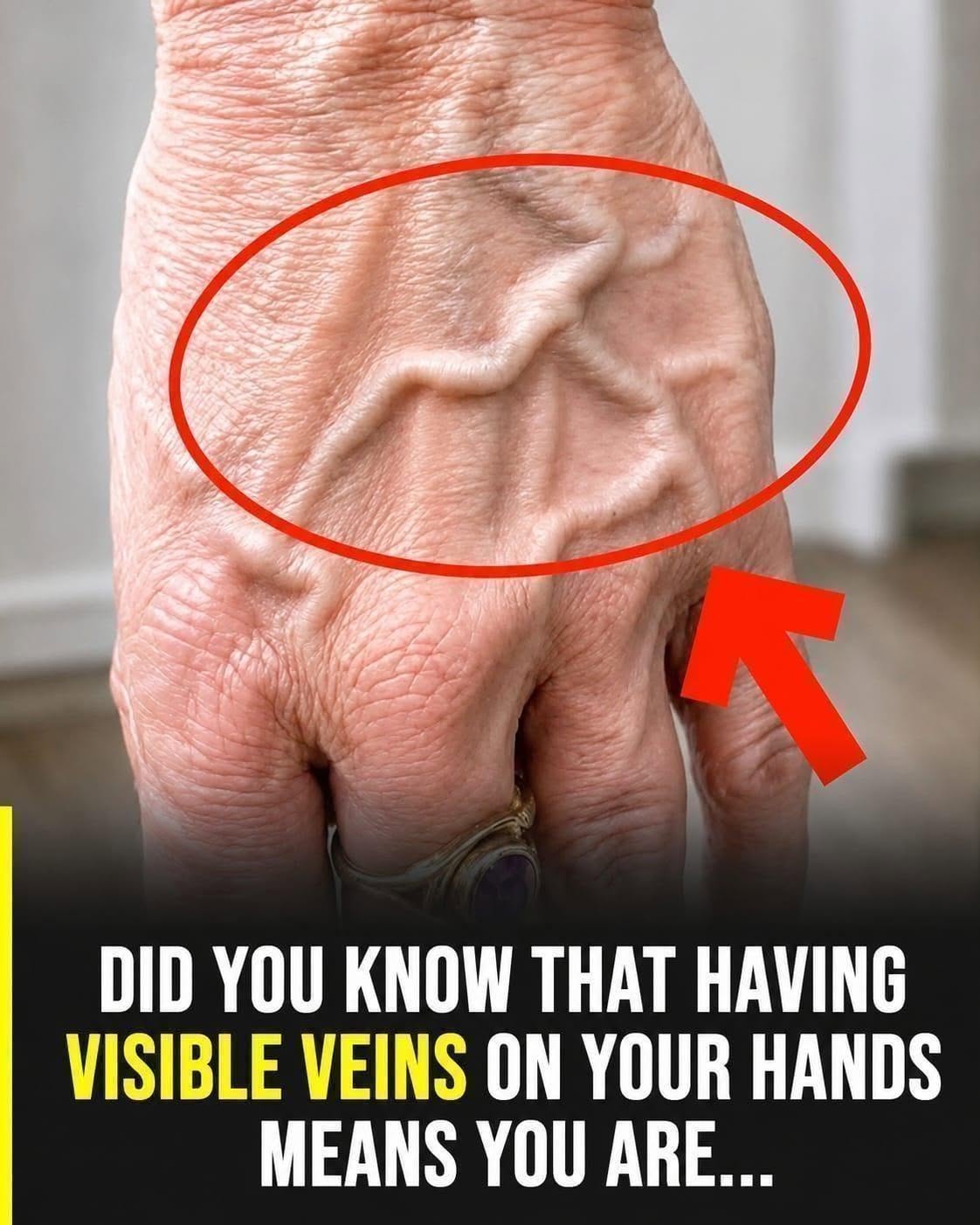
Have you ever looked down at your hands, arms, legs, or feet and suddenly noticed that your veins seem much more visible than they used to be?
It can be unsettling, especially if you don’t remember seeing them so clearly before.
The good news is that visible veins are often completely normal. Veins can become easier to see because of age, exercise, hot weather, genetics, changes in body composition, or simply because they sit close to the surface of the skin.
But there are times when a change in your veins deserves more attention.
The important question isn’t simply, “Can I see my veins?”
It’s what else is happening with them?
Why can veins become more visible?
Veins carry blood back toward the heart. Some veins sit relatively close to the skin, making them naturally visible.
As we get older, the skin becomes thinner and loses some of the fullness that can make veins less noticeable. This can make veins on the backs of the hands, forearms, feet, and other areas stand out more.
Exercise can have a similar temporary effect. When you exercise, blood flow increases and muscles can push veins closer to the surface, making them appear more prominent.
Heat can also make veins easier to see because blood vessels near the skin can expand.
So if your veins become more noticeable after gardening on a hot afternoon, taking a brisk walk, or exercising, that doesn’t automatically mean there is a health problem.


1. Aging can make veins stand out more
One of the simplest explanations is getting older.
With age, the skin becomes thinner and less elastic. There may also be less tissue underneath the skin in some areas.
As a result, veins that were always there can become much easier to see.
This is especially common on the hands and forearms.
If the veins are visible on both hands, haven’t suddenly changed, and aren’t painful or swollen, this is often simply part of normal aging.
Visible veins by themselves are not proof of poor circulation or disease.
2. Exercise can make veins temporarily more noticeable
Have you ever finished exercising and noticed that the veins in your arms suddenly looked much larger?
That’s not necessarily something to worry about.
During physical activity, blood flow increases and the muscles become more active. This can make superficial veins appear more prominent.
People who exercise regularly may also have more noticeable veins because of changes in muscle and body composition.
So seeing prominent veins after walking, lifting weights, gardening, or another physical activity can be perfectly normal.
The key is whether they return to their usual appearance afterward and whether there are any other symptoms.
3. Hot weather can make veins stand out
Temperature can change how noticeable your veins appear.
When you’re warm, blood vessels near the skin can become more prominent. That’s one reason veins may seem much more visible during the summer, after a hot shower, or after spending time outdoors.
You may notice this particularly on your hands, arms, feet, or legs.
Again, the appearance alone usually isn’t enough to indicate a medical problem.
If the change disappears when your body cools down and there is no pain, swelling, redness, or other unusual symptom, it is generally less concerning.
4. Changes in body weight can reveal veins that were already there
Another possible explanation is a change in the amount of tissue underneath your skin.
When someone loses body fat, veins can become easier to see because there is less tissue covering them.
This can happen gradually and may be especially noticeable on the hands, arms, shoulders, and legs.
That doesn’t necessarily mean the veins themselves have changed.
Sometimes the difference is simply that they’re no longer as hidden as they were before.
If weight loss was intentional and you otherwise feel well, more visible veins may simply be part of that change.
However, unexplained weight loss is different and should be discussed with a healthcare professional.


5. Genetics can play a role
Some people simply have more visible veins than others.
If your parents or other close relatives have prominent veins, you may be more likely to have them too.
Skin tone, body structure, the location of your veins, and the amount of tissue under your skin can all influence how visible your veins appear.
This is one reason comparing your veins with someone else’s isn’t particularly useful.
What matters more is whether your own veins have changed.
6. Prominent veins in the legs may be varicose veins
The situation can be different when veins become enlarged, twisted, or rope-like, particularly in the legs.
These may be varicose veins.
Varicose veins develop when valves inside veins don’t work properly. Instead of blood moving efficiently back toward the heart, some blood can move backward and pool in the veins.
The affected veins may become enlarged and appear blue, green, or purple beneath the skin.
Varicose veins are extremely common, particularly as people get older.
They don’t always cause problems.
But some people experience aching, heaviness, itching, swelling, or discomfort in the affected leg.
7. Spider veins are different
Not every visible vein is a varicose vein.
Spider veins are much smaller blood vessels that can appear as thin red, blue, or purple lines that branch out in patterns resembling a spider web.
They’re usually flatter and smaller than varicose veins.
For most people, spider veins are primarily a cosmetic concern and don’t cause symptoms.
If they’re accompanied by burning, itching, cramping, or other symptoms, however, it’s reasonable to discuss them with a healthcare professional.
8. Swelling changes the picture
Visible veins alone are usually less concerning than visible veins combined with swelling.
If one or both legs become swollen, particularly if the swelling persists, there can be several possible causes.
Chronic venous disease, for example, can cause blood to pool in the legs because the veins aren’t returning blood efficiently toward the heart. This can lead to aching, heaviness, and swelling.
But swelling can also have causes unrelated to the veins.
That’s why persistent swelling shouldn’t be self-diagnosed.


9. Pain, warmth, or redness deserves attention
A vein that becomes painful, swollen, warm, or red is different from a vein that is simply visible.
These symptoms can occur with inflammation or a blood clot and should be evaluated.
The U.S. Office on Women’s Health specifically recommends contacting a healthcare professional if a vein becomes swollen, red, very tender, or warm to the touch.
This is particularly important if the change is sudden and affects one leg much more than the other.
Don’t massage a painful, swollen area in an attempt to make it disappear. Get medical advice instead.
10. Skin changes around the veins can be significant
Another change worth noticing is what happens to the skin around prominent veins.
Long-standing venous problems can sometimes be associated with changes such as skin discoloration, irritation, or sores around the lower leg or ankle.
A sore that doesn’t heal normally, particularly around the ankle or lower leg, should be evaluated.
This is very different from simply noticing a few blue veins beneath otherwise healthy skin.
What about veins suddenly appearing on your hands?
This is one of the most common things people notice.
The veins on your hands can become more visible because of aging, exercise, heat, genetics, or changes in the amount of tissue beneath the skin.
For many people, prominent hand veins are simply a normal physical characteristic.
If both hands look similar and the veins aren’t painful, swollen, red, or otherwise changing, there is often no reason to panic.
But a sudden one-sided change, particularly when accompanied by pain or swelling, deserves medical attention.
What about veins on your chest?
Visible veins on the chest can sometimes be completely normal, especially in people with less tissue covering the veins.
Heat, exercise, genetics, and body composition can all influence their appearance.
However, a new and unexplained change in chest veins is something worth mentioning to a healthcare professional, particularly if it occurs together with swelling, pain, a breast or chest lump, skin changes, or other new symptoms.
The overall pattern matters more than the appearance of a single vein.
Can exercise get rid of visible veins?
Not necessarily.
Exercise is excellent for overall cardiovascular health and can help keep the muscles that assist venous blood flow active.
Walking, for example, engages the calf muscles and can support circulation in the legs.
But exercise isn’t a guaranteed way to make established varicose veins disappear.
Cleveland Clinic notes that exercise may improve symptoms and circulation but does not simply erase varicose veins.
If you have painful or troublesome varicose veins, there are medical treatments available, depending on the underlying problem.
Simple habits that support healthy leg circulation
If your legs tend to feel heavy or uncomfortable, several everyday habits may help.
Keep moving
If you sit or stand for long periods, try to change position regularly.
Walking activates the calf muscles, which help move blood upward through the legs.
Even short periods of movement throughout the day can be useful.
Avoid staying in one position for hours
Long periods of sitting or standing can contribute to discomfort and pooling of blood in the legs.
If your daily routine keeps you in one position, take regular movement breaks when possible. Cleveland Clinic recommends avoiding prolonged sitting or standing when possible.
Elevate your legs when appropriate
For some people with venous discomfort, elevating the legs can help reduce the effects of gravity and ease swelling.
If you have significant swelling or another medical condition affecting your circulation, ask your healthcare professional what is appropriate for you.
Ask before using compression socks
Compression stockings can help some people with venous symptoms.
But they’re not automatically appropriate for everyone.
If you have circulation problems involving your arteries or have significant swelling of unknown cause, ask a healthcare professional before starting compression therapy.


When should you get visible veins checked?
A few visible veins usually aren’t a reason for alarm.
But make an appointment if you notice veins that are:
- Newly enlarged or changing rapidly
- Painful or tender
- Associated with persistent swelling
- Surrounded by redness or warmth
- Accompanied by skin discoloration
- Associated with sores that aren’t healing
- Bleeding unexpectedly
These symptoms can indicate a vein problem that deserves evaluation.
And if you develop sudden leg swelling or pain together with chest pain, difficulty breathing, or coughing up blood, seek emergency medical attention. These can be warning signs of a serious blood clot complication.
The bottom line
Seeing your veins more clearly doesn’t automatically mean something is wrong.
For many people, visible veins are simply a combination of normal anatomy, aging, genetics, exercise, temperature, or changes in body composition.
What matters is the bigger picture.
A few prominent veins on your hands after a hot day are very different from a suddenly swollen, painful, warm leg with a new prominent vein.
So don’t judge your health by how visible your veins are alone.
Instead, pay attention to new changes, pain, swelling, redness, warmth, skin changes, and other symptoms.
Those are the clues that make a conversation with a healthcare professional more important.







