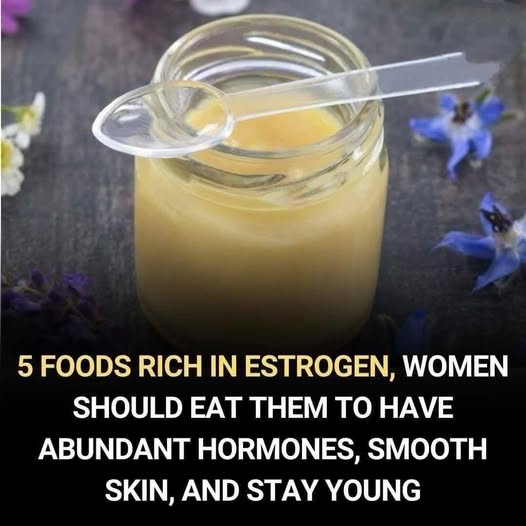
When people think about estrogen, they often think only about hormones and menopause. But there is another side to the conversation that starts in the kitchen.
Certain everyday foods contain natural plant compounds called phytoestrogens, which have a chemical structure somewhat similar to estrogen. Soy isoflavones and the lignans found in flaxseed are two well-known examples.
That does not mean these foods simply “raise estrogen” in the same way a hormone medication would. The way phytoestrogens interact with the body is more complicated, and research on their effects, particularly for menopause symptoms, has produced mixed results.
Still, the foods themselves can be nutritious additions to an everyday diet. And five foods in particular stand out in the source material for their connection to estrogen-like plant compounds.
The first one is probably the most familiar.
1. Soybeans and Other Soy Foods
Soybeans contain isoflavones, a type of phytoestrogen that has received considerable scientific attention.
You don’t have to eat plain soybeans to include them in your meals. Common soy foods include tofu, tempeh, miso, edamame and soy milk.
This is one reason soy has become part of many conversations about women’s health and menopause. Research has looked at soy and soy isoflavones for symptoms such as hot flashes, as well as bone health and other areas.
The results are not as simple as saying that soy will increase estrogen or eliminate menopause symptoms. The National Center for Complementary and Integrative Health notes that studies have produced inconsistent results, although some research suggests soy protein or isoflavones may modestly reduce the frequency or severity of hot flashes.
That makes soy a better choice to think of as a nutritious food containing phytoestrogens, rather than as a natural replacement for estrogen.
And there is another food that contains a completely different type of phytoestrogen.
2. Flaxseed
Those tiny brown or golden seeds may not look particularly impressive, but flaxseed is one of the better-known dietary sources of lignans, another group of phytoestrogens.
Flaxseed also brings fiber to the table, which is one reason many people add it to oatmeal, yogurt, smoothies or baked goods.
There is a practical detail worth remembering: ground flaxseed is generally easier to use in everyday meals than whole seeds, especially when you want to incorporate it into foods such as oatmeal or smoothies.
But don’t think of flaxseed as a guaranteed way to change your hormone levels. Research on flaxseed and menopause symptoms has been mixed. NCCIH notes that studies have not clearly shown flaxseed to relieve hot flashes, and evidence for other menopause-related benefits is also inconsistent.
In other words, there is a good reason to enjoy flaxseed as a nutritious food, but there isn’t a good reason to treat it like a hormone treatment.
Then the list takes a rather unexpected turn.
3. Royal Jelly
Royal jelly is very different from soybeans or flaxseed.
It is a substance produced by honeybees and is commonly sold as a dietary supplement. The source article includes royal jelly because of compounds such as phytosterols and flavonoids and describes it as potentially supporting estrogen-related processes.
This is also where a little caution becomes especially important.
Royal jelly is not simply another everyday food like berries or beans. It is a concentrated bee product, and people with pollen allergies can have allergic reactions to products such as royal jelly. NCCIH specifically advises caution with bee products for people with pollen allergies.
So if royal jelly interests you, it makes more sense to think of it as a supplement that deserves the same care you would give other supplements, rather than assuming that because something is natural it is automatically appropriate for everyone.
And the next food on the list is much easier to recognize.
4. Strawberries
Strawberries bring something completely different to the table.
They contain vitamin C and flavonoids and are highlighted in the source for their plant compounds, including phytoestrogen-related components.
They are also remarkably easy to add to an ordinary meal.
A handful can go over oatmeal in the morning. Sliced strawberries can be added to plain yogurt, tossed into a salad, or blended into a smoothie. You don’t need a complicated recipe or a special supplement to enjoy them.
The source connects strawberries with collagen production, skin appearance, heart health, mood and stress. Those claims should not be interpreted as meaning that eating strawberries will directly change estrogen levels or reverse signs of aging.
Their biggest advantage may be much simpler: they’re a fruit that can add flavor, vitamin C and other plant nutrients to the diet without requiring much preparation.
But there is still one more item on the original list, and this one is considerably less familiar to many Americans.
5. Kudzu Root Powder
Kudzu is a plant that many people know because of how aggressively it can grow. What may be less familiar is kudzu root powder, which has been used in traditional food and herbal preparations.
The source highlights compounds including isoflavones and puerarin-related plant constituents and connects kudzu with estrogen-related effects and menopause symptoms.
However, this is another case where “contains plant compounds associated with estrogen” should not be confused with “will raise your estrogen.”
Phytoestrogens can interact with estrogen receptors in ways that are not identical to the body’s own estrogen. Their effects can vary depending on the compound, amount, person and biological context.
That distinction matters, particularly for anyone considering concentrated herbal products rather than simply eating ordinary foods.
What Does “Estrogen-Rich” Really Mean?
This is perhaps the most important part of the whole conversation.
When someone says a food is “rich in estrogen,” it can sound as though the food contains human estrogen. Generally, that isn’t what is meant.
Foods such as soy and flaxseed contain phytoestrogens, which are plant compounds with chemical structures similar to estrogen. They can interact with estrogen receptors, but they are not the same thing as the estrogen naturally produced by the human body.
And eating one of these foods doesn’t mean your body’s estrogen level will suddenly rise.
That’s why it is better to think about these foods as part of an overall eating pattern rather than as a quick hormone-balancing solution.
For example, adding edamame to a meal, sprinkling ground flaxseed over oatmeal, or having strawberries with yogurt can all be simple ways to bring more whole and minimally processed foods into your diet.
A Simple Way to Work Them Into Your Meals
You don’t need to eat all five foods every day.
A breakfast of oatmeal topped with ground flaxseed and strawberries is one easy combination.
Another day, you might use edamame as a side dish with dinner or add tofu to a stir-fry.
If you’re interested in royal jelly or kudzu root powder, remember that these are different from ordinary foods and may have additional safety considerations. Supplements can also interact with medications, so discussing them with a healthcare professional is sensible, especially if you take prescription medicines or have a condition affected by hormones.
The bigger takeaway is that foods containing phytoestrogens can be part of a varied diet, but they shouldn’t be treated as a guaranteed way to correct a hormone imbalance.
If you’re experiencing significant symptoms that you believe may be related to menopause or changing hormone levels, food alone may not answer the question. A healthcare professional can help determine what is actually causing the symptoms and whether treatment is appropriate.
In the meantime, the kitchen offers plenty of simple possibilities. Soybeans, flaxseed and strawberries are easy places to start, while royal jelly and kudzu require a little more consideration.
Sometimes the most useful change isn’t a dramatic one. It is simply finding a few nutritious foods you enjoy and making them part of your regular routine.
Have you ever added flaxseed, soy or another phytoestrogen-containing food to your meals?