Good neighbors can make life easier, especially when they are willing to lend a helping hand. But there is an important difference between being friendly and taking advantage of someone else’s kindness.
For Ruth, that difference became impossible to ignore after a series of uncomfortable incidents involving her neighbor, Denise. What began with a damaged trash can eventually revealed a much bigger problem: borrowed belongings that were never returned, personal boundaries that were repeatedly ignored, and the difficult decision to stand up for herself.
The Damaged Trash Can
Thanksgiving morning began with an unexpected discovery.
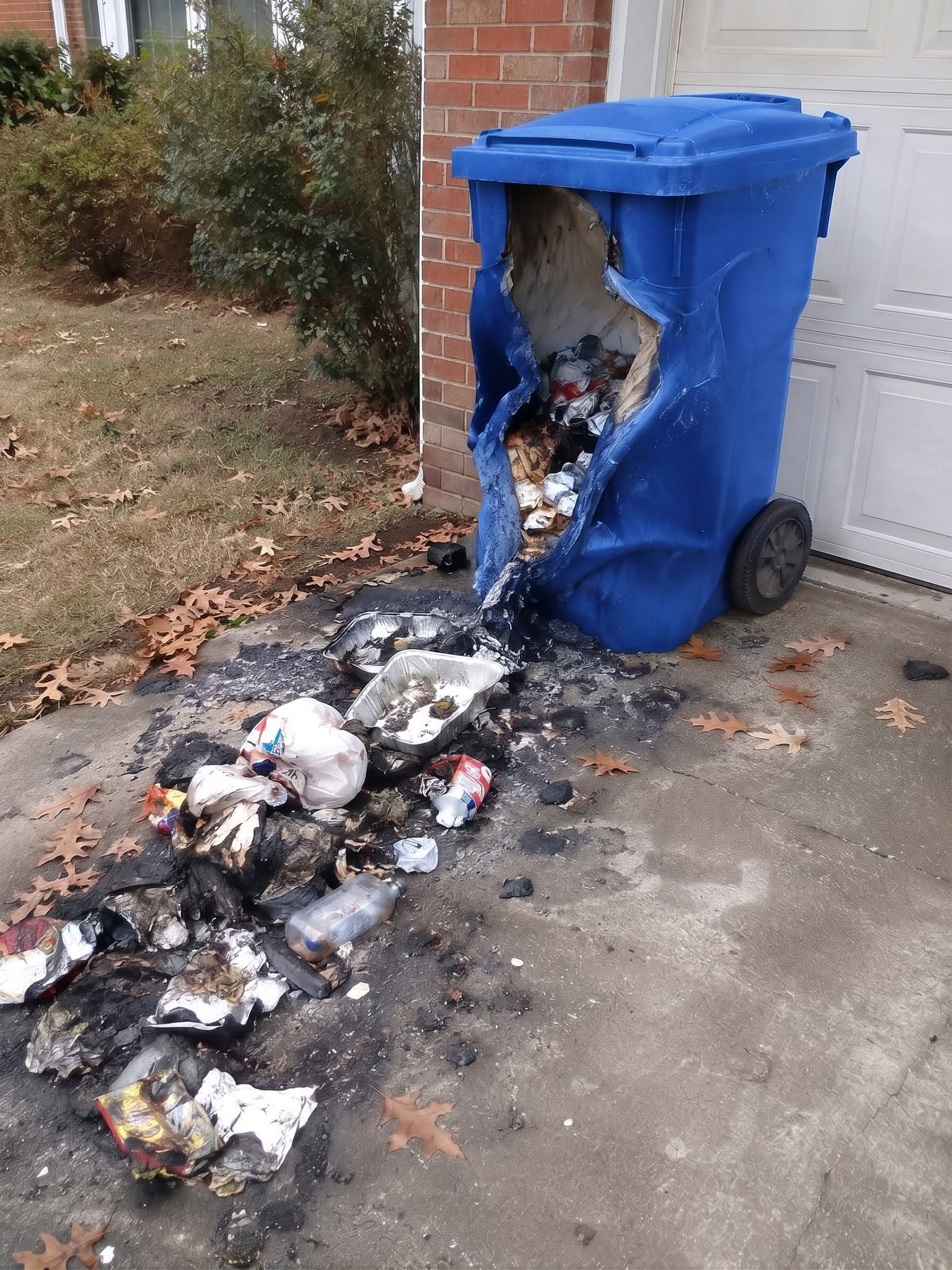
Frank, Ruth’s husband, lifted the lid of their green trash can and immediately noticed something unusual. Inside was a pile of charcoal, and the plastic around the opening had become badly warped.
“That wasn’t there yesterday,” Ruth said.
The couple had just carried a bag of potato peels and coffee grounds down the driveway. When Frank inspected the container, the bag slipped against its damaged edge, scattering its contents across the pavement.
He warned Ruth not to touch the ashes. The plastic was still slightly warm, and the damage suggested that the charcoal had been placed inside before it had completely cooled.
Ruth looked across the driveway toward Denise’s house. Earlier that morning, Denise had been hosting guests around her outdoor grill.
“Do you think she put the coals in our can?” Ruth asked.
Frank lowered the damaged lid. Its edges no longer fit properly.
“She could have asked first,” he replied.
Ruth did not want to start an argument without knowing exactly what had happened. She had always believed in being a helpful neighbor, but she also understood that kindness should not mean allowing someone to damage her property.
The bottom of the can had buckled, making it impossible to use safely.
They needed a replacement, but before buying one, Ruth wanted to speak with Denise.
More Than Just a Missing Garden Tool
While looking for a shovel and brush to clean the driveway, Ruth noticed that two gardening tools were missing from their usual places in the garage.
The cultivator had a distinctive green strip of tape around its handle, making it easy to recognize. Her trowel was missing as well.
Ruth searched the shelves and checked behind bags of potting soil, but neither tool appeared.
“Denise borrowed them, didn’t she?” Ruth wondered aloud.
Frank remembered seeing Denise carrying a trowel months earlier, although he could not be certain it belonged to Ruth.
The discovery reminded Ruth of other incidents. Denise had borrowed garden equipment before, and Ruth had sometimes needed to visit her house to retrieve items. Even after Denise returned several things, Ruth was no longer certain that everything had made its way back.
Frank eventually found the missing brush behind a shelf, but the cultivator and trowel remained unaccounted for.
“You could ask her about the tools when you talk about the trash can,” he suggested.
Ruth agreed.
She did not want a confrontation. She simply wanted her belongings returned and her property treated with respect.
A Security Camera Reveals Something Important
Before approaching Denise, Ruth and Frank moved the damaged trash can toward the driveway.
Frank remembered that the security camera above their garage might have recorded part of the incident.
He opened the camera application on his phone and checked the footage. The camera showed their driveway and part of the neighboring property.
While reviewing the recordings, Frank also remembered an earlier incident involving Ruth’s lawn mower.
A June 14 recording showed Denise taking the mower out of their garage area and steering it past Frank’s Buick. She had not asked permission, and the mower had passed dangerously close to the car’s side mirror.
Ruth watched the footage with surprise.
She remembered seeing the mower outside that day, but she had never known exactly how it had gotten there.
“Can you save that recording?” she asked.
Frank agreed.
They also checked the Thanksgiving footage. This time, the camera provided a clearer picture of what had happened to the trash can.
The recording showed Denise checking her own garbage container before walking over to Ruth’s. She opened Ruth’s can and emptied the contents from her grill into it.
Ruth watched the scene carefully.
The footage did not show an accidental mix-up. Denise had deliberately used the neighboring trash can without asking.
Ruth decided that the recordings should be preserved.
An Uncomfortable Conversation
Ruth pushed the damaged container toward Denise’s driveway.
Denise was busy arranging plates and preparing food for her Thanksgiving guests. When Ruth showed her the warped plastic, Denise admitted that she had emptied the grill into the container.
“I thought the coals were out,” she explained.
Ruth asked whether Denise would help replace the damaged can.
Instead of offering an apology, Denise dismissed the concern.
“You have retirement money. Go buy a new one,” she said, calling Ruth a cheapskate.
The comment was embarrassing, especially with guests nearby.
Ruth could have argued, but she chose not to turn the gathering into a public confrontation. She left the damaged container near Denise’s grill and returned home.
Frank encouraged her to keep the evidence and consider a more formal way to resolve the disagreement.
Ruth began looking for a local community mediation service.
Ruth Decides to Seek Mediation
That afternoon, Ruth found the website of the Valley Community Mediation Center.
The center offered an online intake form for neighbors experiencing disagreements.
Ruth carefully described the damaged trash can and the missing gardening tools. She also indicated that she had supporting material, including security camera footage.
Frank offered to help organize and print the recordings, but he reminded her that the account itself needed to be hers.
After reviewing the information, Ruth submitted the request.
An acknowledgment arrived by email confirming an intake appointment for Monday at 10 a.m.
For Ruth, this was an important step. She was no longer simply hoping Denise would understand the problem. She wanted a clear agreement that both neighbors could follow.
Another Incident Makes the Situation Worse
Later that afternoon, Denise appeared with a black trash bag and offered to help collect the potato peels and coffee grounds scattered across the driveway.
Ruth accepted the help.
For a few minutes, the two women worked together without arguing. Denise used a folded paper plate to collect the remaining scraps, while Ruth held the bag open.
When they finished, Denise left the tied bag beside Ruth’s front step, saying it could wait there until collection day.
Ruth was disappointed, but she decided to deal with the matter through the mediation process rather than argue again.
The day became even more frustrating when Denise later attempted to move the damaged green trash can. As she pushed it across the driveway, one of its wheels struck a clay planter near Ruth’s walkway.
The planter fell and broke.
It was not an ordinary flowerpot to Ruth. Her mother had planted the nearby rosebushes in 1991, the year Ruth moved into the house, and the planter had been part of her garden for years.
Denise said she had not seen it.
Ruth looked at the broken pieces and realized that the disagreement was becoming about much more than one damaged container.
She carefully collected the remaining pieces and decided to include the incident in her notes.
The Evidence Tells a Clearer Story
Before dinner, Frank helped Ruth review the saved recordings.
The June footage showed Denise taking the lawn mower without asking. The Thanksgiving recording showed her checking her own full garbage container before placing the grill contents into Ruth’s.
Frank printed still images from both recordings.
Ruth also prepared a short letter explaining what she wanted:
- Reimbursement for the damaged trash can.
- The return of her missing gardening tools.
- Removal of the damaged container and the black trash bag.
- Respect for her garage and other personal property.
- A simple agreement that Denise would ask before borrowing anything.
She wanted a practical solution, not revenge or an argument.
That evening, Ruth visited Denise’s porch with the printed documents.
She explained that the mediation center had scheduled an intake appointment for Monday and showed Denise the estimated replacement cost of the trash can: $68.49.
Denise was surprised by the formal approach.
“I’ll buy you a new can if you cancel the call,” she offered.
But Ruth declined.
She wanted the agreement to cover all the problems, not just the cost of one damaged item.
A Meeting Changes the Conversation
On Monday morning, Ruth and Denise met with Carol, a representative from the Valley Community Mediation Center.
Carol invited Ruth to explain what she hoped to accomplish.
Ruth calmly listed her requests and showed the recordings.
The Thanksgiving footage demonstrated how Denise had used the trash can. The June recording showed her taking the lawn mower without asking.
Denise initially appeared uncomfortable, but she eventually acknowledged that she should have asked permission.
She explained that she had grown up in a large apartment building in Chicago, where neighbors frequently shared things. After moving into her house, she had sometimes treated the same informal arrangement as normal.
She also admitted that she had felt embarrassed when Ruth approached her in front of her Thanksgiving guests.
However, Ruth made it clear that embarrassment did not justify damaging someone else’s property or taking belongings without permission.
Carol helped the women turn the discussion into a written agreement.
Denise agreed to pay the exact replacement cost of $68.49, return the cultivator and trowel, and remove the damaged trash can and black bag.
She also agreed not to enter Ruth’s garage or take anything from the property without permission.
The meeting ended with both women signing the document.
The agreed deadline was Saturday, December 5.
Denise Returns What She Borrowed
At 10:30 on Saturday morning, Ruth heard a knock at her front door.
Denise stood outside holding two garden tools and an envelope.
“The cultivator and trowel,” she said. “I washed them.”
Ruth immediately recognized the green tape wrapped around the cultivator’s handle. Although one corner had started to lift, the tool was finally back where it belonged.
Denise also handed her an envelope containing the exact amount they had agreed upon.
Ruth counted the money.
“Sixty-eight dollars and forty-nine cents. Thank you.”
Denise then mentioned something else she had been meaning to explain.
She admitted that she had taken cuttings from Ruth’s rosebushes earlier in the fall and had managed to grow roots on two of them.
Ruth was disappointed. The rosebushes had sentimental value because her mother had planted them decades earlier.
She listened, then calmly explained that Denise could keep the cuttings she already had, but she must not take any more without asking.
Denise agreed.
She also removed the black trash bag and the damaged green container from Ruth’s property, fulfilling the remaining parts of the agreement.
For the first time in a long while, Ruth felt that her concerns had been taken seriously.
A Small Request, A Different Response
The following Sunday, Ruth returned to her garden with her pruning shears.
Frank sat nearby, ready to help if needed. Ruth was preparing to trim a branch that had begun catching on his jacket.
Then she heard a knock at the side door.
It was Denise.
“Could I borrow your pruning shears?” she asked. “I have a branch hanging over my front walkway.”
Ruth looked at the shears in her hand.
In the past, she might have handed them over automatically, even if she needed them herself. But this time, she made her decision without feeling guilty.
“I’m using them this afternoon,” she replied.
Denise nodded.
“All right. I’ll get a pair of my own.”
She stepped away from the door and returned to her house.
Frank watched Ruth come back toward the rosebushes.
“Was that Denise?” he asked.
“She wanted the shears.”
“And you wanted them, too.”
Ruth smiled slightly.
“I did.”
She placed the shears beside her bucket and returned to the garden.
There was no argument, no raised voice, and no need for another formal meeting. Denise had asked, Ruth had answered honestly, and the answer had been respected.
The Importance of Healthy Boundaries Between Neighbors
Ruth’s experience illustrates an important lesson about relationships between neighbors.
Being generous does not mean giving up the right to privacy, personal property, or peace of mind. Sharing tools and helping one another can strengthen a community, but those arrangements work best when everyone communicates clearly.
Sometimes, a simple request for permission is all that is needed to prevent a misunderstanding.
And when repeated problems occur, addressing them calmly and documenting important details can help people find a fair solution.
Ruth did not need to end her relationship with Denise or turn a neighborhood disagreement into a lasting feud. She simply needed to explain what was acceptable, what was not, and what she expected going forward.
In the end, the most meaningful change was not the replacement of a trash can or the return of two gardening tools.
It was the moment Ruth learned that she could be a kind neighbor without allowing others to take advantage of her kindness.
Sometimes, the healthiest relationship begins with one simple word: no.