Skip to content

Why Are People Burying Pennies in Snake Plant Soil? Here’s What You Need to Know!
Have you noticed a buzz online about people burying pennies in the soil of their snake plants? It might sound quirky, but there’s a growing trend among plant enthusiasts that suggests this surprising little trick could benefit your greenery. Whether you’re a seasoned plant parent or just dipping your toes into indoor gardening, you might be wondering: does it actually help your plant? Let’s dig into the details!
The Motivating Mystery Behind Pennies in Soil
Why would someone put a coin into potting soil? The answer lies in a mixture of curiosity and a desire to nurture our plants better. Snake plants, known for their resilience and air-purifying abilities, thrive on minimal care, yet plant parents constantly seek ways to enhance their health. Adding a penny might seem like a strange approach, but what if it holds some truth?
Many people report improvements in their plants after burying a few pennies, sparking a curiosity gap: is there something about the penny that promotes growth, or is it merely an urban legend? The concept may seem quirky, but it has stirred enough interest online to warrant a closer examination.
Why This Works: The Science Behind It
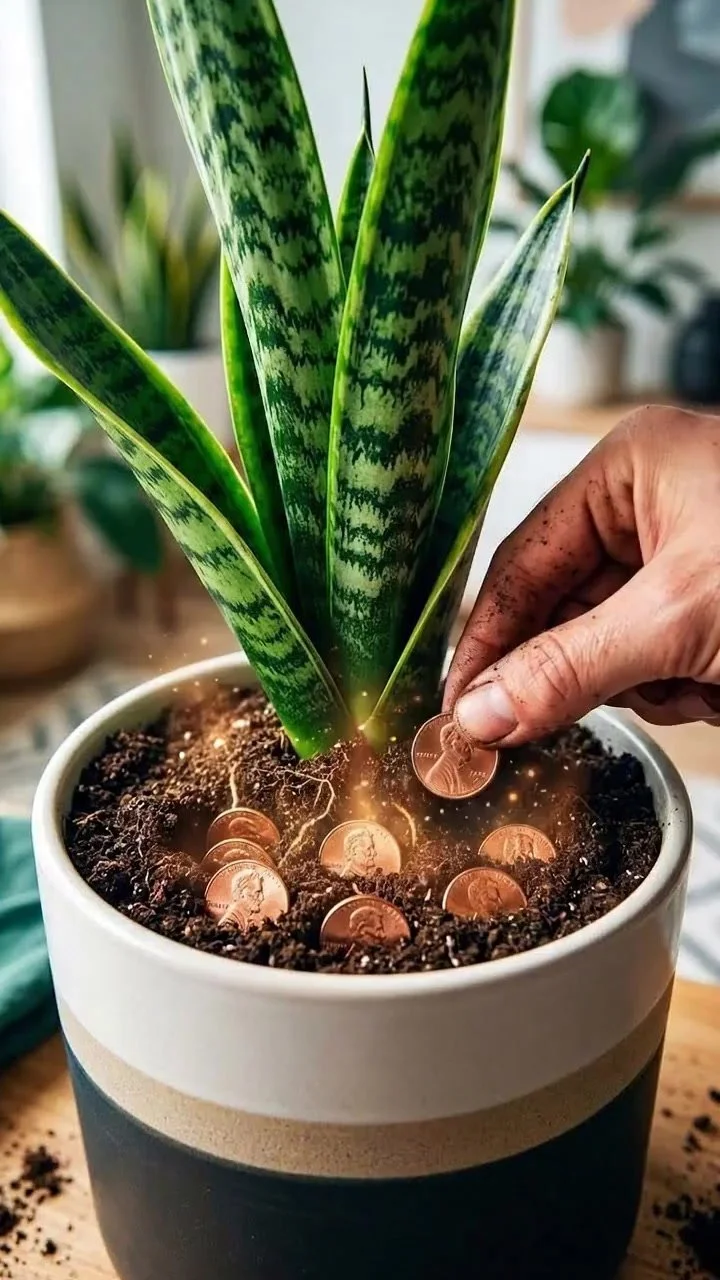
The main claim is that copper, a component of pennies minted before 1983, can act as a natural fungicide. This means it helps prevent harmful fungi from attacking your plant roots. While today’s pennies are mostly zinc, some enthusiasts swear by the effects of copper still, as it is known to have beneficial properties when it comes to plant care.
In addition to these potential antifungal benefits, inserting a penny could also encourage healthier drainage due to the weighted nature of the coin. The argument goes that the pennies help create small pockets of air in the soil, thus allowing roots to breathe better and preventing them from suffocating.
Main Content: The Process of Burying Pennies
If you’re intrigued and want to give this trick a try, here’s a simple guide on how to do it:
-
Choose Your Pennies: Use pre-1983 pennies as they are 95% copper. If you’re environmentally conscious or just prefer not to use coins, there are other ways to introduce copper into your plant care.
-
Prepare Your Pot: Ensure your snake plant pot has adequate drainage holes. This is vital, as snake plants are sensitive to overwatering.
-
Bury the Pennies: Plant a couple of pennies about an inch or two below the surface of the soil.
-
Regular Care: Treat your snake plant as you normally would—water when it’s dry and keep it in a well-lit spot.
-
Observe the Changes: After a few weeks, take note of any positive health changes in your snake plant. Look for signs like new growth, vibrant color, or improved resilience against pests.
Expected Results: What to Look For
After incorporating pennies into the soil of your snake plant, you may observe a variety of improvements:
- Healthier Growth: The plant may grow faster with lush, green leaves.
- Reduced Fungus: There might be fewer signs of mold or fungus in the soil.
- Improved Drainage: The added weight from pennies could enhance soil aeration, leading to a healthier root system.
Extra Tips to Enhance Plant Care
- Complement with Fertilizer: Use a balanced fertilizer designed for houseplants to provide essential nutrients.
- Rotate Your Plants: Position your snake plant to receive even light from all sides to ensure uniform growth.
- Monitor Soil Moisture: Snake plants prefer to dry out between waterings, so keep an eye on moisture levels.
Conclusion: Is it Worth the Hype?
While the science behind burying pennies in snake plant soil isn’t foolproof, many plant lovers find success with this quirky trend. Whether it’s due to the properties of copper or simply the act of caring for your plant more attentively, the psychological benefits cannot be ignored. So why not give this simple trick a shot? You might just be surprised by the results!
So, what are you waiting for? Grab those pennies and start experimenting with your snake plant today! Embrace the community curiosity, and enjoy nurturing your greenery even more.