
How to Clean Dull and Greasy Kitchen Cabinets the Easy Way
Kitchen cabinets go through a lot every day. Between cooking oils, steam, fingerprints, and food splatters, it’s no surprise they eventually develop a sticky layer of grime that regular dusting can’t remove. Over time, this buildup can leave cabinets looking dull, discolored, and older than they really are.
The good news is that you don’t need expensive specialty cleaners to bring them back to life. With a few common household ingredients and a little elbow grease, you can safely remove grease, restore their appearance, and keep them looking cleaner for longer.
Why Kitchen Cabinets Get So Dirty
Cooking releases tiny grease particles into the air. These particles settle on nearby surfaces, especially cabinets located above or beside the stove. Dust then sticks to the greasy film, creating a stubborn layer that becomes harder to remove over time.
Cabinet handles and edges also collect fingerprints, food residue, and oils from your hands, making them some of the dirtiest spots in the kitchen.
A Simple Homemade Cabinet Cleaner
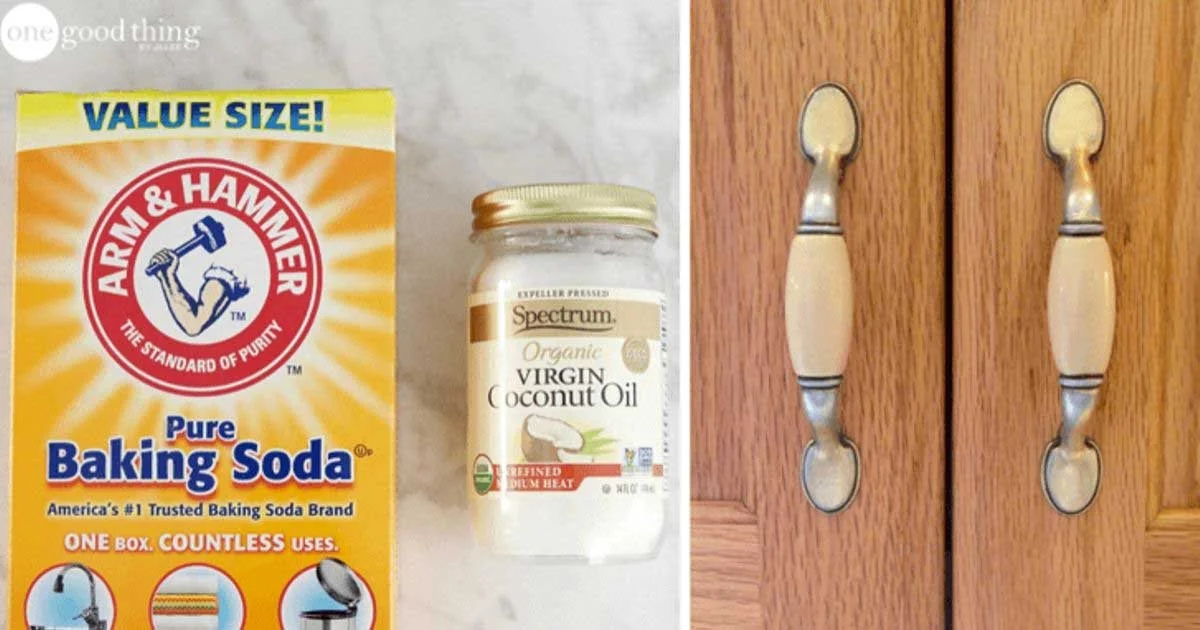
One popular DIY cleaner combines baking soda and coconut oil to loosen greasy buildup.
You’ll need:
- 2 parts baking soda
- 1 part coconut oil
- A small bowl
- A soft microfiber cloth
- An old toothbrush or soft detailing brush
Mix the baking soda and coconut oil until you have a thick, spreadable paste.
How to Clean Kitchen Cabinets
Apply the Paste
Using a microfiber cloth or your fingers, spread a thin layer of the paste over greasy cabinet doors, especially around handles, edges, and areas near the stove.
Allow it to sit for 2 to 3 minutes so it can soften built-up grease.
Gently Scrub
Use a soft cloth or an old toothbrush to gently scrub in small circular motions. The baking soda provides mild abrasion that helps lift grime without aggressively scrubbing.
Take extra care around decorative grooves, corners, and hardware where grease tends to accumulate.
Wipe Everything Clean
Dampen a clean microfiber cloth with warm water and wipe away the paste.
Continue wiping until no residue remains.
Finally, dry the cabinets with a soft towel to prevent moisture from sitting on the finish.
Alternative Cleaning Solutions
If your cabinets are especially greasy, these alternatives also work well.
Dish Soap and Warm Water
A few drops of grease-cutting dish soap mixed with warm water is often enough for routine cleaning. It’s gentle enough for most cabinet finishes and removes fresh grease effectively.
White Vinegar Solution
Mix equal parts warm water and white vinegar to cut through stubborn grease.
Always test this solution on a hidden area first, especially if your cabinets are painted or have delicate finishes.
Degreasing Wood Cleaner
For heavily soiled wood cabinets, a commercial wood-safe degreaser may be the better option. Follow the manufacturer’s directions and avoid oversaturating the wood.
Clean the Cabinet Hardware Too
Handles and knobs collect more bacteria and grease than almost any other part of the cabinet.
Wipe them thoroughly using warm, soapy water or a disinfecting cleaner that’s safe for the material. If possible, remove the hardware occasionally for a deeper cleaning.
Cabinets That Need Extra Care
Different cabinet materials require slightly different cleaning methods.
Painted Cabinets
Avoid excessive scrubbing or abrasive cleaners that could damage the paint. Always test homemade cleaners on a hidden spot before cleaning the entire surface.
Natural Wood Cabinets
Wood doesn’t like excess moisture. Use only a damp cloth—not a soaking wet one—and dry the surface immediately after cleaning.
Laminate Cabinets
Laminate is generally durable, but avoid harsh scouring pads that could dull the finish.
High-Gloss Cabinets
Use only soft microfiber cloths to prevent scratches and streaks.
Tips to Keep Cabinets Cleaner Longer
A little maintenance goes a long way.
- Wipe grease splatters soon after cooking.
- Turn on the range hood whenever you cook to reduce airborne grease.
- Clean cabinet handles weekly.
- Dust cabinet tops regularly if they don’t reach the ceiling.
- Wipe cabinets with a damp microfiber cloth every few weeks before grime builds up.
Mistakes to Avoid
To protect your cabinets, avoid these common cleaning mistakes:
- Using steel wool or abrasive scrubbers.
- Soaking wood cabinets with water.
- Leaving cleaning solutions on the surface for too long.
- Spraying cleaner directly onto cabinets instead of onto a cloth.
- Skipping the final wipe, which can leave behind residue.
Final Thoughts
Greasy kitchen cabinets may seem impossible to clean, but they don’t require harsh chemicals or hours of scrubbing. A simple mixture of baking soda and coconut oil can help loosen stubborn grime, while regular maintenance prevents grease from building up again.
Whether your cabinets are painted, wood, or laminate, using the right cleaning method and avoiding excess moisture will help keep them looking bright, clean, and well cared for. A few minutes of routine cleaning can make your entire kitchen feel fresher and more inviting.