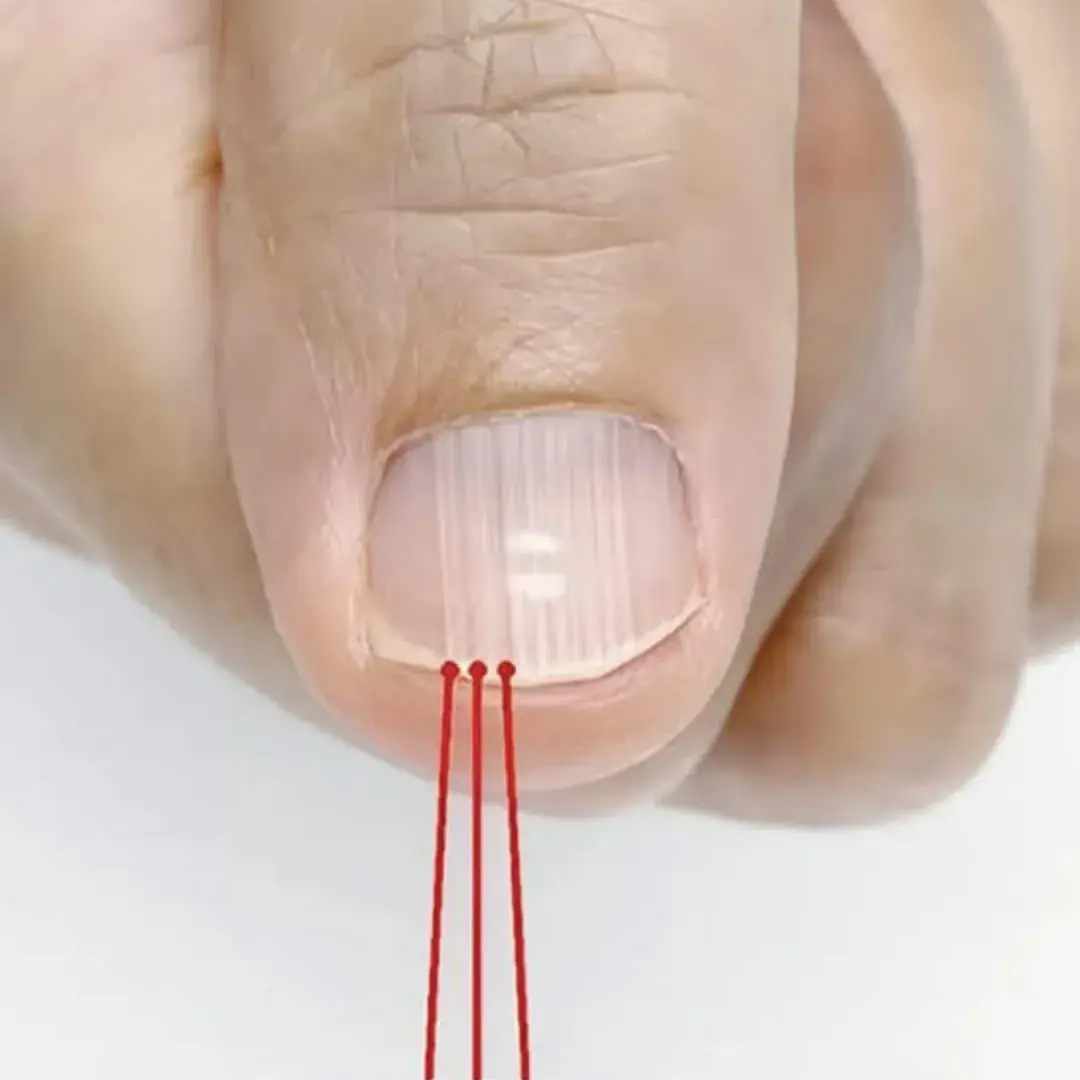
One morning, you look down at your hands and notice something that wasn’t quite so obvious before. Your fingernails, once smooth and even, now have a series of thin lines running from the base to the tips.
At first, you might assume they’re scratches. Perhaps you’ve been washing dishes more often, working in the garden, or using a new nail-care product.
But the lines don’t disappear.
Instead, they seem to become more noticeable over time.
For adults over 40, this can raise an uncomfortable question: Are these lines simply another sign of getting older, or could they be telling you something important about your health?
The answer may be more reassuring than you expect.
Those tiny grooves are commonly called vertical nail ridges, and they’re often a normal part of aging. However, certain changes in nail appearance can occasionally point toward other concerns.
The important detail isn’t simply whether you have lines on your nails. It’s what those lines look like, how they develop, and whether anything else has changed.
The First Clue Is the Direction of the Lines
Before worrying about what your fingernails might be telling you, take a closer look at the direction of the markings.
Do they run lengthwise, from the cuticle toward the fingertip?
Or do they cross the nail from one side to the other?
This distinction matters.
Vertical ridges, also known as longitudinal ridges, are very common, especially as people grow older.
They may appear as fine raised lines or shallow grooves extending along the nail.
Some people notice only one or two.
Others develop several parallel ridges across multiple fingernails.
The ridges may be barely visible in ordinary lighting but become obvious when sunlight hits the nail from a particular angle.
Horizontal grooves are different.
These run across the width of the nail and may sometimes be associated with injuries, temporary disruptions in nail growth, or certain health conditions.
Understanding that difference is the first step toward making sense of what you’re seeing.
And when it comes to vertical ridges, the most common explanation is surprisingly ordinary.
1. Your Nails May Simply Be Showing Their Age
Most people expect their skin and hair to change as they get older.
Fine lines appear around the eyes.
Hair may become thinner or gradually turn gray.
The skin on the hands can become drier.
But fingernails change with age, too.
Your nails grow from a specialized area beneath the skin near the base of each nail, called the nail matrix.
This area produces the cells that eventually form the hard nail plate.
As the years pass, changes in nail growth and cell production can make the surface less uniform.
The result may be the appearance of fine vertical ridges.
For many adults, these lines become more noticeable during middle age and later life.
They may gradually deepen or become easier to see.
The important point is that vertical nail ridges, by themselves, are usually not a sign of serious disease.
They can simply reflect the natural aging process.
Much like wrinkles in the skin, ridges in the nails may develop without indicating that anything is wrong.
But age isn’t the only factor that can make these markings more noticeable.
Everyday activities can also influence how your nails look.
2. Frequent Handwashing May Make the Ridges More Visible
Think about everything your hands encounter during an ordinary day.
You wash dishes.
You clean countertops.
You use soap, hand sanitizer, and household cleaning products.
Perhaps you spend time gardening or working with your hands.
Each of these activities can expose your nails to moisture, drying agents, or repeated friction.
Frequent cycles of getting wet and drying out can contribute to brittle nails.
Harsh detergents and cleaning chemicals may also strip away some of the natural oils that help protect the surrounding skin and nail surfaces.
Over time, the nails may become drier and more prone to roughness, peeling, or splitting.
When the nail plate loses some of its flexibility, existing ridges can appear more pronounced.
This doesn’t necessarily mean that the lines are a warning of an internal health problem.
Sometimes, the explanation is connected to what your hands experience every day.
A simple change that may help
Try paying closer attention to nail care after washing your hands.
Apply a fragrance-free hand cream and gently massage a little into the nails and surrounding skin.
When washing dishes or using cleaning products, wear protective gloves appropriate for the task.
Avoid prolonged exposure to harsh chemicals whenever possible.
These habits may improve the comfort and appearance of dry, brittle nails.
However, they may not completely eliminate age-related ridges.
And that’s perfectly normal.
3. Nutrition Can Affect Nail Health, but the Signs Aren’t Always Obvious
Here’s where the subject becomes more interesting.
Your fingernails are made primarily from a tough protein called keratin.
The body needs adequate nutrition to produce and maintain healthy tissues, including nails.
Protein, iron, zinc, and several vitamins contribute to normal growth and bodily functions.
When someone experiences a significant nutritional deficiency, changes in nail strength or appearance may sometimes occur.
For example, iron deficiency can be associated with brittle nails and, in some cases, changes in nail shape.
Other nutritional problems may also contribute to weakened or abnormal nail growth.
But there’s an important distinction.
Having vertical nail ridges does not automatically mean you’re deficient in iron, zinc, biotin, or another nutrient.
Many healthy people develop these ridges as they age.
And nail appearance alone cannot identify a specific nutritional deficiency.
If changes in your nails occur alongside unusual fatigue, weakness, hair changes, or other persistent symptoms, a healthcare professional may recommend an examination and appropriate testing.
Taking large doses of supplements without confirming a deficiency is not a reliable solution.
Some supplements can cause side effects or interfere with medications and laboratory tests.
A balanced diet is generally a better starting point for supporting everyday nail health.
What Foods Help Support Healthy Nails?
There is no single food that guarantees perfectly smooth fingernails.
However, eating a variety of nutritious foods helps provide the building blocks your body needs.
Eggs, fish, poultry, beans, and other protein-rich foods support normal tissue maintenance.
Leafy vegetables, legumes, and fortified cereals can contribute important vitamins and minerals.
Nuts and seeds provide additional nutrients, including certain minerals and healthy fats.
Whole grains, fruits, and vegetables also help maintain a balanced overall diet.
For adults over 55, nutritional needs may change because of medical conditions, medications, appetite changes, or other factors.
If you have difficulty eating enough food or suspect a nutritional deficiency, ask a qualified healthcare professional or registered dietitian for individualized guidance.
The goal is not to eat a particular food just to erase nail ridges.
It’s to support the body’s overall nutritional needs.
And there is another distinction worth understanding before assuming all nail lines have the same meaning.
4. Horizontal Lines Can Tell a Different Story
Imagine looking at your nails and seeing a deep groove running from one side to the other.
Unlike the fine vertical ridges commonly associated with aging, these horizontal indentations may deserve closer attention.
Some are known as Beau’s lines.
They can develop when nail growth temporarily slows or stops because of a significant physical stress or injury affecting the nail matrix.
Potential causes include certain illnesses, injuries, and medical treatments.
Because nails grow slowly, the groove may not become obvious until some time after the event that affected growth.
As the nail continues growing, the line gradually moves toward the fingertip.
If several nails develop horizontal grooves around the same time, a healthcare professional may consider whether a broader health issue affected nail growth.
A horizontal ridge on just one nail may have a more localized explanation, such as an injury near its base.
But these patterns cannot be reliably interpreted without considering the person’s health history.
That is why the direction, depth, and timing of nail changes can be more informative than the mere presence of a line.
When Nail Changes Deserve Medical Attention
Most fine vertical ridges do not require treatment.
But some nail changes should not be ignored.
The following signs are worth discussing with a healthcare professional or dermatologist:
A new dark brown or black streak, especially if it changes or widens.
Nail discoloration that appears suddenly or persists.
Significant pain, swelling, or redness around a nail.
A nail that begins lifting away from the nail bed without an obvious explanation.
Deep grooves that develop unexpectedly.
Unusual thickening, splitting, or distortion.
Changes affecting several nails together, particularly when accompanied by other symptoms.
A new or changing dark streak deserves prompt evaluation because certain nail pigment changes can occasionally be associated with serious conditions, including nail melanoma.
That does not mean every dark line is dangerous.
Many nail color changes have harmless explanations.
But the cause should be established by someone qualified to examine it.
The same applies to persistent pain, bleeding, or unexplained changes in nail structure.
Why You Shouldn’t Try to Diagnose Your Health From Your Nails Alone
It’s tempting to believe that every mark on the body carries a specific message.
A white spot must mean a vitamin deficiency.
A ridge must indicate poor circulation.
A brittle nail must reveal a hidden medical problem.
But the human body is more complicated than that.
The same nail change can have several possible causes.
And different conditions can produce similar-looking symptoms.
For example, brittle nails may be related to frequent water exposure, ordinary aging, certain skin conditions, or other factors.
A change in color might result from an injury, cosmetic product, infection, or something requiring additional evaluation.
That’s why photographs and online symptom descriptions have limitations.
They can help you recognize something worth asking about.
They cannot replace a professional diagnosis.
For adults who notice gradual, fine vertical ridges across several nails, normal aging is often a reasonable explanation.
But when the change is sudden, painful, or accompanied by other concerning symptoms, professional evaluation is the safer choice.
Can You Get Rid of Vertical Nail Ridges?
This is one of the questions people ask most often.
If nail ridges are simply part of aging, can they be smoothed away?
The answer depends on what is causing them.
Ridges associated with natural age-related changes may remain visible even when the nails are healthy.
However, if dryness or repeated irritation is making the appearance worse, improving nail care may help.
A few gentle habits can make a difference.
Moisturize your hands and nails regularly
Apply hand cream after washing and before bed.
Pay attention to the skin around the nails as well.
Dry cuticles and surrounding skin can become irritated, particularly during colder months.
Avoid aggressive nail buffing
A nail buffer may temporarily smooth the surface.
But excessive buffing can thin and weaken the nail plate.
If the nails are already brittle, removing additional layers may make splitting more likely.
Gentle care is usually preferable to trying to eliminate every visible ridge.
Keep your nails at a manageable length
Long nails can sometimes catch on objects, especially when they are fragile.
Keeping them neatly trimmed may reduce accidental breakage.
Use clean nail clippers and a gentle file.
Protect your hands during cleaning
Wear suitable gloves when working with detergents, dish soap, or other products that can irritate or dry the skin.
This may help reduce repeated exposure to substances that contribute to brittle nails.
Be patient
Fingernails grow slowly.
Changes in nail care won’t transform their appearance overnight.
It may take months for healthier-looking nail growth to become noticeable.
And if your ridges are primarily caused by normal aging, they may never disappear completely.
That doesn’t mean your nails are unhealthy.
The Nail-Care Mistake That Can Make Things Worse
One common mistake is trying too hard to create perfectly smooth nails.
When someone notices ridges, they may begin filing or buffing the surface repeatedly.
The idea seems logical.
Remove the raised areas, and the nail should look smoother.
But excessive filing can weaken the nail plate.
That may increase peeling, splitting, and breakage.
A similar problem can develop when cuticles are aggressively trimmed or pushed back.
The cuticle helps protect the area where the nail grows.
Damaging it can increase irritation and create opportunities for infection.
For many people, gentle moisturizing and avoiding unnecessary trauma provide a more sensible approach.
And if the ridges don’t cause discomfort, there may be no need to do anything about them at all.
Why Nail Changes Become More Noticeable After 40
Middle age often brings a series of gradual changes that don’t happen all at once.
Skin may lose some moisture.
Hair texture can change.
And nails may become less flexible or develop more noticeable surface irregularities.
These developments are part of the normal variation in how our bodies age.
Not everyone experiences them at the same time.
Some individuals begin noticing vertical ridges in their thirties or forties.
Others may have relatively smooth nails well into later life.
Genetics, daily habits, environmental exposure, and individual health all influence nail appearance.
There is no specific birthday when nail ridges suddenly become normal.
And turning 40 doesn’t mean that every new nail change should automatically be dismissed as aging.
The useful question is whether the change is gradual and consistent with normal variation or whether it appears unexpectedly and comes with other concerning symptoms.
That distinction can help determine whether simple care or medical evaluation is appropriate.
What Your Nails Can and Cannot Tell You
Fingernails are interesting because they grow slowly and can reflect certain changes affecting the nail-producing tissue.
A temporary interruption in growth may leave a visible groove.
An injury can alter the way part of the nail develops.
Some skin conditions can change nail texture or appearance.
But nails cannot provide a complete picture of a person’s health.
They cannot independently tell you whether your circulation is normal, whether you have a vitamin deficiency, or whether your thyroid is functioning properly.
Those questions require appropriate medical assessment.
What nails can do is provide visible information that may be useful when considered alongside other symptoms and health history.
For example, someone who notices new nail changes and ongoing fatigue may have a reason to discuss both concerns during a medical appointment.
But someone who has had mild vertical ridges for years, with no other symptoms, may simply be experiencing a common age-related change.
The Simple Answer Behind Those Lines
The next time you notice fine lines running from the base of your fingernails toward the tips, remember the difference between a common change and a warning sign.
Vertical ridges frequently become more noticeable with age.
Dryness, repeated handwashing, and exposure to cleaning products can make the nail surface appear rougher.
Nutrition and certain health conditions can influence nail growth, but ridges alone are not proof of a deficiency or disease.
And horizontal grooves, sudden discoloration, pain, or other unusual changes may deserve medical attention.
The most useful approach is to pay attention without assuming the worst.
Take care of your hands.
Protect your nails from unnecessary damage.
Eat a varied diet.
And ask a healthcare professional about changes that are new, persistent, or concerning.
After all, growing older brings many small changes to the body.
Not every one of them is a warning.
Sometimes, those little lines on your fingernails are simply another reminder that your body has been changing gradually over the years.
Sources and References
Editorial Disclaimer
This article is intended for general informational, educational, and health-awareness purposes only. It does not constitute professional medical advice, diagnosis, or treatment.
The discussion of vertical nail ridges, aging, nutritional factors, and possible medical causes is based on publicly available medical information. Fingernail changes can have multiple explanations, and the appearance of lines or ridges alone cannot reliably identify a vitamin deficiency, circulatory disorder, thyroid condition, or other disease.
Before trying supplements, home remedies, aggressive nail treatments, or making significant dietary changes to address nail abnormalities, consult a qualified healthcare professional or dermatologist. Individual health conditions, medications, and nutritional needs can affect which approaches are appropriate.
New or changing dark nail streaks, significant discoloration, pain, swelling, bleeding, or sudden changes in nail growth should be evaluated by a medical professional. Do not delay appropriate care while attempting cosmetic treatments or relying on online photographs.
The information provided does not guarantee that particular nail-care practices will eliminate ridges or prevent medical conditions. Readers should seek individualized guidance from qualified healthcare professionals whenever nail changes are unexplained, persistent, or accompanied by other symptoms.