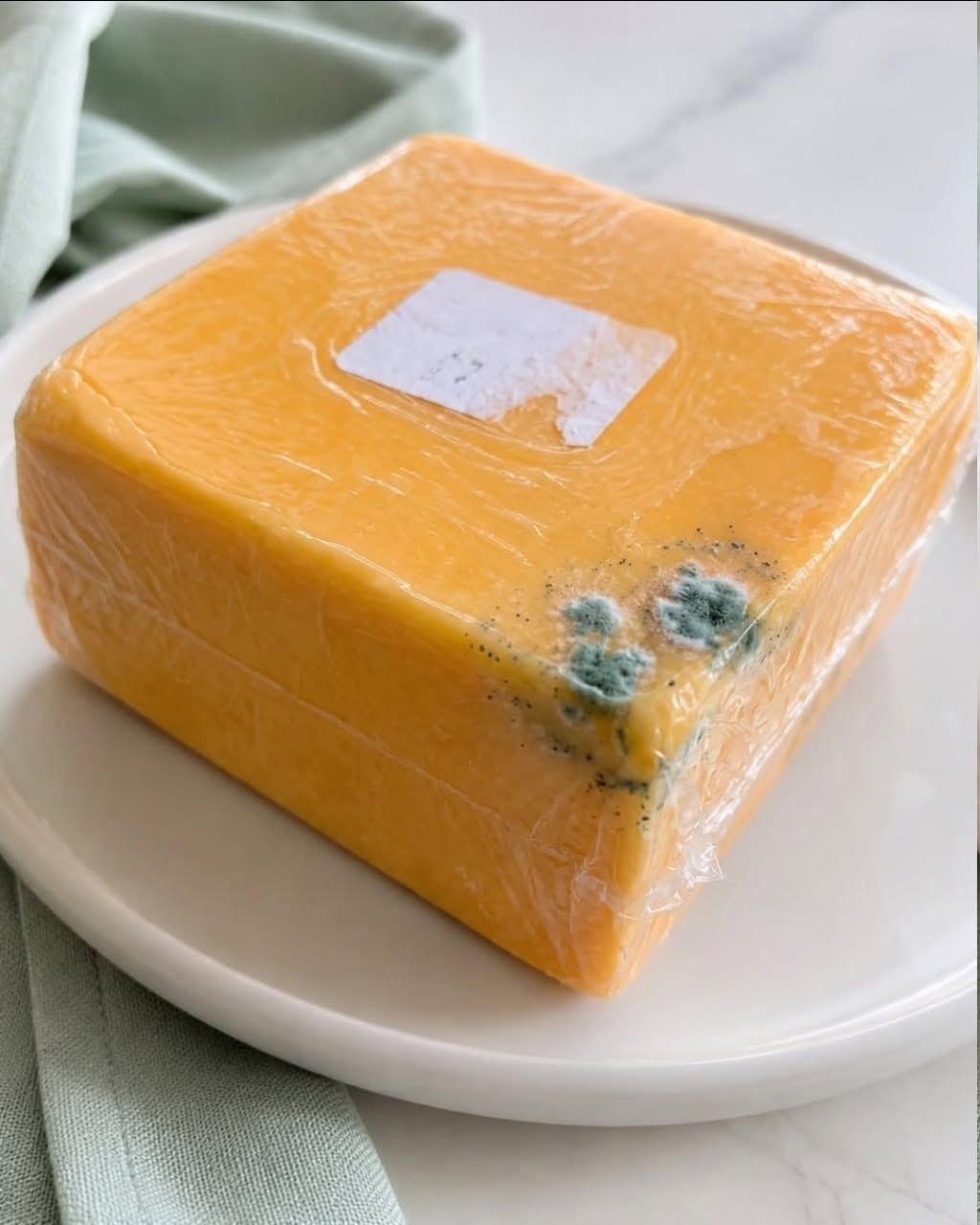
You open the refrigerator, already thinking about what to prepare for dinner. Maybe you’re planning a grilled cheese sandwich, a quick pasta dish, or an easy homemade meal. Then you notice something unexpected: a small, fuzzy green patch growing on your block of cheddar cheese.
Suddenly, you have a decision to make.
Should you cut away the mold and use the remaining cheese? Is the entire block unsafe? Or is throwing it away simply an unnecessary waste of food and money?
It’s a common kitchen dilemma, and the answer depends largely on the type of cheese involved.
While some cheeses are intentionally made with mold, unexpected mold growth on other varieties can be a sign of spoilage. Fortunately, hard cheeses such as cheddar are treated differently from soft cheeses when it comes to food safety.
Understanding the difference can help you make informed decisions, reduce unnecessary food waste, and protect your household from potential foodborne risks.
First, Is Mold on Cheddar Cheese Dangerous?
Not all mold is harmful. Certain varieties of cheese, including blue cheese, are intentionally produced using specific mold cultures that contribute to their distinctive flavor, appearance, and texture.
However, mold appearing unexpectedly on cheddar cheese is a different situation.
Cheddar is a hard cheese that is not supposed to develop fuzzy green, white, or other unusual mold growth during normal storage. These spots may develop when mold spores come into contact with the cheese through air exposure, contaminated utensils, or improper storage conditions.
Although a small mold patch on hard cheese does not automatically mean the entire block must be discarded, it should never be ignored.
Some molds can produce substances called mycotoxins, and contamination may extend beyond the visible surface.
The important distinction is that hard cheeses such as cheddar can sometimes be safely salvaged, while soft cheeses generally need to be discarded when unexpected mold appears.
The Type of Cheese Makes a Big Difference
One of the biggest mistakes people make is assuming that the same food safety rules apply to every type of cheese.
In reality, moisture content and texture play an important role in determining how mold spreads.
Hard Cheeses: Cheddar, Parmesan, and Swiss
<AsyncImage query=”block of aged cheddar cheese on wooden cutting board close up” aspectRatio=”16:9″ width=”100%”/>
Hard cheeses have a dense structure and relatively low moisture content. This makes it more difficult for mold to spread throughout the cheese compared with softer varieties.
According to USDA food safety guidance, mold can generally be removed from hard cheeses by cutting away at least one inch (2.5 centimeters) around and below the affected area.
This approach applies to intact blocks of hard cheese, not shredded, crumbled, or sliced cheese.
Soft Cheeses: Brie, Ricotta, and Cream Cheese
<AsyncImage query=”soft brie ricotta cream cheese assortment on serving board” aspectRatio=”16:9″ width=”100%”/>
Soft cheeses contain more moisture, which allows mold to spread more easily beneath the visible surface.
Even when mold appears in only one small area, contamination may extend throughout the product.
For this reason, unexpected mold growth on soft cheeses generally means the entire product should be discarded.
Examples include:
- Brie
- Ricotta
- Cream cheese
- Cottage cheese
- Fresh mozzarella
- Soft goat cheese
Unlike an intact block of cheddar, these cheeses should not be salvaged simply by removing the visible mold.
What Should You Look for Before Making a Decision?
If you discover mold on cheddar, it is important to assess the product carefully.
However, remember that appearance and smell cannot guarantee that food is safe. Moldy cheese should be handled according to established food safety guidance rather than relying entirely on a visual inspection.
Here are some warning signs worth understanding.
1. Multiple Mold Spots
<AsyncImage query=”cheddar cheese block with small green mold patch close up” aspectRatio=”16:9″ width=”100%”/>
A single visible patch may be limited to one area, but multiple spots can suggest more widespread contamination.
If mold appears in several locations or covers a large portion of the cheese, discarding the block is the more cautious choice.
2. Unusual Colors
<AsyncImage query=”cheddar cheese surface showing unusual discoloration food spoilage close up” aspectRatio=”16:9″ width=”100%”/>
Unexpected green, black, pink, or orange growth should be treated as a warning sign.
Some cheeses naturally have different colors depending on their ingredients and production methods, but unusual fuzzy growth is not something to overlook.
3. Unusual Odors
Fresh cheddar has a recognizable aroma that varies depending on how long it has been aged.
An unusual sour, ammonia-like, or unpleasant smell may indicate deterioration.
However, a normal smell does not prove that moldy cheese is safe.
4. Changes in Texture
<AsyncImage query=”aged cheddar cheese block sliced texture close up food photography” aspectRatio=”16:9″ width=”100%”/>
Cheddar should generally have a firm texture.
Unexpected sliminess, excessive softness, or unusual moisture around the moldy area may indicate that the cheese has deteriorated.
When these changes are present, discarding the product is the safer option.