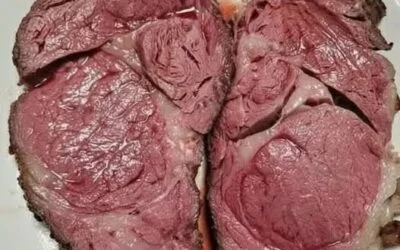
A prime rib roast can look intimidating when you’re staring at a large, expensive piece of beef—but the hardest part is actually knowing when to take it out of the oven. Cook it by time alone and you can easily end up with a dry outer layer or a center that’s more done than you wanted.
The better approach is simple: build a deeply browned crust, cook the roast gently, and use an instant-read or probe thermometer to decide when it is ready. The thermometer matters far more than any exact “minutes per pound” promise because roast size, shape, oven performance, and starting temperature all affect cooking time.

Why Prime Rib Turns Out Better With a Thermometer
Prime rib is a roast where guessing can get expensive.
Two roasts with the same weight can cook differently if one is thicker, one has bones, or one starts colder. That’s why cooking charts should be treated as a starting point rather than a guarantee.
For example, FoodSafety.gov lists 325°F or higher as the oven temperature for roasting beef and gives approximately 23–25 minutes per pound for a 4- to 6-pound bone-in rib roast at 325°F. It also recommends using a food thermometer rather than relying only on cooking time.
For a classic prime-rib texture, many cooks aim for medium-rare rather than cooking the roast all the way to the USDA safety temperature. If you choose to serve beef below 145°F, understand that this is below the federal recommended minimum for beef roasts. FoodSafety.gov recommends 145°F with at least a 3-minute rest for beef roasts.
Ingredients
For the Roast
- 1 bone-in prime rib roast, about 4 to 6 pounds
- 2 tablespoons olive oil
- 2 tablespoons kosher salt
- 1 tablespoon freshly ground black pepper
- 1 tablespoon finely chopped fresh rosemary
- 1 tablespoon finely chopped fresh thyme
- 5 garlic cloves, finely minced
- 1 teaspoon onion powder
Optional for the Pan
- 1 cup beef broth
- 1/2 cup dry red wine
- 1 small onion, roughly chopped
- 2 garlic cloves, smashed
You don’t need an elaborate seasoning blend. Prime rib already has plenty of flavor from the beef and its marbling. The job of the seasoning is to enhance that flavor and help create a savory crust.
1. Choose the Right Roast
For a special dinner, a bone-in rib roast is a great choice.
The bones add flavor and also provide a natural rack for the roast to sit on while cooking.
Ask your butcher for a rib roast with good marbling. Those small streaks of fat throughout the meat are important because they contribute to the juicy texture people expect from prime rib.
And one useful clarification: “prime rib” doesn’t necessarily mean the beef has to carry the USDA Prime grade. Prime rib refers to the cut; the USDA grade is a separate classification.
2. Season It Ahead of Time
Pat the roast thoroughly dry with paper towels.
Mix the salt, pepper, rosemary, thyme, garlic, and onion powder.
Rub the outside of the roast lightly with olive oil, then coat it evenly with the seasoning mixture.
If you have time, season the roast several hours ahead—or even the day before—and refrigerate it uncovered or loosely covered.
This gives the salt time to work into the surface and also helps dry the exterior, which is useful when you’re trying to develop a good crust.
Before roasting, take the meat out of the refrigerator and allow it to sit while the oven preheats. Don’t rely on a fixed “room temperature for exactly X hours” rule; the important thing is to avoid putting an extremely cold roast straight into the oven and to keep food-safety considerations in mind.


3. Start With a Hot Oven
Preheat the oven to 450°F.
Place the roast bone-side down in a roasting pan.
The bones act like a natural rack, keeping the main portion of the meat slightly elevated.
Roast at 450°F for about 15 to 20 minutes to get the browning started.
You are not trying to cook the center during this initial blast of heat. You’re building the flavorful exterior.
4. Lower the Heat and Finish Slowly
After the initial browning, reduce the oven temperature to 325°F.
Continue roasting until the center reaches the temperature you’re targeting.
This is where the thermometer becomes more important than the clock.
As a rough planning guide, a 4- to 6-pound bone-in rib roast can take roughly 23 to 25 minutes per pound at 325°F, according to FoodSafety.gov. But start checking the internal temperature before the estimated cooking time is complete.
Insert the thermometer into the thickest part of the roast, avoiding the bone and large pockets of fat.


5. Know What Temperature You’re Aiming For
This is where prime rib recipes often become confusing because culinary doneness and food-safety guidance are not the same thing.
For beef roasts, FoodSafety.gov recommends a minimum internal temperature of 145°F followed by at least 3 minutes of rest.
If you prefer a traditional medium-rare prime rib, many cooking references target a final temperature around 130–135°F after resting.
The important thing is to understand that a roast continues cooking after it comes out of the oven.
So don’t wait until the roast reaches your final target temperature before removing it. The internal temperature can continue rising while the roast rests.
If food safety is your priority, follow the 145°F minimum rather than using the lower medium-rare targets.
6. Let It Rest—Don’t Rush This Part
Once the roast reaches your chosen temperature, remove it from the oven and place it on a cutting board.
Loosely tent it with foil and let it rest for 15 to 30 minutes, depending on its size.
This is not wasted time.
Resting allows the internal temperature to settle and gives the juices time to redistribute. Cutting immediately can send more of those juices onto the cutting board instead of leaving them in the slices.
For a large holiday roast, giving it a proper rest can make a noticeable difference in how juicy the slices feel.
7. Carve the Prime Rib
If you’re working with a bone-in roast, run a long carving knife along the bones to separate them from the main roast.
Set the bones aside—they’re excellent for snacking or saving for stock.
Then slice the roast across the grain.
Don’t make paper-thin slices unless that’s your preference. Prime rib is generally more enjoyable when the slices have enough thickness to retain their juicy texture.


The Biggest Prime Rib Mistakes
Cooking strictly by minutes per pound
A timing chart can’t know the exact shape of your roast or how your oven behaves.
Use the time estimate to plan dinner, but use the thermometer to determine doneness.
Skipping the drying step
A wet surface has a harder time developing the deeply browned crust you’re looking for.
Pat the roast dry before seasoning.
Cutting it immediately
This is one of the easiest mistakes to avoid.
Give the roast time to rest before carving.
Constantly opening the oven
Every time you open the door, you lose heat and make the cooking environment less consistent.
Use a probe thermometer if you have one so you can monitor the roast without repeatedly opening the oven.
Seasoning only the outside at the last second
A large roast needs enough seasoning to flavor the exterior properly. Salting ahead of time can also help season the surface more evenly.
Should You Use Bone-In or Boneless?
Both can work.
Bone-In
Bone-in rib roast is traditional and gives you a natural roasting platform.
It’s also visually impressive when served for a holiday meal.
Boneless
Boneless roast is easier to carve and portion.
Because the shape can be different from a bone-in roast, don’t assume the same cooking time will apply. Again, the thermometer is the better guide.
Do You Need to Sear Prime Rib First?
Not necessarily.
You can start with a high-temperature roast, as in this recipe, to develop the crust before lowering the oven temperature.
Another popular technique is to roast at a low temperature first and finish with very high heat.
Both approaches can produce excellent results.
What matters most is controlling the internal temperature and getting the exterior properly browned.
What to Serve With Prime Rib
Prime rib is rich, so classic sides work especially well.
Try serving it with:
- Creamy mashed potatoes
- Yorkshire pudding
- Roasted Brussels sprouts
- Green beans
- Creamed spinach
- Roasted carrots
- Horseradish sauce
- Au jus
- A crisp green salad
For a holiday dinner, mashed potatoes and a sharp horseradish sauce provide a particularly good contrast to the rich beef.
Quick Au Jus From the Pan
Don’t throw away the flavorful drippings.
After removing the roast, place the roasting pan over low heat if it’s suitable for stovetop use.
Add beef broth and scrape up the browned bits from the bottom.
You can also add a splash of dry red wine for additional depth.
Simmer briefly, then strain if you prefer a smoother sauce.
Keep the seasoning restrained at first because the pan drippings can already be salty.
Can You Make Prime Rib Ahead?
Prime rib is best served freshly roasted, but you can plan the meal so most of the work happens before guests sit down.
Season the roast in advance.
Prepare the side dishes while the roast cooks.
Make sauces and garnishes ahead.
Then let the finished roast rest while you finish the sides and set the table.
If you have leftovers, refrigerate them promptly in a shallow container or tightly wrapped package.
How to Reheat Leftover Prime Rib Without Drying It Out
The biggest mistake is blasting cold slices with high heat.
That can quickly turn beautifully pink beef into dry, overcooked meat.
Instead, reheat slices gently with a little broth or leftover jus. A covered, low-temperature oven works better than aggressive heat.
For food safety, reheated leftovers should reach 165°F.
Frequently Asked Questions
How much prime rib should I buy per person?
A common planning estimate is roughly 1 pound of bone-in roast per person, although appetites and the number of side dishes can change that considerably.
If you want generous leftovers, buy more.
Why is my prime rib tough?
Overcooking is one common reason, but slicing technique matters too. Make sure you’re slicing across the grain and giving the roast enough time to rest.
Do I need to baste prime rib?
No. Basting isn’t essential for a juicy roast. Opening the oven repeatedly can actually make temperature control harder.
Should I cover prime rib while roasting?
For the main roasting process, you generally want the exterior exposed so it can brown properly.
A loose foil tent is useful after cooking, during the resting period.
Can I cook prime rib at a lower temperature?
Yes. Low-temperature roasting is another established approach, but it requires more time and careful temperature monitoring. The key is still the internal temperature rather than a rigid cooking schedule.
What is the most important tool for prime rib?
A reliable meat thermometer.
A beautiful roasting pan is nice to have, but the thermometer is what keeps you from guessing about the center of an expensive roast.
Final Takeaway
A great prime rib doesn’t require complicated tricks.
Dry the roast, season it well, brown the outside, control the oven temperature, and—most importantly—watch the internal temperature instead of blindly following the clock.
For traditional medium-rare results, you’ll see many recipes target a final temperature around 130–135°F, while federal food-safety guidance recommends 145°F for beef roasts with at least a 3-minute rest. Choose your target with that distinction in mind.
Once the roast has rested, carve it into thick, juicy slices and serve it with the classic sides and sauces that make prime rib feel like a true special-occasion dinner.