PARTE 2
Jeffrey pushed through the loose gate in the chain-link fence, and it swung back hard enough to catch his heel. He barely noticed.
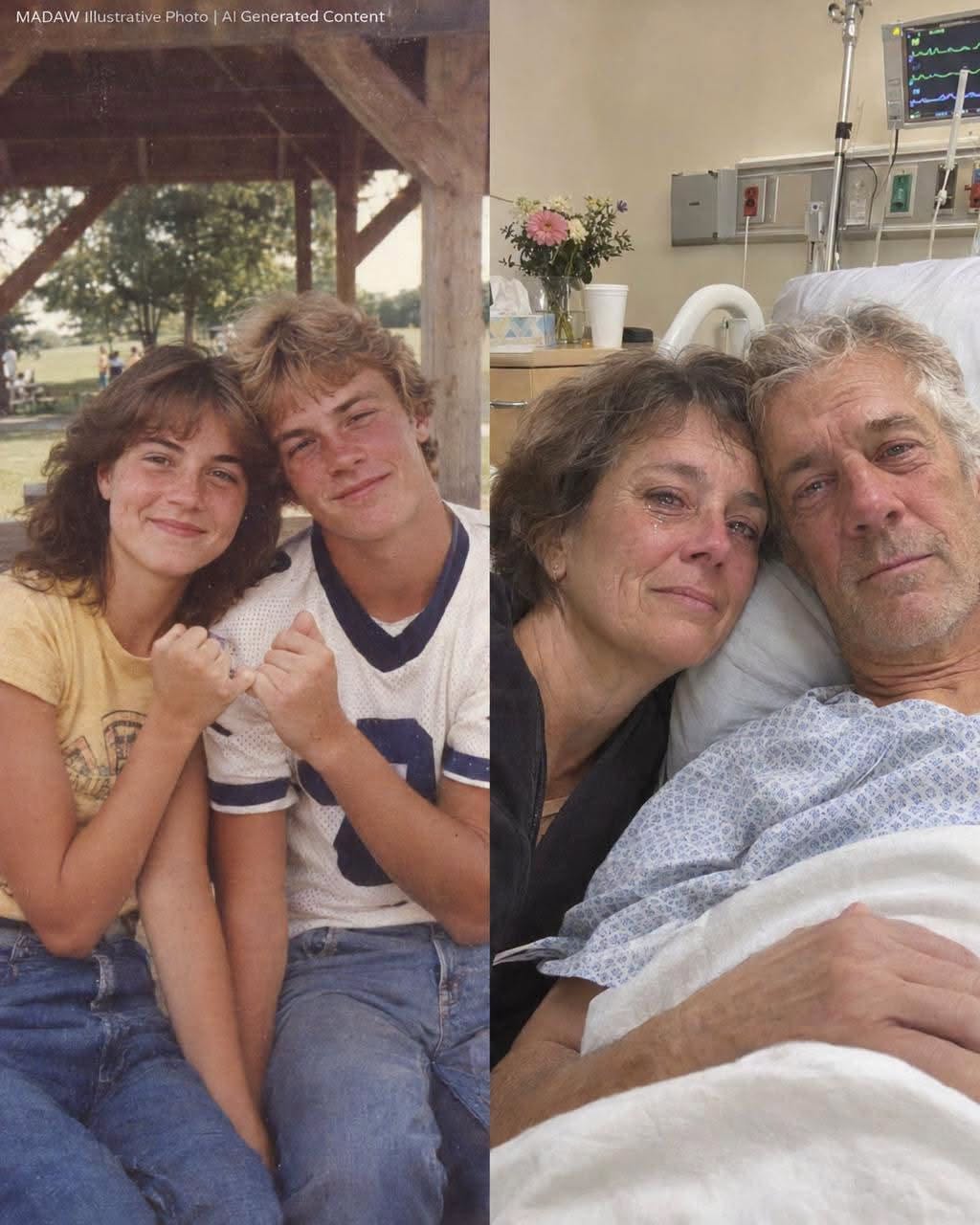
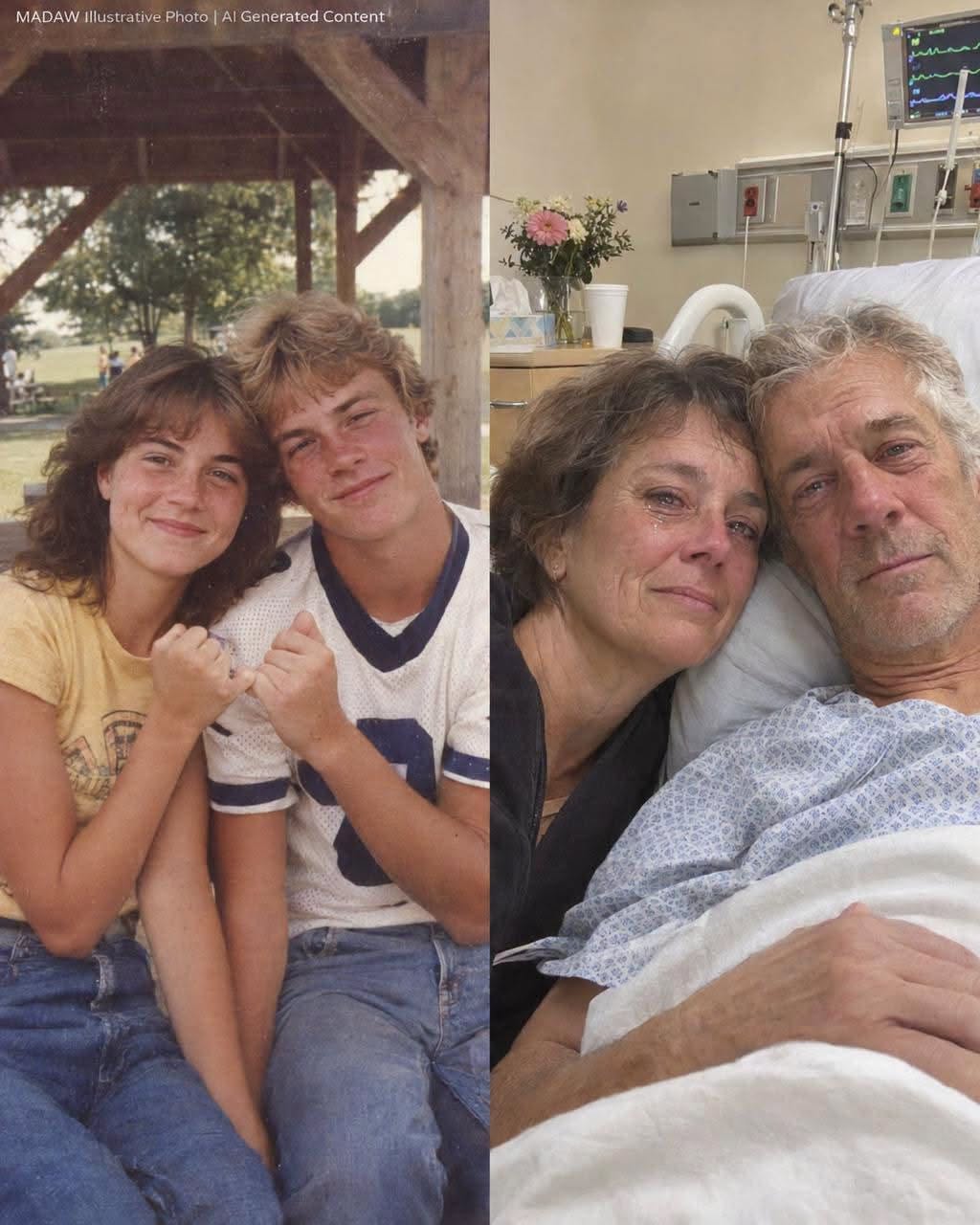
Ruth was waiting beneath the high school bleachers with a paper cup of soda. It was late summer in Cedar Falls, and both of them were nineteen.
“How was your date?” she asked.
Jeffrey dropped onto the lowest wooden board beside her.
“She asked if I had a brother.”
“Maybe she was just making conversation.”
“She wanted to know if he looked like me. Then she asked if he was smarter.”
Ruth handed him the cup. “What did you tell her?”
“That he was imaginary, but probably.”
She tried not to laugh. Jeffrey had worn a clean shirt and borrowed his father’s car for the evening. His collar was folded underneath, and she couldn’t help noticing.
“What about your date?” he asked.
“He talked about his car through the entire supper. He even drew the engine on a napkin.”
“Did you keep the drawing?”
“I left it beside my plate. Maybe someone will appreciate his artwork.”
Jeffrey smiled, but his expression soon became thoughtful. He looked through the gaps between the wooden boards above them.
“What if neither of us finds the right person?” he asked.
“The right person for what?”
“To marry.”
Ruth turned the paper cup between her hands. Jeffrey would be leaving for college soon. She knew he had plans, new friends to meet, and an entirely different life waiting for him. She had tried not to think too much about how quiet Cedar Falls might feel without him.
“You could always write to the girl from tonight,” she joked. “Ask her to wait for your imaginary brother.”
“I’m serious, Ruthie.”
He rubbed his little finger with his thumb and held it out toward her.
“If we’re both single at sixty, let’s find each other.”
“Sixty?” Ruth laughed. “Why sixty?”
“Because it’s far enough away to sound ridiculous. We have plenty of time to stop being foolish.”
“That’s a very long wait.”
“We don’t have to wait. We can get married before then if we find somebody.”
Ruth looked down at the soda cup. A small drop slipped over its soft bottom and landed on her shoe.
“And if we don’t?”
“Then we find each other.”
He wasn’t smiling anymore.
Ruth wanted to ask whether he really meant it or whether it was simply another joke between two friends who were afraid of growing up. Instead, she held out her little finger.
Jeffrey curled his around hers.
For a few quiet moments, neither of them said anything. Their hands remained together until he finally let go.
Neither knew that a simple promise beneath the school bleachers would follow them for the next forty years.
A Letter Before College
Several days later, Jeffrey appeared at Ruth’s family home carrying a folding chair and an envelope.
“You left this at my house after the picnic,” he said, handing the chair to Thomas, Ruth’s father. “Mother thought you might want it back before somebody else borrowed it.”
Thomas tested one of the chair’s legs against the kitchen floor.
“It has a habit of closing on people.”
“Only people who lean back,” Jeffrey replied.
He placed the envelope on the table.
“That’s my college address. I thought Ruth might need it.”
Ruth picked it up and read the dormitory name.
“Do you have a roommate?”
“They sent his name, but I haven’t met him yet. I just hope he doesn’t play the trumpet.”
“You could ask him to practice in the hallway,” she said.
Thomas folded the chair and asked Jeffrey to return it to his car. While the two men spoke, Ruth turned the envelope over, studying the address.
“Where should I keep this so it doesn’t disappear?” she asked.
“I can keep it safe,” Thomas replied.
He opened his wooden document box and carefully placed Jeffrey’s envelope among the papers inside.
“I’ll need it when I write,” Ruth said.
“It’s right there whenever you want it.”
Thomas then picked up another envelope and wrote Jeffrey’s name across the front. Ruth noticed him slipping a folded sheet of paper inside before sealing it.
“What’s that?”
“A note for Jeffrey before he leaves.”
“He’ll be back in a minute. Why not tell him yourself?”
Thomas ran his thumb along the sealed flap.
“It concerns his future. I’d rather he have time to read it.”
Ruth looked at him curiously.
“Does it concern me?”
“It’s a favor I’m asking him, not a warning I’m giving you.”
Before she could ask another question, the screen door opened and Jeffrey returned.
He stayed for a glass of water, spoke with Thomas about his plans, and then left.
After the car disappeared down the road, Thomas placed the sealed envelope beneath the outgoing mail clip.
Ruth never asked about it again.
She had no idea how important that little envelope would become.
The Distance Between Two Friends
College changed Jeffrey’s daily routine, but at first, their friendship seemed untouched.
His first letters were full of stories about his roommate, difficult professors, cafeteria food, and the strange people he met in the dormitory.
Ruth answered every letter.
She wrote about the library where she worked, the children she hoped to teach, and the ordinary events that filled her days.
Sometimes she included small jokes that only Jeffrey would understand.
When his letters became less frequent, she tried not to worry.
One winter evening, she spread his envelopes across the kitchen table while Erica packed the leftover meat loaf.
“Three weeks longer,” Ruth said, comparing the postmarks.
“Maybe he has exams,” Erica suggested.
“Maybe.”
She picked up the newest letter.
“He says his roommate borrowed his good shirt and spilled gravy on it.”
Erica laughed.
“Did he get it back?”
“He did. Apparently, the gravy came with it.”
But after the laughter faded, Erica looked at her carefully.
“Have you told him you miss him?”
Ruth kept her eyes on the letter.
“I could tell him about the library.”
“You could tell him both.”
Ruth didn’t answer immediately. She pulled a fresh sheet of paper from the telephone table and began writing.
She told Jeffrey about her teacher training, the children she had watched in a classroom, and the money she had spent on lunch.
At the bottom of the page, she added:
“I hope your classes are going well. Save me a story for when you come home.”
She wanted to write something more personal, but she couldn’t find the courage.
So she folded the letter, placed it inside an envelope, and sent it.
For a while, she convinced herself that friendship was enough.
The Name That Changed Everything
During Jeffrey’s second year of college, a letter arrived with a name Ruth hadn’t seen before.
Margaret.
He explained that she was a nursing student who had borrowed his notes in the library. They had started studying together, although he admitted they often spent more time talking than reading.
Ruth read the letter twice.
That evening, she carried it into her bedroom and dialed Jeffrey’s number.
“What classes does Margaret take?” she asked when he answered.
He laughed.
“That was quick. I only mailed that letter Tuesday.”
“I was curious about the nursing program.”
“She likes it, except for chemistry. She says the instructor could make a glass of water sound complicated.”
Ruth smiled faintly.
“How did you meet her?”
“In the library. I had books spread across an entire table, and she asked if I was expecting company.”
“Were you?”
“No. She moved half my books and sat down. I didn’t get much studying done after that.”
Ruth listened quietly.
“Are you serious about her?”
“Yes,” Jeffrey answered. “I am.”
“Does she feel the same way?”
“She told me she does. She argues with me about everything, and I like that about her.”
He laughed again, describing how Margaret had criticized his handwriting.
“You’d like her, Ruthie. She’d tell you to study harder and then sit down to help you.”
“Maybe I would.”
“When I’m home, we should all have lunch together.”
Ruth pressed her pencil against the notepad on her lap.
“That sounds nice.”
They talked about his classes and her teacher training before saying goodbye.
After hanging up, Ruth sat in silence.
She took a clean sheet of paper and wrote his name at the top.
Then she wrote what she had been afraid to say for years.
She told him that she loved him. That she had missed him more than she admitted. That the promise beneath the bleachers had never been a joke to her.
She filled several pages.
When she finished, she read the first one again.
Then she tore the pages into small pieces and dropped them into the wastebasket.
She wasn’t going to ask him to choose her.
If Jeffrey had found someone who made him happy, Ruth would not stand in the way.
A Wedding Invitation
A year later, Jeffrey sent Ruth an invitation.
He and Margaret were getting married.
Ruth held the card for a long time before placing it on her bedside table.
She had expected the news, but seeing their names printed together made everything feel final.
She attended the wedding.
Margaret was kind, warm, and genuinely pleased to meet her. She thanked Ruth for being such a good friend to Jeffrey and even asked about her work at the library.
For a moment, Ruth felt guilty for having disliked someone she had never met.
Margaret had done nothing wrong.
During the reception, Jeffrey found Ruth near the edge of the room.
“You came,” he said.
“Of course I came.”
He looked happy, and she was glad he did.
“Remember our promise?” he asked quietly.
Ruth smiled.
“Which one?”
“The one beneath the bleachers.”
She looked at Margaret across the room.
“I think you found your person before sixty.”
Jeffrey laughed, but there was something thoughtful in his eyes.
“Looks like it.”
They hugged before he returned to his new wife.
That night, Ruth drove home alone. She put the invitation inside a drawer and allowed herself to cry for the first time.
The next morning, she got up, went to work, and continued building the life she had always imagined.
She became a teacher, eventually earning a position at an elementary school in Cedar Falls. She loved her students, traveled when she could, and made friends who became like family.
She had relationships over the years, but none became a lasting marriage.
Still, she never considered her life incomplete.
She had not spent forty years waiting for Jeffrey.
She had simply never forgotten him.
Forty Years Later
Time passed more quickly than either of them could have imagined.
The town changed. The old shops disappeared, familiar faces became memories, and the high school bleachers were eventually replaced.
Jeffrey and Margaret built a life together. They raised two children, moved to another state for work, and returned to Iowa after retirement.
Their marriage lasted for decades.
Margaret became ill in her later years, and Jeffrey cared for her through the difficult final months of her life.
After she passed away, he discovered that grief could make even a familiar house feel unfamiliar.
He kept her photographs on the mantel and continued visiting their favorite places. He didn’t rush to fill the silence.
Ruth, meanwhile, had retired from teaching. She spent her mornings reading, volunteered at the local library, and occasionally visited her former students.
Both were now approaching sixty.
One afternoon, while sorting through an old wooden box, Jeffrey found a photograph from the summer he left for college.
It showed him and Ruth standing outside the school gymnasium, both smiling at something beyond the camera.
He turned the photograph over.
In Ruth’s handwriting were four words:
“Don’t forget our promise.”
Jeffrey sat down.
He remembered the bleachers, the paper cup of soda, and the little fingers they had curled together.
Then he remembered something else.
His father’s envelope.
He had almost forgotten it.
The Secret Inside the Old Envelope
Jeffrey returned to Cedar Falls the following week to visit his sister. While there, he stopped by his childhood home, which his family had kept after his parents passed away.
The house had been sold years earlier, but some family documents remained in storage.
Among them was the old wooden document box.
He opened it carefully.
Inside were photographs, receipts, school records, and several letters. Near the bottom, he found an envelope with his name written across the front.
The handwriting belonged to Thomas.
Jeffrey recognized it immediately.
He opened the envelope and unfolded the letter.
It was dated just before he left for college.
Thomas had written:
“Jeffrey,
I know you and Ruth are close. I also know that young people sometimes make promises because they are afraid of what the future might take away from them.
I don’t want you to feel responsible for her happiness, and I don’t want her to feel that she must wait for you.
If you love her, be honest with her. If you find someone else, don’t hide it from her. And if life takes you in different directions, don’t let an old promise prevent either of you from living fully.
Ruth is a wonderful young woman. She deserves a life filled with love, whether that love comes from you or someone else.
One day, you may understand why I am writing this.
Take care of each other, even when you are far apart.
Thomas.”
Jeffrey read the letter twice.
His father had understood more than he realized.
He had seen the affection between them and wanted to protect Ruth from waiting for something that might never happen.
Jeffrey folded the letter carefully.
For the first time in decades, he wondered whether Ruth had ever known how much her father had understood.
The Promise at Sixty
On the morning of Ruth’s sixtieth birthday, she received a small envelope in the mail.
There was no return address, only her name written in familiar handwriting.
Inside was a short note.
“Ruthie,
I believe we have an appointment.
The old school grounds. Saturday afternoon.
Bring a paper cup of soda.
Jeffrey.”
Ruth read it several times.
Then she laughed.
It was the same kind of laugh she had shared with him beneath the bleachers all those years ago.
On Saturday, she drove to the old high school.
The bleachers had been replaced, and the chain-link fence had been repaired. The place looked different, but the late-afternoon light brought back memories she thought she had packed away long ago.
Jeffrey was waiting near the field.
His hair had turned gray, and he walked a little more slowly than before. But when he saw her, his smile was unmistakable.
“Hello, Ruthie.”
She stopped a few steps away.
“You’re late.”
“Only by forty-one years.”
She laughed and held out a paper cup.
“I brought the soda. You can have the ice.”
Jeffrey accepted it.
For a moment, they simply looked at each other.
Then he said, “I found something my father wrote to me before I left for college.”
He told her about the envelope and read her the letter.
Ruth listened without interrupting.
When he finished, she looked down.
“My father always knew more than he said.”
“He did.”
“He wanted us to live our lives.”
Jeffrey nodded.
“And we did.”
Ruth looked at him.
“Are you happy, Jeffrey?”
“I was happy with Margaret. She was a wonderful person, and I loved her very much. Losing her was the hardest thing I’ve ever experienced.”
Ruth reached for his hand.
“I know.”
He looked at their hands, now older and marked by time.
“And you?” he asked.
“I had a good life. I became a teacher. I traveled. I made mistakes, learned things, and met wonderful people. I wasn’t sitting around waiting for sixty.”
“I’m glad.”
They walked slowly along the edge of the field.
After a while, Jeffrey stopped.
“I don’t know what happens next,” he said. “I don’t want to pretend we’re nineteen again.”
“We aren’t.”
“But I would like to know you again. Not as the girl beneath the bleachers. As the woman you became.”
Ruth smiled.
“That sounds like a reasonable place to start.”
He held out his little finger.
She looked at it and shook her head.
“After all these years, you’re still doing that?”
“Some traditions are worth keeping.”
This time, she curled her little finger around his.
But neither of them made another promise about marriage.
They didn’t need to.
A New Beginning
Over the following months, Jeffrey and Ruth began seeing each other regularly.
Sometimes they had lunch at the small café near the library. Other times, they walked through the town, remembering the people and places that had shaped their younger years.
They talked about Margaret, about Ruth’s years in the classroom, and about all the things they had never told each other.
There were no demands and no expectations.
They understood that the years between nineteen and sixty had mattered. Their experiences, losses, and choices had made them who they were.
One evening, Jeffrey invited Ruth to dinner.
Afterward, they sat on his porch watching the sunset.
“I used to think that promise was about getting married at sixty,” Ruth said.
“What do you think now?”
She considered the question.
“Maybe it was about knowing that somewhere in the world, there was someone who remembered us before life became complicated.”
Jeffrey nodded.
“I never forgot.”
Ruth looked at him.
“Neither did I.”
He reached for her hand, and she let him take it.
They had not returned to the lives they might have shared at nineteen. They had no way of knowing what the future would bring.
But they had found each other again, exactly when they had promised they would.
And this time, there was no need to rush.
Sometimes, a promise made in youth isn’t meant to decide the rest of your life. Sometimes, it simply leaves a door open — so that, years later, two people can choose whether they still want to walk through it.
For Jeffrey and Ruth, sixty wasn’t the end of a long wait.
It was the beginning of a different kind of love.