
Can You Wash Kitchen Towels and Bath Towels Together?
Towels are one of the most frequently washed items in any home, yet many people wonder whether it’s safe to wash kitchen towels and bath towels together. Tossing everything into one load certainly saves time, water, and energy, but is it the most hygienic approach?
The short answer is yes—you can wash them together under certain conditions. However, keeping them separate is often the better choice, especially if your kitchen towels have been used to clean up food spills or raw meat juices. Understanding the differences between these towels can help you make the best decision for both cleanliness and laundry efficiency.
Is It Safe to Wash Kitchen and Bath Towels Together?
Modern laundry detergents are designed to remove dirt, oils, and many types of bacteria when used with the proper water temperature. If both your kitchen towels and bath towels are only lightly soiled, washing them together usually isn’t a problem.
However, from a hygiene standpoint, separating them is recommended whenever possible. Kitchen towels often come into contact with food residue, grease, and bacteria that bath towels typically don’t.
Why Kitchen Towels Need Extra Attention
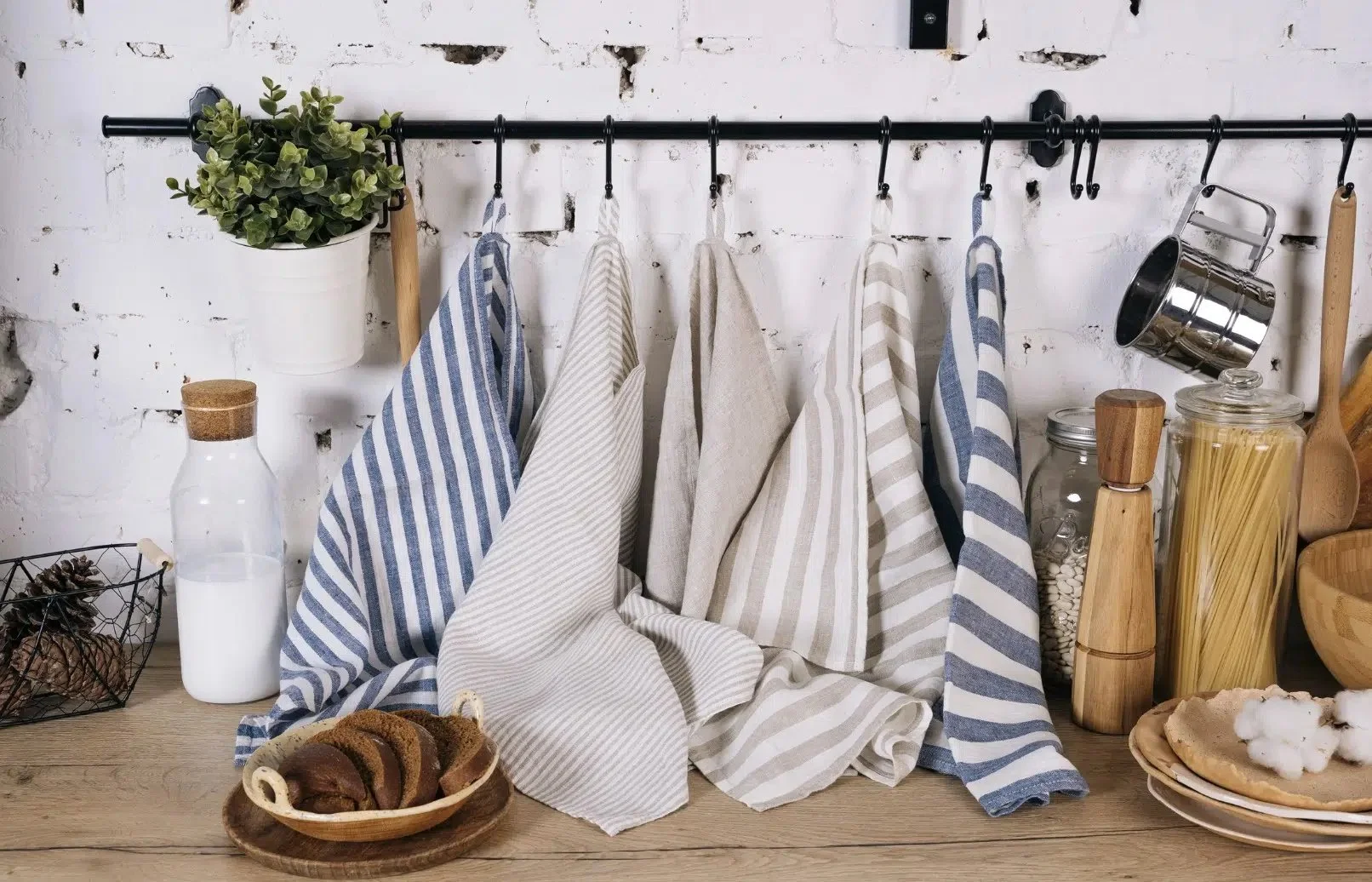
Kitchen towels work much harder than most people realize. Throughout the day they may be used to:
- Dry hands while cooking.
- Wipe kitchen counters.
- Clean up food spills.
- Dry dishes and utensils.
- Handle greasy cookware.
Because of these tasks, kitchen towels often collect food particles, cooking oils, and bacteria that can linger between washes.
Bath towels, on the other hand, mainly absorb water, body oils, and dead skin cells. While they still need regular washing, they generally aren’t exposed to food-related contaminants.
The Biggest Concern: Cross-Contamination
The primary reason many cleaning experts recommend washing these towels separately is to reduce the risk of cross-contamination.
If heavily soiled kitchen towels are washed with bath towels, grease and bacteria may transfer during the wash cycle, particularly if the water temperature is too low or the washing machine is overloaded.
Although a proper wash with quality detergent removes most contaminants, separating loads provides an extra level of hygiene.
When It’s Fine to Wash Them Together
There are situations where combining towel loads is perfectly reasonable.
You can usually wash them together if:
- Kitchen towels are only lightly soiled.
- They haven’t been used to clean raw meat or greasy spills.
- You’re washing with warm or hot water according to the care labels.
- You use enough detergent for the size of the load.
- Everything is dried completely after washing.
If these conditions are met, most households won’t experience any issues.
Best Practices for Washing Kitchen Towels
To keep kitchen towels as clean as possible:
- Wash heavily soiled towels separately.
- Use the hottest water recommended on the care label.
- Use a quality laundry detergent.
- Avoid overloading the washing machine.
- Dry towels completely before storing them.
- Replace towels that remain stained, develop odors, or lose absorbency.
Regular washing helps prevent odors and bacteria from building up over time.
How Often Should You Wash Towels?
Keeping a consistent laundry schedule makes a noticeable difference.
A good rule of thumb is:
- Kitchen towels: Every 1–3 days, or immediately after handling raw meat or large spills.
- Bath towels: Every 3–4 uses.
- Hand towels: Every 2–3 days, especially in busy households.
Frequent washing helps maintain both cleanliness and freshness.
Extra Tips for Fresher Towels
A few simple habits can keep all of your towels in better condition:
- Allow towels to dry completely between uses.
- Wash towels separately from lint-producing fabrics when possible.
- Use white vinegar occasionally during the rinse cycle to help remove detergent residue.
- Avoid using too much fabric softener, which can reduce towel absorbency.
- Replace worn towels that no longer dry effectively.
Final Thoughts
While it’s generally safe to wash kitchen towels and bath towels together when they’re only lightly soiled, separating them remains the most hygienic option. Kitchen towels are exposed to food residue, grease, and bacteria that bath towels typically never encounter.
By washing towels regularly, using the proper water temperature, and avoiding overloaded laundry loads, you can keep every towel in your home clean, fresh, and ready for everyday use. A few simple laundry habits go a long way toward maintaining a healthier home.