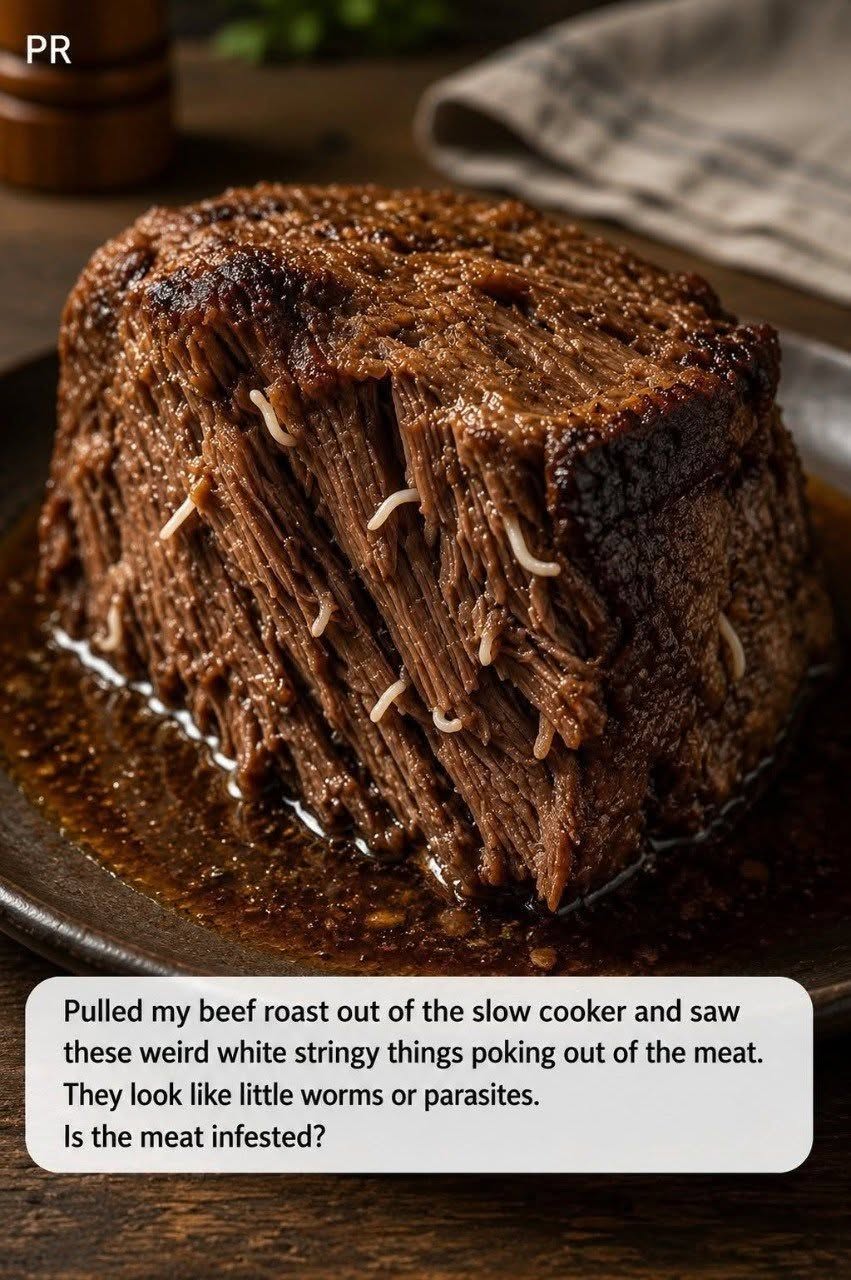
Taking a beef roast out of the slow cooker and noticing strange white, stringy strands sticking out of the meat can be an unpleasant surprise. At first glance, these unusual shapes may look like tiny worms or parasites, leaving you wondering whether the meat is safe to eat.
Fortunately, there is often a much simpler explanation. In many cases, the white strands found in slow-cooked beef are natural parts of the meat, such as connective tissue, collagen, or fat that has changed appearance during cooking.
Understanding how beef reacts to prolonged heat can help explain why these structures become more noticeable after several hours in a slow cooker. However, appearance alone cannot confirm whether a particular piece of meat is safe.
What Are the White Stringy Things in Cooked Beef?
Beef is made up of several different structures, including muscle fibers, connective tissue, fat, and small blood vessels. These components work together to give raw meat its structure and texture.
During slow cooking, prolonged exposure to heat and moisture changes these structures.
Several processes happen simultaneously:
- Muscle fibers gradually become tender and separate.
- Collagen begins breaking down into gelatin.
- Fat softens and melts into the surrounding cooking liquid.
- Connective tissue becomes easier to see as the meat separates.
As a result, pale or whitish strands may become visible between pieces of cooked beef.
These strands can look unusual, particularly when they appear against darker meat, but they are often ordinary anatomical structures rather than signs of contamination.
The Most Common Explanation: Collagen and Connective Tissue
One of the most likely explanations for white, thread-like strands in a slow-cooked beef roast is connective tissue.
Connective tissue helps hold muscle groups together. It contains collagen, a structural protein naturally found throughout animal tissues.
When beef is cooked slowly with moisture, collagen gradually converts into gelatin. This process helps explain why tougher cuts, such as chuck roast and brisket, become tender after several hours of cooking.
Not every piece of connective tissue breaks down at exactly the same rate. Some membranes and tougher strands may remain visible even after the surrounding meat becomes soft.
They may appear:
- White, cream-colored, or pale gray.
- Thin and string-like.
- Attached to separating pieces of meat.
- Slightly elastic or fibrous.
- More noticeable when the roast is pulled apart.
These characteristics are consistent with normal connective tissue, although visual inspection alone cannot establish the identity of an unfamiliar object.
Why Slow Cooking Makes These Strands More Visible
Slow cookers are designed to cook food gradually using relatively low, moist heat.
This cooking method works particularly well for tougher cuts of beef because it allows collagen-rich connective tissue to soften over time.
Unlike quick cooking methods, slow cooking gives the meat several hours to change texture. Muscle groups gradually separate, fat renders, and connective structures become more exposed.
This is why a roast that looked completely ordinary before cooking may appear very different when removed from the slow cooker.
The white strands are not necessarily something that appeared during cooking. They may simply have been hidden inside the raw meat.
Why Do They Look Like Worms or Parasites?
Thin, pale strands naturally raise concerns because their appearance can resemble worms or other unwanted objects.
However, several ordinary components of beef can create a similar visual effect.
The most common possibilities include:
1. Collagen fibers: These strands are part of the animal’s natural connective tissue and may become visible as the meat softens.
2. Fat deposits: Beef fat can appear white or cream-colored after cooking. Depending on its location and texture, it may resemble soft strings or small clumps.
3. Silverskin and connective membranes: Some cuts contain thin membranes that become more noticeable when the surrounding muscle separates.
4. Separated muscle fibers: Cooked beef naturally breaks into individual fibers, particularly when prepared until tender enough to shred.
Importantly, it is not possible to rule out every form of contamination simply by looking at a photograph or description. If an object has an unusual appearance, avoid assuming that it is harmless.
Can Parasites Be Found in Beef?
Parasites are a legitimate food-safety concern, but visible white strands in cooked beef are not, by themselves, evidence of a parasitic infection.
Some parasites can infect cattle and enter the food supply under certain circumstances. This is one reason meat inspection and proper cooking practices are important.
For example, beef tapeworm infection is associated with consuming raw or inadequately cooked beef containing infective larvae. These infections are not typically identified by finding ordinary-looking collagen strands in a cooked roast.
Properly handling and cooking beef significantly reduces foodborne infection risks.
If you genuinely suspect that the meat contains an unfamiliar organism or foreign material, do not eat it while trying to identify the object. Keep the remaining meat and packaging available if you need advice from a food-safety professional.
When Should You Be Concerned About Cooked Beef?
Although white connective tissue is common, unusual food appearances should not automatically be dismissed.
Pay attention to the following warning signs:
- Unusual odor: A strong sour, rotten, or otherwise unpleasant smell before cooking may indicate spoilage.
- Abnormal surface texture: Raw beef that feels unusually slimy or sticky deserves caution.
- Damaged packaging: Leaking, swollen, or compromised packaging can raise food-safety concerns.
- Uncertain storage history: Meat left at room temperature for too long may become unsafe even if it looks normal.
- Unidentified foreign material: Objects that do not resemble ordinary muscle, fat, or connective tissue should not be assumed safe.
If the meat shows signs of spoilage or its storage history is uncertain, the safest decision is to discard it.
It is also important to remember that harmful bacteria do not always produce noticeable changes in smell, color, or texture.
How to Make Sure Your Slow-Cooked Beef Is Safe to Eat
Proper food handling matters just as much as cooking time.
Follow these basic precautions when preparing beef in a slow cooker:
1. Start with properly stored beef. Keep raw beef refrigerated at 40°F (4°C) or below until preparation.
2. Avoid leaving meat at room temperature. Refrigerate perishable ingredients promptly and do not use meat that has been left in unsafe conditions.
3. Follow the slow cooker’s instructions. Use the recommended settings and avoid unnecessary interruptions during cooking.
4. Check the internal temperature. Use a food thermometer rather than relying on appearance or cooking time alone. Whole beef roasts have a recommended minimum internal temperature of 145°F (63°C), followed by a three-minute rest. Tough cuts cooked for shredding may require additional cooking time to become tender.
5. Store leftovers promptly. Refrigerate cooked beef within two hours, or within one hour when temperatures exceed 90°F (32°C).
These practices help reduce the risk of foodborne illness and make slow-cooker meals safer.
Frequently Asked Questions
Are white strings in slow-cooked beef worms?
Not necessarily. They are commonly connective tissue, collagen-rich membranes, or muscle fibers that become visible during cooking. However, an unfamiliar object cannot be identified with certainty from appearance alone.
Does collagen look white after cooking?
Collagen-rich connective tissue can appear pale or whitish, particularly when surrounding muscle fibers separate during prolonged cooking.
Can slow cooking destroy parasites in beef?
Proper cooking can eliminate many foodborne parasites, but safety depends on reaching the appropriate internal temperature. Do not rely on cooking time alone.
Is it normal for beef to become stringy in a slow cooker?
Yes. Beef becoming tender and separating into strands is a normal result of prolonged moist cooking, especially with tougher cuts.
Final Thoughts
Finding strange white strands in a slow-cooked beef roast can certainly be alarming, especially when they resemble tiny worms. However, connective tissue, collagen, fat, and separated muscle fibers are common explanations for this appearance.
Slow cooking changes the structure of beef, making components that were previously hidden much easier to see.
The important thing is to distinguish normal changes in meat texture from genuine food-safety concerns. Pay attention to proper storage, cooking temperatures, and signs of spoilage rather than relying on appearance alone.
When something looks genuinely unfamiliar, it is always better to be cautious than to risk eating food that may be unsafe.