
What’s Making Holes in Your Clothes? Common Causes and Simple Ways to Prevent Them
Finding tiny holes in your favorite shirt can be frustrating, especially when you have no idea how they got there. Many people assume the washing machine is to blame, but in reality, clothing damage usually results from several everyday factors working together. Friction, improper washing habits, pests, and even the way clothes are stored can gradually weaken fabric until small holes begin to appear.
The good news is that most of these problems are easy to prevent. With a few simple adjustments to your laundry routine and daily habits, you can help your clothes last much longer.
Why Clothes Develop Small Holes
Fabric naturally wears down over time, but certain conditions speed up the process. Lightweight cotton, knit fabrics, and inexpensive materials are especially vulnerable because their fibers are thinner and less resistant to repeated stress.
Constant rubbing, frequent washing, excessive heat, and accidental snagging slowly weaken the fibers until they finally break, creating small holes that seem to appear out of nowhere.
Laundry Habits That Damage Clothing
Many cases of fabric damage actually happen during the wash cycle. Clothes rubbing against zippers, hooks, buttons, or bra clasps can easily create tiny tears that become larger after repeated washing.
Overloading the washing machine is another common mistake. When the drum is packed too tightly, garments twist together and experience more friction, increasing wear on delicate fabrics.
High dryer temperatures also contribute to fabric deterioration. Heat weakens natural fibers over time, causing cotton shirts, activewear, and knitwear to wear out much faster.
To reduce laundry-related damage:
- Wash delicate garments inside mesh laundry bags.
- Zip all zippers and fasten hooks before washing.
- Avoid overloading the washing machine.
- Use cool or warm water instead of hot water whenever possible.
- Choose low-heat drying or air-dry delicate clothing.
These small changes can significantly extend the lifespan of your wardrobe.
Everyday Friction Can Be the Hidden Cause
Surprisingly, your washing machine isn’t always responsible.
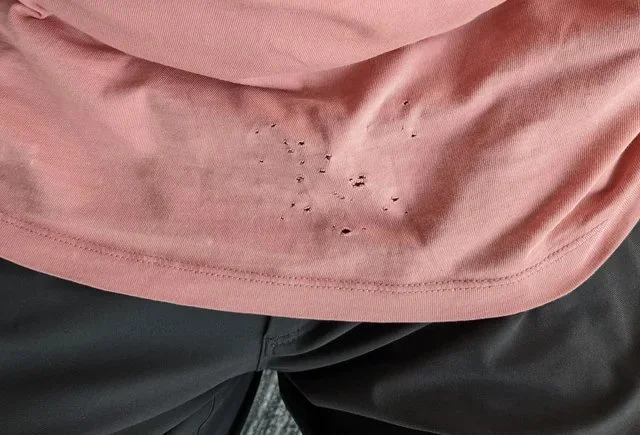
Many small holes develop because clothing constantly rubs against rough surfaces throughout the day. Kitchen countertops, desk edges, seat belts, belts, purse straps, and even rough chair arms create repeated friction in the same spots.
If you often notice holes near the lower front of your shirts, the edge of a kitchen counter may be the real culprit. Continuous rubbing gradually weakens the fabric until it tears.
Being aware of these habits and avoiding unnecessary friction can prevent many mysterious holes from appearing.
Insects May Be Damaging Your Clothes
Not all clothing damage happens while wearing or washing your garments.
Closet pests such as clothes moths and silverfish feed on natural fibers like wool, silk, cashmere, and other animal-based fabrics. Unlike regular wear, insect damage usually appears as irregular holes in areas that have been stored for long periods.
To reduce the risk of pest damage:
- Keep closets clean and dry.
- Vacuum storage areas regularly.
- Wash clothes before storing them for long periods.
- Avoid storing damp garments.
- Use cedar blocks or lavender sachets to help discourage moths.
Regular closet maintenance helps protect valuable clothing from unnecessary damage.
Proper Storage Makes a Difference
How you store your clothes also affects their longevity.
Thin wire hangers can stretch delicate garments and create stress points around the shoulders. Overcrowded drawers and tightly packed closets increase friction between garments, making snagging more likely.
Instead:
- Use wooden or padded hangers for delicate clothing.
- Fold heavy sweaters instead of hanging them.
- Leave enough space between garments to prevent rubbing.
Good storage habits help fabrics maintain their shape while reducing unnecessary wear.
Choose Better Quality Fabrics
Not every hole is caused by poor care. Lower-quality clothing often uses thinner fabrics that simply wear out faster than higher-quality materials.
When shopping, pay attention to fabric thickness, stitching quality, and overall construction. Spending a little more on durable garments often saves money over time because they withstand frequent washing and everyday use much better.
Simple Ways to Prevent Holes in Clothes
Protecting your clothes doesn’t require expensive products. A few consistent habits make a noticeable difference:
- Wash delicate items inside mesh laundry bags.
- Avoid overcrowding the washer.
- Use gentle wash cycles.
- Dry clothes using low heat whenever possible.
- Fasten zippers and hooks before washing.
- Reduce friction from countertops, belts, and rough surfaces.
- Store clothes properly using quality hangers.
- Keep closets clean to discourage insects.
Final Thoughts
Small holes in clothing rarely have a single cause. More often, they’re the result of repeated friction, improper laundry habits, excessive heat, poor storage, or even insects. Once you identify the source, preventing further damage becomes much easier.
By making a few simple changes to the way you wash, wear, and store your clothes, you can keep your favorite garments looking better for longer while avoiding the frustration of discovering new holes after every laundry day.