
PART 1
The rain was coming down hard the afternoon I found the folder. Three months since Sarah died. I was finally clearing her desk — the one I hadn’t touched because her coffee mug was still there, the rim stained with her lipstick, the ceramic cold in a way that made my chest ache. I told myself I was being practical. The truth was I was looking for her. Any piece of her I could still hold.
Behind the bottom drawer, taped to the wood with yellowed Scotch tape, was a navy folder. Inside: bank statements. Fifteen years of them. Every single month, $400 transferred to an address in Millbrook. A town I’d never heard her mention. A town I’d never been.
I stared at the dates until my eyes burned. The first transfer was three months after our wedding.
My hands shook so badly the papers rattled. I thought of affairs. Secret children. Lies woven into the very fabric of our marriage while I slept beside her every night, stupid and trusting, believing I was enough. The coffee mug seemed to stare at me. The lipstick mark looked like a wound.
I drove to Millbrook that evening. Didn’t pack a bag. Didn’t tell anyone. The GPS led me down highways that grew narrower and darker, until I reached a street where the streetlights flickered like dying fireflies, casting jittering shadows on brick walls that smelled of wet moss. Number 42. A brownstone with peeling green paint, a brass mailbox dented on one corner, and a single bulb above the door that buzzed like an angry insect.
I climbed the steps. My heart was a hammer against my ribs, each beat saying: turn back, turn back. The nameplate was small, hand-engraved, tarnished green with age. I leaned close to read it in the weak, trembling porch light.
The letters swam, then sharpened.
David Halloway.
My name. My full name. On a stranger’s door.
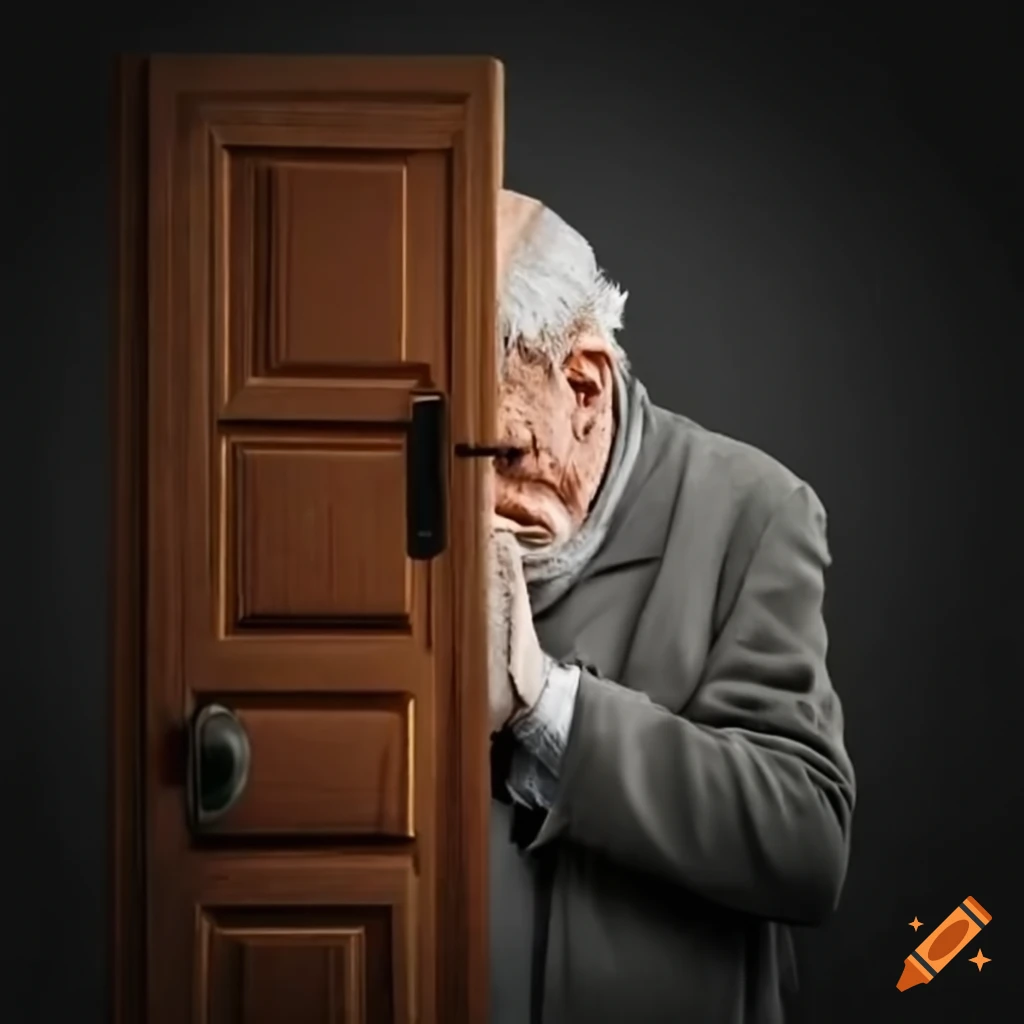
I knocked before I could stop myself — three hard raps that hurt my knuckles. The door creaked open. An old woman stood there — silver hair pinned back with ivory combs, a wool shawl draped over shoulders thin as wire hangers, and eyes the color of faded denim. She didn’t look surprised to see me. She looked like she’d been waiting for years.
“You’re late,” she said.
I pushed past her. I don’t know why. Rage, maybe. Grief so thick it had turned to something violent. The hallway smelled of turpentine and dried lavender. Then I saw the walls.
Hundreds of drawings. Pinned, taped, framed in cheap plastic. Sketches in charcoal, watercolor, crayon. All of the same boy. A boy with my gap-toothed smile. My cowlick that never lay flat. My eyes, too big for my face.
The boy was me. At six, holding a kite string. At ten, reading under a tree. At sixteen, awkward in a suit. At thirty, standing at an altar.
I turned to her, my voice cracking like dry earth. “Who are you?”
She smiled — a sad, knowing smile — and pointed to the last drawing. It hung alone on the far wall, catching the light from a small window. It was unfinished. Just an outline. Charcoal on cream paper. Of a man my age, standing in a doorway, rain on his shoulders.
“That’s you,” she said. “Today.”
My blood turned to ice.
PART 2