PART 2
She wasn’t Sarah.
Of course she wasn’t Sarah. Sarah was ash. Sarah was a ceramic urn on the mantelpiece I still couldn’t look at. Sarah was gone.
But this woman had Sarah’s eyes. The same gray-green, the same small scar bisecting her left eyebrow. The same way of tilting her head when she was caught doing something she shouldn’t.
She didn’t run. She didn’t flinch. She just looked at me, and her hand tightened around Maya’s.
“My name is Elena,” she said. “I was your wife’s roommate at St. Mary’s. The palliative ward.”
The word landed like a stone.
“I don’t —” My voice broke. “Sarah never mentioned a roommate.”
“She wouldn’t have.” Elena’s eyes dropped to Maya’s hand. “I was there three weeks. She was there two months. We shared a room with yellow curtains and a view of the parking lot. She talked about you constantly. About Maya. About the lighthouse story she was writing.”
Maya was watching us both, her thumb in her mouth, completely calm. Like this was a play she’d already seen.
“She made me promise something,” Elena continued. “The night before she passed. She made me swear that if I ever got out — if I ever walked out of that hospital — I would find you. Not to replace her. Never that. Just to…” Elena swallowed. “Just to make sure Maya didn’t forget her voice.”
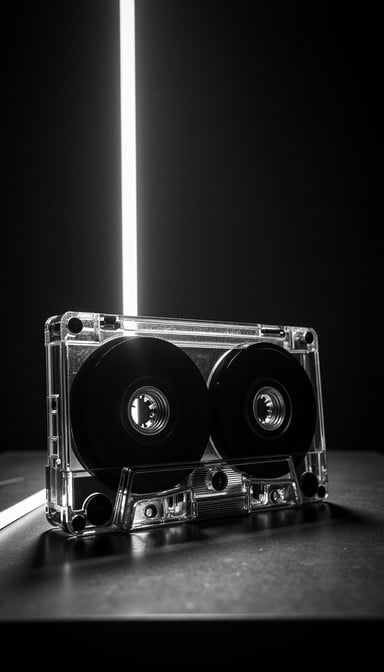
She reached into her coat again and pulled out a battered cassette recorder. The kind from the nineties. Sarah’s kind.
“Your wife recorded herself reading every story she wrote. Every letter she never sent. Forty-three tapes. She gave them to me because she knew I’d keep them safe. She knew I’d come.”
I stared at the recorder. At the woman who had broken into my house seventeen times to keep a promise to a dying stranger.
“Why at night?” I asked. My voice sounded like gravel.
Elena smiled then. It was Sarah’s smile. Not because they looked alike — they didn’t. But because Sarah had taught it to her. I could see it.
“Because Maya sleeps deepest at 2:47,” she said softly. “Your wife knew that. She timed everything. Even her goodbyes.”
She placed the recorder on the bed. Then she reached out and touched my hand — the first human touch I’d felt in eight months that didn’t come with a condolence card.
“There’s a tape in there for you,” she said. “Tape number forty-four. She made me promise not to give it to you until you were ready.”
I wasn’t ready. I would never be ready. But I took it anyway.
That was six months ago. Elena still comes. Not at 2:47 anymore — she uses the front door now. She sits at our kitchen table and drinks coffee that’s too strong, and she tells Maya stories that my wife wrote in a room with yellow curtains. Sometimes Maya falls asleep on her lap.
I finally listened to Tape 44 last Tuesday. It was only twelve seconds long. Sarah’s voice, thinner than I remembered, fighting the morphine:
“Don’t stay in the dark, David. The lighthouse was never about the beam. It was about the person who keeps it burning.”
I play it every morning now. And every night, at 2:47, I check on Maya. Sometimes she’s asleep. Sometimes she’s whispering to the ceiling. And sometimes — just sometimes — I whisper back.
Because grief isn’t a room you lock. It’s a light you learn to keep burning.
His Daughter Talks to Someone at 2:47 AM. the Camera Reveals the Impossible

Author: Isabel Martín
Published: