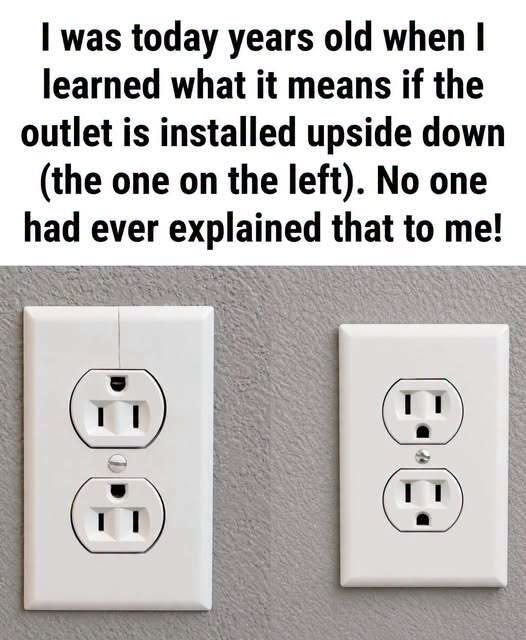
If a metal object, such as a picture frame or tool, accidentally falls between a partially plugged-in cord and the outlet, having the ground connection at the top may reduce the chance of the object touching the energized prongs first. While the safety benefit is relatively small, some facilities choose this orientation as an extra precaution.
An Upside-Down Outlet Doesn’t Always Mean Anything Special
Although switched outlets are a common reason for this installation style, an upside-down outlet is not always connected to a wall switch.
In some homes, the orientation simply reflects the habits of the electrician or builder. Others may have been installed during renovations or replaced over the years without any special meaning.
Because of this, it’s impossible to determine an outlet’s function based on its appearance alone.
How to Check if an Outlet Is Switched
If you’re curious about whether an outlet is controlled by a wall switch, the easiest method is to perform a simple test.
Plug a lamp into the outlet and flip the nearby wall switches. If the lamp turns on and off with one of the switches, you’ve identified a switched outlet. If nothing changes, the outlet is likely powered continuously.
If you’re unsure about your home’s electrical wiring or notice anything unusual, it’s always best to consult a qualified electrician rather than attempting to modify the wiring yourself.
The Bottom Line
An upside-down electrical outlet is usually not a mistake. In many cases, it serves as a practical indicator of a switched outlet, follows local installation practices, or is used for added safety in certain buildings.
Since there is no nationwide rule requiring outlets to face one direction, you’ll find both orientations in homes and commercial spaces. The next time you spot an upside-down outlet, you’ll know it’s often a thoughtful installation choice rather than an installation error.