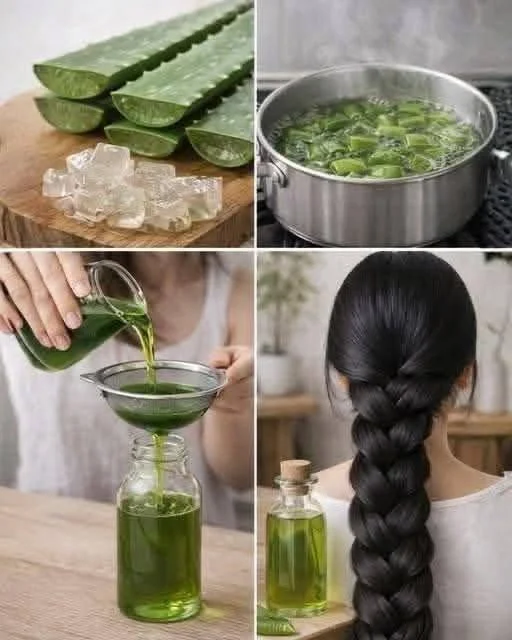
If your scalp feels dry or your hair needs a little extra conditioning, you don’t necessarily need a complicated hair treatment.
A simple combination of fresh aloe vera gel and a little coconut or olive oil can make a soothing, conditioning treatment at home. The important part is understanding what this mixture actually is: a fresh hair treatment to use promptly, not a shelf-stable oil that should sit in a bottle for weeks.
Fresh aloe contains a lot of water, which makes homemade aloe mixtures more prone to microbial growth. That’s why preparation, cleanliness, and storage matter just as much as the ingredients themselves.
What This Aloe Hair Treatment Is Like
The aloe gives the mixture a light, fresh feel, while the carrier oil adds more richness and helps condition the hair.
Coconut oil tends to feel more substantial, especially on dry or coarse hair. Olive oil has a richer, smoother feel and can be a good choice if your hair already responds well to it.
This isn’t a miracle hair-growth treatment, and there isn’t enough good evidence to promise that a homemade aloe-and-oil mixture will make hair grow faster. Think of it instead as a simple conditioning treatment for the scalp and hair.
What You’ll Need
- 2 tablespoons fresh aloe vera gel
- 1 tablespoon coconut oil or extra-virgin olive oil
You’ll also need:
- A clean spoon
- A small, clean bowl
- A clean towel
If you’re using coconut oil and it is solid, warm a small amount between your hands or gently soften it until it becomes liquid. It should be warm—not hot.
Before You Cut the Aloe Leaf
If you’re using fresh aloe directly from a plant, don’t use the whole leaf.
Aloe leaves contain different parts. The clear inner gel is different from the yellow latex found closer to the outer part of the leaf. Aloe latex contains compounds such as aloin, so you want to work with the clear inner gel rather than the yellow material.
Cut away the base of the leaf and allow the yellow sap to drain. Then rinse the leaf well.
Carefully remove the green outer skin and collect only the clear inner gel.
If the gel looks yellow rather than clear, don’t use that portion.
How to Make the Aloe Vera Hair Treatment
1. Prepare the gel
Scoop out about 2 tablespoons of clear aloe gel.
If the gel contains large pieces, mash it with a clean spoon until it has a smoother consistency.
2. Add your oil
Add 1 tablespoon of coconut oil or olive oil.
Mix the two together as thoroughly as you can.
Don’t worry if the mixture isn’t perfectly smooth. Aloe gel contains water, so it won’t behave exactly like a traditional oil infusion.
3. Do a small skin test first
Before putting the mixture all over your scalp, apply a small amount to a small area of skin.
Aloe used topically is generally well tolerated, but burning, itching, rash, and eczema have been reported in some people.
If you notice irritation, wash the area and don’t use the mixture.
4. Apply it to the scalp and hair
Part your hair into a few sections and apply a small amount to the scalp with your fingertips.
You don’t need to soak your hair.
Work any remaining mixture through the lengths and ends, particularly if those areas tend to feel dry.
A gentle application is enough. There’s no need for vigorous scrubbing.
5. Let it sit briefly
Leave the treatment on for about 15–20 minutes.
Because this is a fresh, water-containing mixture, there’s no advantage to leaving it on for hours.
6. Wash thoroughly
Shampoo your hair as you normally would, paying attention to the scalp.
If your hair feels oily afterward, a second gentle shampoo may be helpful.
The Most Important Part: Don’t Store a Batch for Weeks
This is where homemade aloe hair treatments can easily go wrong.
Fresh aloe contains water, and adding water-containing ingredients to a homemade cosmetic creates conditions where microorganisms can grow if the product isn’t properly preserved and tested. FDA notes that microbial contamination is a potential safety problem in cosmetics and that products with plant-derived ingredients and little or no preservation can have shorter shelf lives.
So rather than making a large bottle and keeping it in the bathroom:
Make a small amount, use it during the same session, and discard whatever is left.
That approach is much simpler than trying to guess how long a homemade aloe mixture will remain safe.
Coconut Oil or Olive Oil: Which Is Better?
Coconut Oil
Choose coconut oil if you like a slightly richer treatment.
It can feel heavier on fine hair, so start with a small amount.
Olive Oil
Olive oil has a richer, smoother feel and may be preferable if your hair is dry or coarse.
Again, a little goes a long way.
Not Sure?
Start with coconut oil if you normally tolerate it well, and use less than you think you need.
You can always add more next time.
A Few Mistakes to Avoid
Using the yellow aloe latex
Don’t deliberately include the yellow latex or outer leaf material. Work with the clear inner gel instead.
Making a large batch
A big jar may seem convenient, but fresh aloe introduces water into the mixture. Without an appropriate preservation system and testing, you can’t reliably assign a long shelf life to a homemade preparation.
Using too much oil
More oil doesn’t necessarily mean a better treatment. Start small, especially if your hair is fine.
Applying it to irritated or broken skin
If your scalp is already irritated, raw, or damaged, it’s better not to experiment with a homemade mixture on it.
Assuming “natural” means risk-free
Natural ingredients can still cause irritation or contamination. FDA specifically notes that natural or organic ingredients are not automatically safe simply because they are natural.
How Often Can You Use It?
There’s no well-established evidence-based schedule for this particular homemade aloe-and-oil mixture.
If your hair and scalp tolerate it well, you could use it occasionally as a conditioning treatment rather than treating it like a daily scalp product.
The right frequency will depend on how your hair responds.
Can Aloe Vera Make Hair Grow Faster?
This is one claim worth being careful about.
Aloe is popular in homemade hair-care routines, but that doesn’t mean a simple aloe-and-oil treatment has been proven to increase hair growth.
What we can say more confidently is that topical aloe gel is generally well tolerated and has been studied for several skin-related uses, although evidence for many popular aloe claims remains limited.
So use this recipe for what it realistically offers: a simple, fresh conditioning treatment—not a guaranteed hair-growth remedy.
Can I Use Store-Bought Aloe Gel?
You can, but check the ingredient list.
A product made specifically for topical use may be easier to handle than freshly scooped aloe, but commercial aloe products can vary considerably in formulation and quality. Research has found variation among aloe-containing personal-care products, including differences in moisture and detectable aloin.
Follow the product’s directions rather than assuming every aloe gel can be used the same way.
What If My Scalp Itches After Using It?
Stop using the treatment and rinse your scalp thoroughly.
Topical aloe can occasionally cause itching, burning, rash, or eczema.
If the reaction is severe, persistent, or worsening, seek medical advice rather than trying another homemade hair treatment.
Final Thoughts
Aloe vera and a little carrier oil can make a wonderfully simple addition to an occasional hair-care routine.
But the best homemade treatments aren’t necessarily the ones with the longest ingredient list or the biggest promises.
Keep this one fresh, keep the recipe small, use only the clear inner aloe gel, and pay attention to how your own hair and scalp respond.
That’s really all you need for a simple aloe vera hair treatment at home.