
PART 1
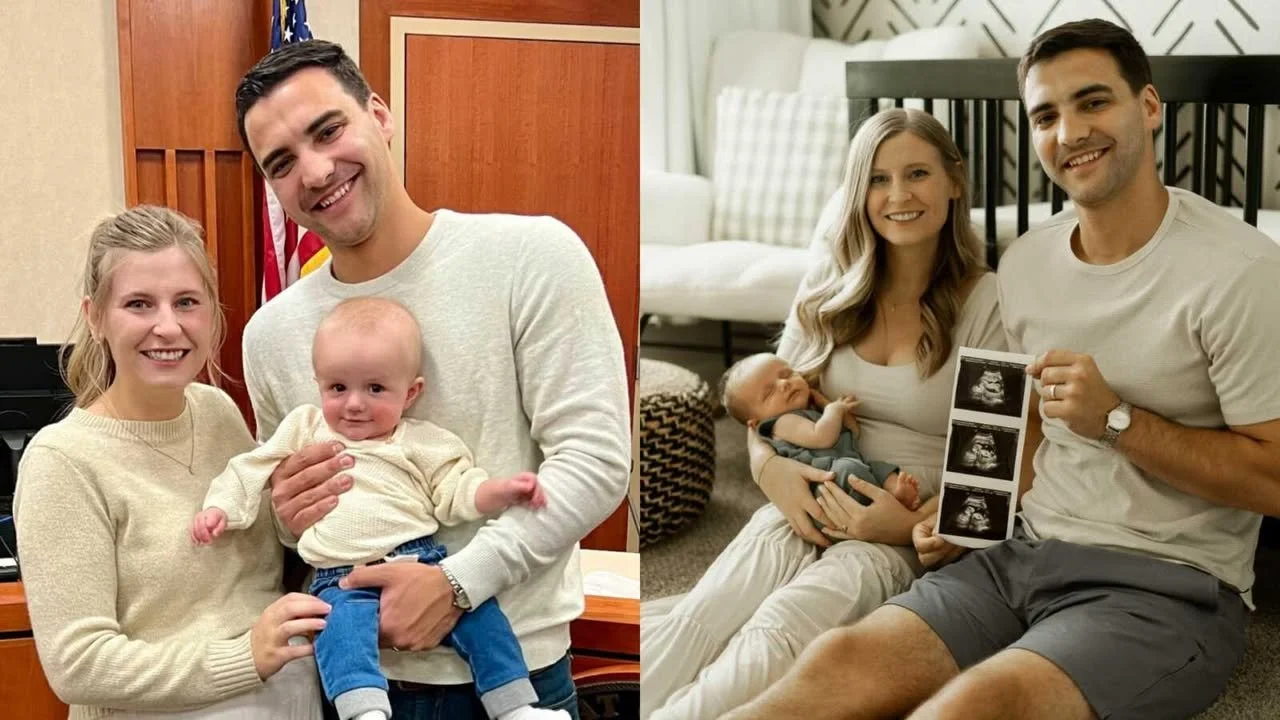
The day I found out I was pregnant with our daughter, I cried.
Not because I was scared.
Because after everything we’d been through, she felt like a miracle.
We had already lost a baby before.
So when that second line appeared on the pregnancy test, I stared at it for several minutes before calling my husband.
“We’re having another baby.”
He didn’t say anything at first.
Then I heard him laugh through tears.
“Are you serious?”
I smiled.
“Yeah.”
From that moment on, I became obsessed with making sure everything was okay.
Every appointment mattered.
Every ultrasound mattered.
Every little movement mattered.
This baby wasn’t just another pregnancy.
She was our second chance.
At the anatomy scan, we were excited to finally find out whether we were having a boy or a girl.
The technician moved the ultrasound wand across my stomach.
Then she smiled.
“It’s a girl.”
My husband squeezed my hand.
A daughter.
We started talking about names that night.
We bought a tiny outfit.
We imagined her growing up alongside the rest of our family.
For a while, everything felt perfect.
Then came the blood test.
A few days later, my doctor’s office called.
The nurse asked me to come in.
“Is everything okay?”
She hesitated.
“We’d like you to speak with your doctor.”
My stomach dropped.
At the appointment, the doctor explained that the screening showed a possible abnormality.
They were concerned about a neural tube defect.
One possibility was spina bifida.
I barely understood what she was saying.
“What does that mean for her?”
The doctor explained that there could be problems with movement.
There could be complications after birth.
And there was a possibility our daughter might never walk normally.
I stared at the ultrasound picture in my hands.
I wasn’t thinking about walking.
I was thinking about her.
Her little face.
Her heartbeat.
Her tiny body moving inside me.
We were referred to a specialist.
I walked into that appointment expecting the worst.
But I still wasn’t prepared for what I was about to hear.


5
The specialist examined the ultrasound again.
Then she became very quiet.
She measured her head.
Checked her brain.
Checked the baby’s spine.
Then she looked at us.
“I’m sorry.”
Those two words made my heart stop.
“This isn’t spina bifida.”
I waited.
“Your daughter has anencephaly.”
I didn’t understand.
“What’s that?”
The doctor explained that her brain was not developing normally.
The condition was fatal.
She wasn’t expected to survive long after birth.
I stared at my husband.
Neither of us spoke.
The room seemed to disappear around us.
I had walked into that office worried that my daughter might never walk.
I walked out knowing she might never have the chance to grow up at all.