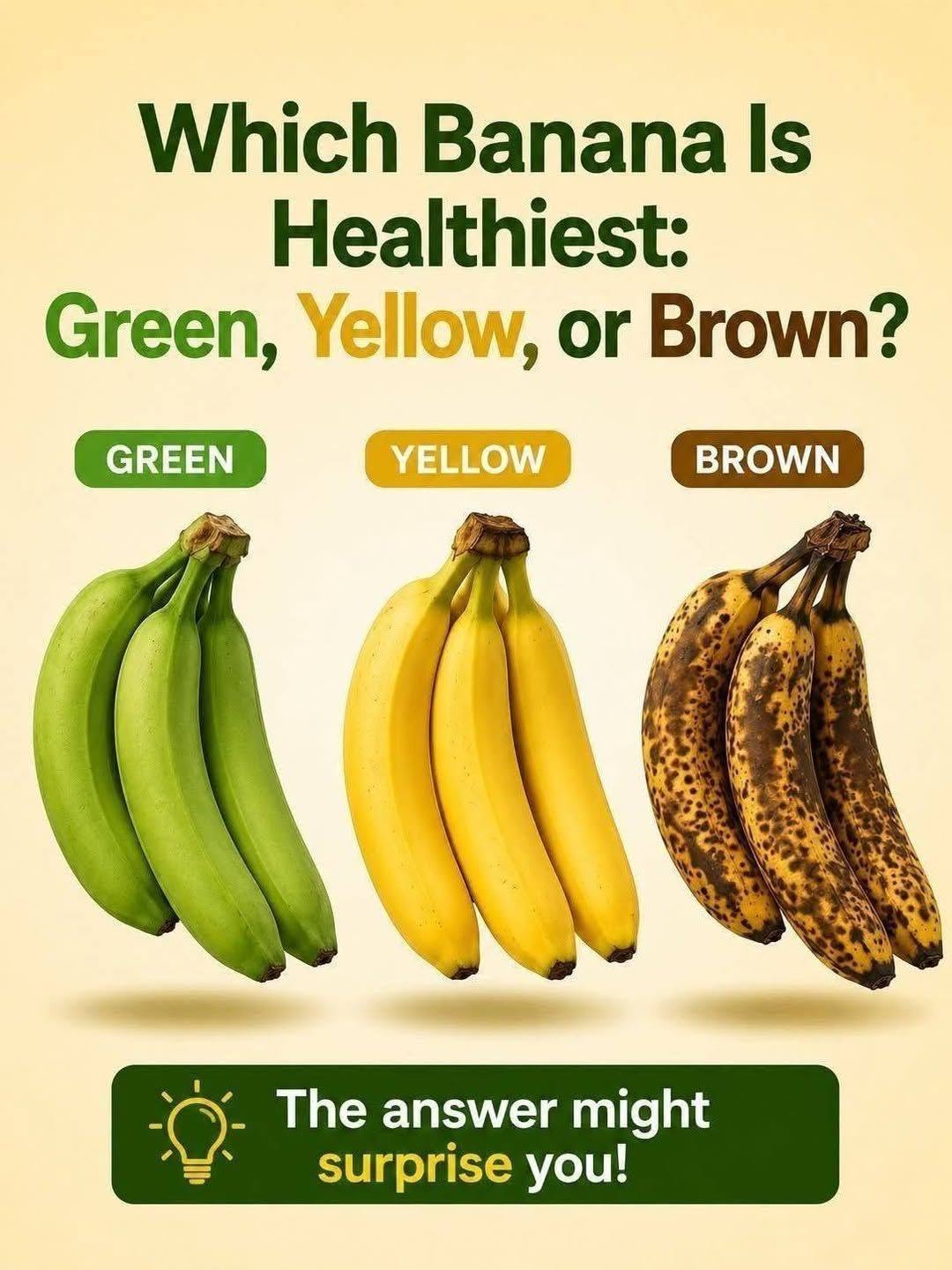
The next time you reach for a banana, take a closer look at its color. Is it still green, perfectly yellow, or covered with little brown spots? Most people choose based on sweetness and texture, but the color can reveal something more interesting about what is happening inside the fruit.
A banana doesn’t have exactly the same nutritional composition throughout its life. As it ripens, its starch gradually changes into natural sugars, its texture softens, and its taste becomes sweeter. Even the way its carbohydrates are digested can change.
This raises an interesting question: Is a green banana actually better for you than a yellow one? And should you avoid bananas once brown spots begin appearing?
The answer isn’t quite what many people expect. Each stage of ripeness offers different characteristics, and understanding them can help you make better choices for your everyday meals.
Green Bananas: The Stage With More Resistant Starch
Green bananas are picked before they become fully ripe. They are firm, less sweet, and sometimes have a slightly bitter taste.
Their most notable nutritional feature is their higher content of resistant starch.
Unlike ordinary starch, resistant starch isn’t completely broken down in the small intestine. Instead, it travels to the large intestine, where beneficial bacteria can ferment it.
This is one reason green bananas are often discussed when people talk about digestive health.
Why Resistant Starch Matters
Resistant starch behaves somewhat like dietary fiber. It can act as a prebiotic, helping provide nourishment for certain beneficial bacteria in the gut.
It may also contribute to feelings of fullness, making green bananas an interesting option for people who prefer foods that help them feel satisfied.
Another difference concerns blood sugar. Green bananas generally contain less readily available sugar than fully ripe bananas because more of their carbohydrates remain in the form of resistant starch.
However, individual responses can vary, and portion sizes still matter.
The Best Ways to Eat Green Bananas
Because green bananas are firm, some people prefer cooking them rather than eating them raw.
One simple approach is to peel them, slice them into smaller pieces, and boil them until tender.
After draining, you can season them with a little olive oil and herbs. They can be served alongside vegetables or a source of protein.
Green banana flour is another option used in certain recipes.
Although their texture may take some getting used to, green bananas offer a different way to enjoy this familiar fruit.
Yellow Bananas: A Convenient Everyday Choice
For many households, yellow bananas represent the perfect stage of ripeness.
They are naturally sweet, soft enough to eat comfortably, and convenient for breakfast or an afternoon snack.
But what actually happens when a green banana turns yellow?
During ripening, much of its starch is gradually converted into natural sugars, including glucose, fructose, and sucrose.
This explains why yellow bananas taste sweeter and have a softer texture than their green counterparts.
They also continue to provide several important nutrients.
Four Reasons Yellow Bananas Are Popular
1. A Convenient Source of Energy
Yellow bananas contain natural carbohydrates that provide energy. Their convenient size and easy preparation make them a practical snack before or after everyday physical activity.
2. Potassium for Normal Muscle Function
Bananas are well known for their potassium content. This mineral plays an important role in normal muscle contractions and nerve function.
Potassium also contributes to maintaining healthy blood pressure as part of an overall balanced diet.
3. Vitamin B6
Another useful nutrient found in bananas is vitamin B6.
This vitamin contributes to normal metabolism, nervous system function, and the production of certain neurotransmitters.
4. Dietary Fiber
Although yellow bananas contain less resistant starch than green ones, they still provide dietary fiber.
This makes them a convenient addition to meals and snacks.
Easy Ways to Enjoy Yellow Bananas
One reason yellow bananas are so popular is their versatility.
You can slice one over oatmeal, add it to plain yogurt, or blend it with milk or an unsweetened milk alternative.
They also work well in homemade pancakes and baked goods.
For people who want a simple fruit that requires almost no preparation, yellow bananas remain a practical everyday option.
Brown-Spotted Bananas: Why You Shouldn’t Throw Them Away Too Quickly
Have you ever noticed brown spots appearing on bananas that were perfectly yellow just a few days earlier?
Many people assume this means the fruit is no longer good.
However, brown spots often indicate that the banana has continued ripening.
As this process progresses, more starch is converted into natural sugars. The flesh becomes softer, and the flavor becomes noticeably sweeter.
This makes brown-spotted bananas especially useful in the kitchen.
What Changes When Bananas Develop Brown Spots?
They Become Sweeter
As ripening continues, more of the remaining starch is converted into readily available natural sugars. This gives the fruit its characteristic sweetness.
Their Texture Becomes Softer
The softer flesh is easier to mash, which makes these bananas particularly convenient for baking and preparing smoothies.
Their Natural Plant Compounds Change
Bananas contain naturally occurring antioxidant compounds. Their composition can change as the fruit ripens.
They Become Useful for Homemade Desserts
Because brown-spotted bananas are naturally sweeter, they can sometimes help reduce the amount of added sugar needed in certain homemade recipes.
A Simple Way to Use Overripe Bananas
Instead of throwing away bananas simply because they have developed brown spots, consider making homemade banana pancakes.
Mash two ripe bananas in a bowl. Add one egg and a little flour, then mix everything until combined.
Cook small portions in a nonstick pan until the pancakes are cooked through.
You can also peel ripe bananas, place them in a suitable freezer container, and save them for smoothies.
Remember that brown spots on the peel are different from signs of spoilage. Bananas showing visible mold, leaking liquid, or an unpleasant fermented smell should be discarded.
Green vs. Yellow vs. Brown: What Is the Difference?
Now that the three stages are easier to understand, comparing them side by side makes the differences clearer.
| Characteristic | Green Bananas | Yellow Bananas | Brown-Spotted Bananas |
|---|---|---|---|
| Resistant starch | Highest | Lower | Generally lowest |
| Natural sweetness | Low | Moderate | High |
| Texture | Firm | Soft | Very soft |
| Sugar availability | Lower | Higher | Generally highest |
| Digestibility | May be harder for some people | Generally easier | Generally easier |
| Best kitchen use | Cooking | Everyday snacks | Baking and smoothies |
The exact nutritional composition depends on the banana variety and how ripe the fruit has become.
The important point is that ripening changes the fruit’s carbohydrate composition, sweetness, and texture. It doesn’t mean that one stage suddenly becomes unhealthy.
Which Banana Is Better for Blood Sugar?
This is an especially important question for people who pay attention to their carbohydrate intake.
Green bananas generally contain more resistant starch and less readily available sugar than ripe bananas.
As the fruit ripens, more starch is broken down into natural sugars. This can influence how the carbohydrates affect blood glucose.
However, ripe bananas are not automatically unhealthy, and they are not necessarily forbidden for people living with diabetes.
A few practical considerations can make fruit easier to include in a balanced eating plan:
- Pay attention to portion sizes.
- Choose fruit that fits your individual meal plan.
- Consider combining fruit with protein or healthy fats.
- Monitor your individual blood glucose response if advised to do so.
- Avoid adding unnecessary sugar to banana smoothies.
Anyone managing diabetes should follow the dietary recommendations provided by their healthcare professional.
Which Ripeness Stage Is Better for Weight Management?
Another common question is whether green bananas are a better choice for people trying to manage their weight.
Their higher resistant starch and fiber content may contribute to feelings of fullness.
Yellow bananas offer convenient energy and can be used instead of less nutritious sugary snacks.
Brown-spotted bananas are useful in homemade desserts because their natural sweetness may reduce the need for additional sugar in certain recipes.
However, the color of a banana alone does not determine whether someone will gain or lose weight.
Overall food choices, portion sizes, and everyday eating habits are much more important than choosing one particular ripeness stage.
All three types can fit into a balanced eating pattern.
Are Brown Bananas Less Nutritious Than Green Ones?
Not necessarily.
A banana with brown spots may look less appealing than a bright yellow one, but it still provides useful nutrients.
Potassium, vitamin B6, and other naturally occurring nutrients remain part of the fruit.
The main changes during ripening involve starch, natural sugars, texture, and certain plant compounds.
Green bananas have their own advantages, particularly their higher resistant starch content.
But they may not be the most comfortable choice for everyone. Some people experience bloating or digestive discomfort when eating large quantities of green bananas.
This is another reason there isn’t one perfect answer for everyone.
Personal preference and digestive comfort matter too.
Can You Eat Bananas Every Day?
For most healthy adults, bananas can be part of a varied and balanced diet.
They provide carbohydrates, potassium, vitamin B6, and dietary fiber, making them a convenient fruit to include in ordinary meals.
However, certain people may need to pay closer attention to their potassium intake.
For example, individuals with advanced kidney disease or elevated blood potassium levels may need to limit potassium-rich foods, including bananas, depending on their medical circumstances and professional dietary advice.
People with sensitive digestive systems may also find that large amounts of green bananas cause discomfort.
The best approach is to consider your individual needs rather than assuming that the same amount and type of fruit is suitable for everybody.
So, Which Banana Is Actually the Healthiest?
After looking at the differences, the answer becomes much simpler.
There is no single winner.
Each ripeness stage offers something different:
Green bananas are particularly interesting because they contain more resistant starch and may support beneficial gut bacteria.
Yellow bananas provide a convenient combination of natural sweetness, nutrients, and versatility, making them a practical everyday choice.
Brown-spotted bananas are softer and sweeter, making them especially useful for smoothies, pancakes, and homemade baking.
Instead of choosing only one color, you can enjoy bananas at different stages depending on your preferences and nutritional needs.
A green banana can become part of a cooked meal, a yellow one can be enjoyed as a quick snack, and a softer banana can become the main ingredient in a homemade breakfast.
The next time you see a few brown spots appearing on your fruit, you may think twice before throwing it away.
Sometimes, the healthiest choice isn’t about finding one perfect food. It’s about understanding the different benefits ordinary foods can offer and enjoying them as part of a varied, balanced lifestyle.
Medical Disclaimer
This article is intended for general informational and educational purposes only. It does not provide medical advice, diagnosis, or treatment recommendations.
Individual nutritional needs vary. People with diabetes, advanced kidney disease, elevated blood potassium levels, digestive conditions, or other health concerns should consult a qualified healthcare professional or registered dietitian before making significant dietary changes.
Always seek personalized medical guidance when deciding which foods are appropriate for your individual health circumstances. Do not change prescribed treatments or follow restrictive dietary practices based solely on information found online.