
PART 4
I ran.
I pushed through the hospital doors and found Laura near the elevators.
“Stop!”
She turned.
For one second, fear flashed across her face.
Then she smiled.
“You shouldn’t be following me.”
“Where is my daughter’s makeup?”
“I don’t know what you’re talking about.”
“You took it.”
“I didn’t.”
I held up my phone.
“I have proof.”
Her expression hardened.
“You have no idea what you’re getting yourself into.”
“Then tell me.”
The elevator doors opened.
She stepped inside.
I blocked them with my hand.
“How many children?”
She stared at me.
“What?”
“How many children got sick?”
Silence.
Then she whispered:
“More than you think.”
My heart stopped.
“Why?”
She looked around before speaking.
“Because the company knew.”
Mark had reached us.
“What did they know?”
Laura swallowed.
“The product was reformulated last year.”
“Why?”
“To reduce costs.”
“And?”
“They received complaints.”
“How many?”
“Enough.”
I felt sick.
“Then why was it still being sold?”
Laura looked down.
“Because the company decided the reactions were isolated.”
I shook my head.
“Isolated?”
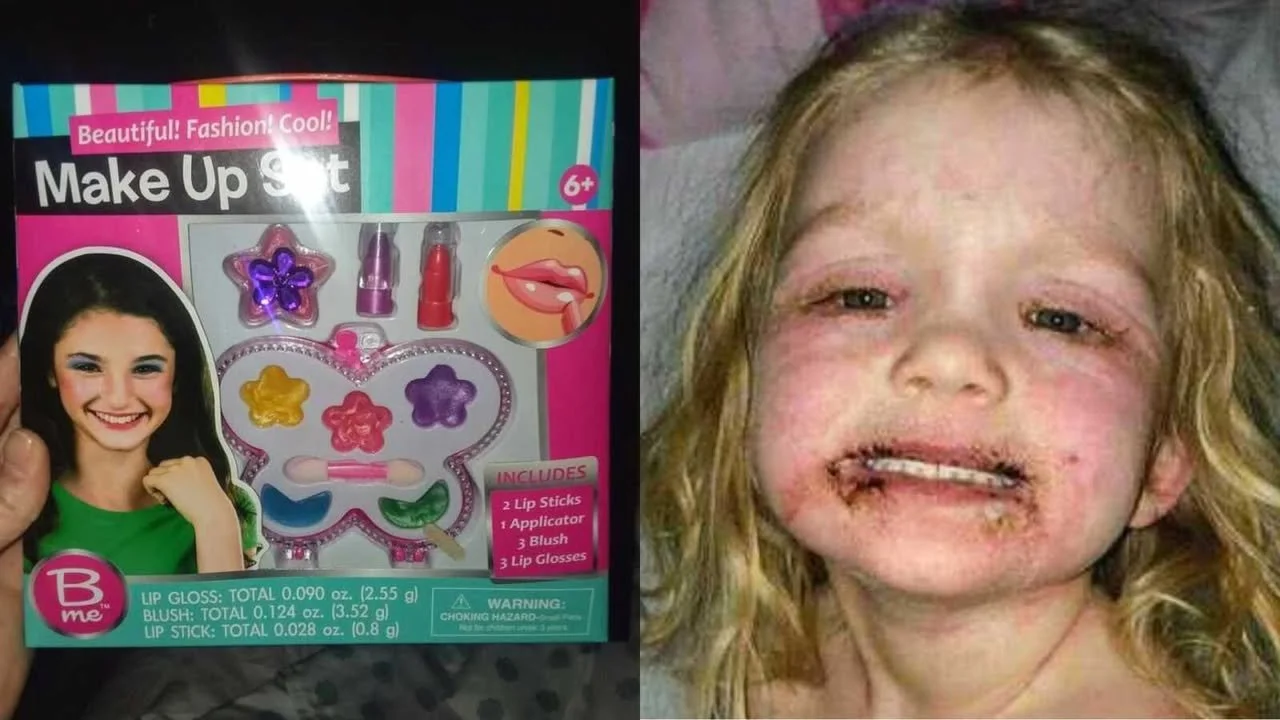
“My daughter nearly lost her eyesight.”
“I know.”
Those two words broke something inside me.
“You knew?”
Laura’s eyes filled with tears.
“My niece was one of the first.”
The hallway went silent.
“What happened?”
“Her eyes were damaged.”
I covered my mouth.
“She’s eight.”
Laura nodded.
“She’s been in treatment for months.”
“Then why are you protecting them?”
“I’m not.”
She reached into her bag.
Pulled out a small flash drive.
“I’ve been collecting the internal emails.”
She handed it to me.
“The company knew about the reactions.”
I stared at the drive.
“Why give this to me?”
“Because your daughter is still one of the lucky ones.”
I froze.
“What does that mean?”
Laura looked toward the pediatric ward.
“Some children didn’t recover as quickly.”


4
That night, Emma’s swelling finally began to go down.
For the first time since the nightmare started, she opened her eyes.
Just a little.
“Mom?”
I rushed to her bedside.
“I’m here.”
“Can I see?”
I smiled through tears.
“Yes, sweetheart.”
Her eyes opened another fraction.
She looked at me.
Then whispered:
“I don’t want makeup anymore.”
I kissed her forehead.
“You never have to wear it again.”
Weeks later, Emma recovered.
Her skin healed.
Her eyes returned to normal.
But we didn’t forget.
The flash drive Laura gave us became part of an investigation.
Parents came forward.
More hospital records appeared.
More families told the same story.
Eventually, the company recalled the affected products.
The story made national news.
But the moment that stayed with me happened months later.
Emma was standing in front of the bathroom mirror again.
For a second, my heart jumped.
Then I realized she wasn’t putting on makeup.
She was brushing her hair.
She looked at herself in the mirror.
Then turned to me.
“Mom?”
“Yeah?”
“Do I look pretty?”
I walked over and hugged her.
“You look like Emma.”
She smiled.
“Good.”
And that was enough.
Because I had learned something I wish I’d known before that little pink box ever entered our home:
A product being made for children doesn’t automatically make it safe for children.
And sometimes, the most dangerous thing in your house isn’t the thing you were warned about.
It’s the thing you were told was harmless.