

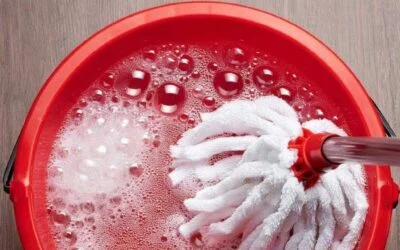
You mop the floor, admire how clean it looks, and then somehow dust is already showing up again. If that sounds familiar, you’re not imagining it. Floors constantly collect particles from clothing, furniture, pets, skin cells, and even the air coming in from outside.
The good news? There are a few simple things you can do to help your freshly cleaned floor stay looking better for longer.
And one popular trick involves something you may already have in your laundry room.


Why Does Dust Come Back So Quickly?
Even after a thorough cleaning, dust doesn’t simply disappear.
It keeps entering and moving around your home through:
- Air circulation
- Clothing and furniture fibers
- Pet hair and dander
- Skin cells
- Outdoor particles
- Everyday household activity
That’s why a floor can look spotless in the morning and already have a light layer of dust later in the day.
The goal isn’t to make dust disappear forever. It’s to reduce how quickly it settles and make everyday cleaning easier.
The Popular Trick: Add a Little Fabric Softener
One of the household tricks mentioned in the original source is adding a small amount of fabric softener to mop water. The article suggests that its anti-static properties may help reduce the tendency of dust to cling to certain floor surfaces.
The source recommends:
- Fill a bucket with warm water.
- Add your normal floor cleaner.
- Add 1–2 tablespoons of fabric softener.
- Mop the floor as usual.
But there’s an important point here.
More isn’t better.
Using too much fabric softener can leave a residue on the floor, making the surface feel sticky or dull rather than cleaner.
So if you want to experiment with this household trick, start with a small amount and see how your particular floor responds.
Don’t Use the Same Mixture on Every Floor
This is where people can get into trouble with viral cleaning hacks.
A mixture that seems fine on tile may not be appropriate for every type of flooring.
Before putting fabric softener or another household product into your mop bucket, check the manufacturer’s cleaning instructions for your floor.
This is especially important for:
- Unsealed wood
- Certain laminate floors
- Natural stone
- Delicate finishes
- Floors treated with special coatings
When in doubt, test any cleaning mixture in a small, inconspicuous area first.
What About White Vinegar?
The original article also mentions white vinegar as another household option.
But vinegar isn’t a universal floor cleaner either.
Its acidity can damage or dull certain surfaces, particularly some natural stones and finishes.
So don’t assume that because vinegar is a common household ingredient, it’s automatically safe for every floor.
For the safest approach, use a cleaner specifically intended for your flooring material.
The Bigger Trick: Reduce the Dust Before It Reaches the Floor
If you’re constantly mopping but dust keeps returning, the solution isn’t necessarily to mop more often.
Look at where the dust is coming from.
A few simple habits can help:
Use doormats at entrances.
Remove outdoor shoes when possible.
Wash bedding and fabrics regularly.
Vacuum rugs and upholstered furniture.
Dust higher surfaces before cleaning the floor.
Keep pets’ bedding clean.
This matters because if you remove dust from shelves and furniture after you’ve already mopped, some of that dust can eventually land right back on the floor.
Always Dust Before You Mop
Here’s one of the easiest ways to improve your cleaning routine.
Don’t start with the mop.
Start from the top.
Dust shelves, tables, furniture, and other surfaces first.
Then vacuum or sweep.
Mop last.
That way, you’re not cleaning the floor only to have dust from another surface fall onto it afterward.


Keep Your Mop Clean Too
This sounds obvious, but it’s easy to forget.
If the mop head is dirty, you’re not really cleaning the floor.
You’re potentially spreading old dirt and residue around.
Wash reusable mop heads according to their care instructions and allow them to dry completely between uses.
If your mop has a disposable pad, replace it when it becomes dirty rather than continuing to push it across the entire floor.
A clean floor starts with clean cleaning tools.
Don’t Turn a Cleaning Hack Into a Chemical Experiment
This is perhaps the most important rule.
Never start mixing several household cleaners together just because you’ve seen a cleaning trick online.
Some combinations can produce dangerous fumes or unwanted chemical reactions.
In particular, don’t mix bleach with acids such as vinegar or with products containing ammonia.
You don’t need a complicated homemade formula to get a clean floor.
Simple and appropriate is better than “strong.”
A Simple Floor-Cleaning Routine
If you want your floor to stay cleaner for longer, try this routine:
Step 1: Remove the loose dirt
Vacuum or sweep first.
Step 2: Clean the surfaces above the floor
Dust furniture and shelves before mopping.
Step 3: Prepare the right floor cleaner
Use a product suitable for your specific flooring.
Step 4: Don’t soak the floor
Use enough moisture to clean without leaving excessive water behind, especially on wood and laminate.
Step 5: Let the floor dry properly
Good ventilation can help the surface dry faster.
Step 6: Keep dust sources under control
Clean rugs, upholstery, bedding, and entry areas regularly.
So, Does Fabric Softener Really Keep Your Floor Dust-Free?
Not completely.
The original source itself acknowledges that no solution can stop dust from settling entirely.
The fabric-softener trick may help some surfaces feel cleaner or reduce static-related dust attraction, but it shouldn’t be treated as a guarantee that your floor will remain dust-free for an entire week.
Your floor type, household activity, humidity, pets, airflow, and how much dust enters your home all make a difference.
That’s why the most effective strategy is a combination of proper cleaning + dust prevention + the right products for your floor.
Final Thoughts
If you’re tired of mopping today only to see dust returning tomorrow, don’t assume you’re cleaning incorrectly.
Dust is part of everyday life inside a home.
But you can make the battle easier.
Keep dust sources under control, clean from top to bottom, use the right cleaner for your floor, and don’t overdo homemade cleaning hacks.
And if you want to try the fabric-softener method mentioned in the source, use a small amount, test it first, and make sure it’s compatible with your flooring.
Because the best cleaning trick isn’t the one that promises a magically dust-free floor.
It’s the one that leaves your floor clean without damaging it in the process.