
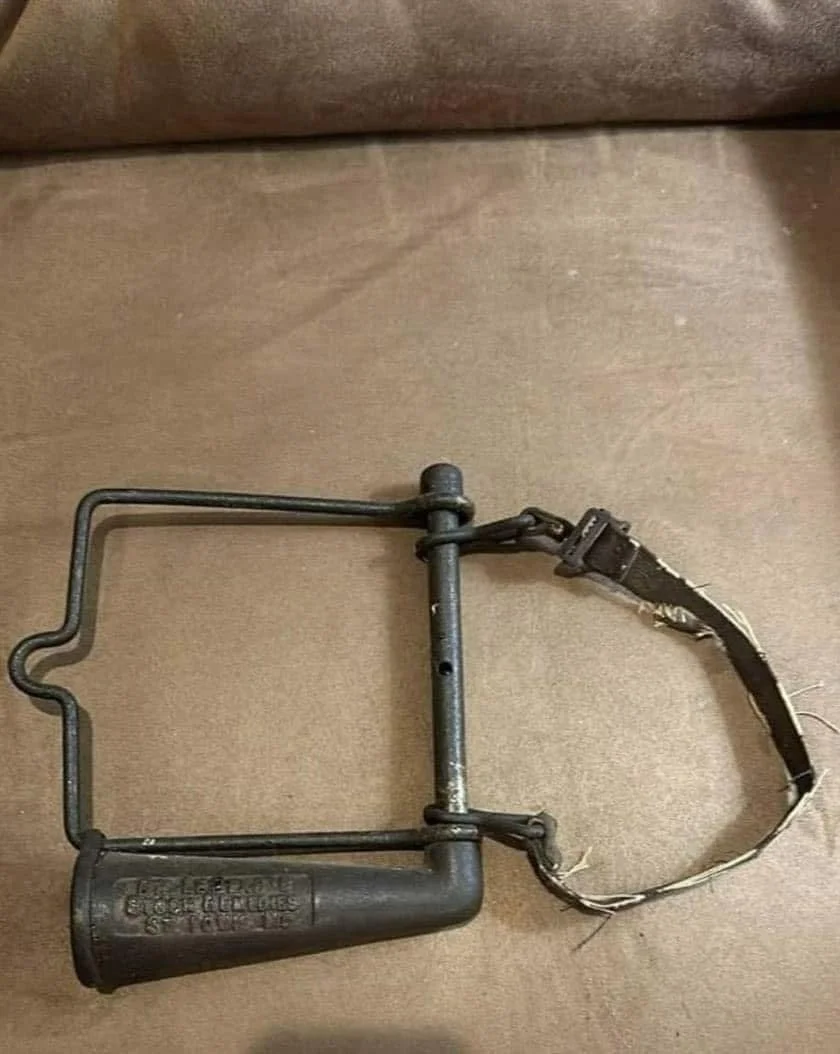
At first glance, this old metal device looks more like a strange harness part than a piece of veterinary equipment. But its unusual shape reveals something fascinating about how horses were treated before modern dosing syringes and stomach tubes became commonplace.
The object in the photo is an antique horse drencher, also known as a drenching bit. Historical examples were designed to help veterinarians or horse handlers administer liquid medicines directly into a horse’s mouth.
What Was a Horse Drencher?
A horse drencher was essentially a specialized oral medication device.
Older veterinary practices sometimes required relatively large quantities of liquid medicine to be given to horses. Instead of today’s purpose-built syringes and dosing equipment, earlier practitioners used devices that incorporated a bit, funnel, or hollow passage.
A documented early-20th-century example in the Orbost & District Historical Society collection is described as a brass horse drenching bit dating from roughly the early 20th century to 1950. It was used to administer substances such as paraffin oil and possibly castor oil or Epsom salts to horses suffering from colic.
How Did It Work?
The basic principle was surprisingly simple.
The device was fitted into the horse’s mouth much like an ordinary bit. A strap or rope helped keep the apparatus positioned while the liquid was introduced through a funnel.
The historical example documented by Victorian Collections had a hollow bit, allowing the liquid to pass through the device and into the horse’s throat.
The idea was to make administering a large dose easier than trying to pour medicine directly into the animal’s mouth.
Why Would a Horse Need a Drench?
“Drenching” simply refers to giving an animal medicine or another liquid by mouth.
Historically, drenches could be used for a variety of veterinary purposes. In horses, some older records describe the use of oily substances and other preparations in connection with digestive problems such as colic.
Drenching was also used more broadly in livestock medicine.
Veterinary references describe oral drenching as a method for administering medicines and fluids, although it has to be performed carefully because liquid can accidentally enter the respiratory tract.
Why Does This Device Look So Unusual?
Modern animal medication equipment tends to resemble a syringe.
Older equipment often looked much more mechanical.
The metal frame, bit, straps, and funnel-like components were designed around the anatomy and handling of a large animal.
The object shown in your photograph appears to be a particularly interesting example because of its heavy metal construction and integrated bit-style design.
Historical collections contain several different forms of drenching equipment, including horse drenchers, sheep drenchers, cattle drenchers, and drenching guns. The Science Museum Group, for example, catalogs a horse drencher specifically intended for administering powdered substances and dating to approximately 1960–1975.
These Tools Were Not Just for Worming
It’s easy to see an old animal dosing device and immediately assume it was exclusively for deworming.
That’s not necessarily the case.
“Drench” is a broader term for a liquid preparation administered orally. Depending on the period and veterinary practice, drenches could be used for different treatments.
Modern drenching equipment is still used to administer oral medications and fluids to horses and livestock.
So the historical tool in the photograph belongs to a much larger tradition of oral veterinary drug delivery.
The Connection to Horse Colic
One reason these old devices are particularly interesting is their connection to the treatment of digestive problems.
The Victorian Collections record specifically states that an early draught-horse drenching bit was used to administer paraffin oil and possibly castor oil or Epsom salts to a colicky horse.
Colic is a broad term for abdominal pain in horses rather than one single disease.
Historically, getting medication or other preparations into a large horse could be difficult, so specialized equipment was valuable.


Why Did These Drenching Bits Eventually Disappear?
Veterinary medicine changed considerably during the 20th century.
The historical record from Orbost & District Historical Society notes that by the 1950s and afterward, veterinarians increasingly used stomach tubes passed through the horse’s nostril for administering drenches. The collection describes this approach as more effective and safer than the older drenching bits.
That transition helps explain why objects like the one in the photograph are now more likely to be found in collections than in working stables.
What Replaced the Old Equipment?
Modern veterinary professionals have a range of oral dosing tools.
Drenching guns can deliver measured quantities of liquid, and modern designs are built with features intended to make dosing and cleaning easier.
For horses, veterinarians may also use specialized oral syringes or stomach tubes depending on the medication, quantity, and medical situation.
The important difference is that modern equipment is designed around controlled dosing, hygiene, and animal safety.
Why Was Drenching Potentially Dangerous?
Giving liquid medication to a large animal isn’t as simple as pouring something into its mouth.
If fluid is accidentally inhaled rather than swallowed, it can enter the lungs and cause serious respiratory complications.
Veterinary guidance emphasizes that drenching must be performed carefully to prevent material from entering the lungs.
This is one reason the development of safer administration techniques was so important.
The old equipment may look ingenious, but historical veterinary tools need to be understood in the context of the practices and knowledge available at the time.
A Glimpse Into Everyday Veterinary History
Objects like this are fascinating because they don’t necessarily belong to famous doctors or major medical discoveries.
Instead, they represent ordinary working veterinary practice.
A horse was an enormously important working animal for transportation, agriculture, hauling, and many other activities. Keeping horses healthy was therefore an essential part of everyday life.
A relatively simple piece of equipment could make the difference between being able to administer a treatment and struggling to get medicine into a large, powerful animal.


The Markings Can Tell Part of the Story
The example documented by Victorian Collections carries markings including “Denyer” and “ECLIPSE.” The museum record identifies it as a brass horse drencher and notes that the particular example was probably intended for larger horses.
Brand names and stamped markings can be extremely useful when identifying antique veterinary equipment.
If you discover a similar object, details such as:
- Manufacturer names
- Stamped numbers
- Engravings
- Material
- Strap design
- Funnel shape
- Overall dimensions
can help researchers determine approximately when and where it was made.
How Is This Different From a Modern Drenching Gun?
The basic purpose is similar: deliver something orally to an animal.
But the construction is very different.
Modern drenching guns generally use a barrel, plunger, and nozzle. Some are designed to deliver repeated measured doses. A patent describing a modern drenching gun, for example, describes a cylinder, plunger, nozzle, and valve system designed specifically for administering fluids to livestock.
The older drencher instead relied on a much simpler mechanical arrangement involving the animal’s bit and a passage for the liquid.
Is the Object in the Photo Still Used Today?
A device of this antique style would generally be considered a historical or collectible veterinary object, rather than the preferred modern method of administering medication to a horse.
The historical collection record explicitly notes that drenching bits eventually became museum pieces as stomach-tube techniques became more widely used.
Modern oral dosing equipment still exists, but it is substantially different in design and is intended to provide more controlled administration.
Why Collectors Find These Tools Interesting
Antique veterinary equipment can tell us a surprising amount about everyday life.
A single object can reveal:
- How valuable horses were
- What veterinary problems were common
- How medicines were administered
- What materials manufacturers used
- How animal-handling practices changed
- How veterinary medicine evolved over time
Unlike decorative antiques, these objects were designed primarily for practical work.
Their unusual appearance today is partly a reminder of how different veterinary medicine once looked.
Frequently Asked Questions
What is an antique horse drencher?
It is a historical veterinary device used to administer liquid or powdered treatments orally to horses. Some older designs incorporated a bit, funnel, and hollow passage.
What was it used for?
Historical examples were used to administer veterinary drenches. One documented example was used for preparations including paraffin oil and possibly castor oil or Epsom salts in horses with colic.
Was it used to deworm horses?
Some veterinary drenches were used for parasite control, but the term “drench” isn’t limited to deworming. Oral drenches can refer to different medicinal preparations.
Why did veterinarians stop using these bits?
Stomach-tube techniques became more common and were considered more effective and safer for administering drenches to horses.
Are horse drenching tools still used?
Yes, oral dosing equipment is still used in veterinary medicine, although modern tools such as dosing syringes and drenching guns are designed differently.
Is this an ordinary horse bit?
No. Although it resembles a bit, its purpose was specifically connected to administering veterinary treatments.
Final Thoughts
What looks like a strange old piece of metal is actually a small window into the history of veterinary medicine.
The antique horse drencher was essentially an early solution to a very practical problem: how do you safely get a veterinary treatment into a large, powerful animal?
The answer once involved bits, straps, funnels, and hollow passages.
As veterinary science advanced, these devices gradually gave way to more controlled techniques, including stomach tubes and modern dosing equipment.
Today, an object like the one in the photograph is valuable not because it’s still the best way to treat a horse, but because it preserves a piece of the everyday history of animal care.