
There’s a moment every squash grower knows: the vine is thriving, the fruit looks beautiful, and then you start wondering whether that little stem can really hold all that weight.
For smaller squash, extra support may not be necessary. But when you’re growing larger squash vertically, a simple fabric or mesh hammock can help keep developing fruit from pulling on the vine or dropping prematurely. University of Minnesota Extension specifically recommends slings for heavy fruits grown on trellises, while noting that larger squash and pumpkins can be too heavy for vertical growing altogether.
The good news is that you don’t need an expensive garden accessory. A piece of soft fabric, an old T-shirt, pantyhose, or a mesh produce bag can become a surprisingly effective fruit cradle.


Why Give Squash a Hammock?
When squash grows on a sturdy trellis, the vine is carrying the weight of the developing fruit above the ground.
Some varieties can handle that without assistance. Smaller squash generally need less support, while heavier fruits can put considerably more strain on the stem. Extension guidance recommends using a sling when a fruit needs additional support.
A hammock can:
- Support the weight of a developing fruit
- Reduce strain on the fruit stem
- Help prevent a heavy fruit from falling
- Keep the fruit away from wet soil
- Make the developing squash easier to see
- Make harvesting easier
It doesn’t guarantee bigger or healthier squash, though. Fruit size still depends on the variety, growing conditions, pollination, nutrition, water, sunlight, and overall plant health.
The hammock is primarily a support system, not a fertilizer or yield booster.
Which Squash Actually Need Support?
This is where it helps not to follow a one-size-fits-all rule.
Cucumbers and small squash often don’t require additional support, according to University of Minnesota Extension. Larger squash and pumpkins are a different story because of their weight.


Consider a hammock when:
- The fruit is getting noticeably heavy.
- The stem looks like it’s under increasing strain.
- The plant is growing vertically.
- The fruit is hanging away from the main support.
- You are growing a variety known for producing heavier fruit.
For very large pumpkins or exceptionally heavy squash, growing them on the ground may be the safer choice. University of Minnesota Extension specifically advises against trellising larger squash and pumpkins because of their weight.
What You Need
The beauty of this project is that the materials can be very simple.
You can use:
- A strip of soft, sturdy fabric
- An old cotton T-shirt
- A piece of breathable cloth
- Pantyhose
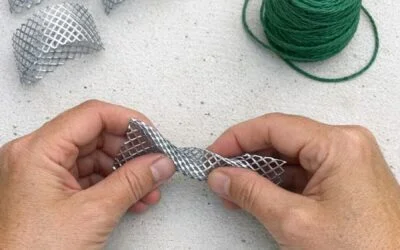
- Mesh produce bags
- Soft garden netting
- Twine or suitable ties
The RHS also recommends repurposing materials such as mesh produce bags or hessian to make fruit hammocks.
You’ll also need a strong trellis, frame, fence, or other support structure capable of carrying the fruit’s weight.


How to Make a Simple Squash Hammock
1. Choose a Strong Support Point
Before making the sling, look at where the fruit is growing.
The hammock should ultimately transfer the fruit’s weight to the trellis or support structure, not place additional strain on the vine.
A weak support won’t become stronger simply because you add a sling.
For heavier fruit, make sure the posts, wires, or frame are firmly anchored.
2. Cut a Wide Strip of Fabric
Choose a soft piece of fabric wide enough to cradle the squash comfortably.
Avoid narrow cords or thin strips that could press into the fruit as it grows.
A wider sling distributes pressure over a larger area.


For particularly heavy fruit, a stretchy material such as pantyhose can be useful because it can expand as the squash grows. Other gardening guidance also recommends cloth or netting with enough slack to accommodate expanding fruit.
3. Create a Cradle Under the Fruit
Gently place the developing squash into the center of the fabric.
The fabric should support the underside rather than squeeze the fruit.
Think of it like a small hammock:
fruit in the middle → fabric underneath → both ends attached to the support


Don’t force the fruit into position.
If moving it would twist or strain the vine, leave the fruit where it naturally sits and build the support around it.
4. Tie Both Ends to the Trellis
Continue Reading For More Helpful Tips →
Continue Reading →
Continue Reading For More Helpful Tips →
Continue Reading →