
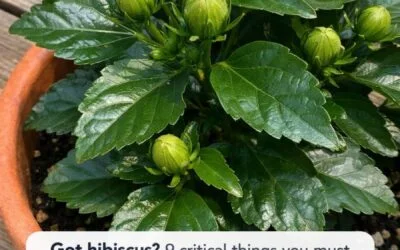
If your hibiscus is producing plenty of leaves but fewer flowers than you expected, June is the time to pay attention to the basics. Warm weather gives hibiscus the growing conditions it loves, but flowering depends on more than fertilizer alone. Light, watering, soil, pruning, and pest control all work together.
The good news is that you don’t need a complicated routine. A few thoughtful adjustments can help your plant stay healthy and productive throughout the summer.


1. Prune Hibiscus Carefully
Pruning can encourage fresh growth, but timing and how much you remove matter.
Start by removing:
- Dead branches
- Damaged growth
- Diseased stems
- Weak or crossing branches
Avoid giving a healthy flowering hibiscus a severe haircut in June simply because you want more flowers. Heavy pruning can remove developing buds and temporarily reduce blooms.
For major shaping, pruning earlier in the growing cycle is often preferable. During summer, light maintenance pruning is usually the safer choice.
2. Improve the Soil Around the Roots
Healthy roots give hibiscus a better foundation for strong growth and flowering.
If your garden soil is poor, adding mature compost or other suitable organic matter can improve its structure and moisture retention.
Spread amendments around the root zone rather than piling them directly against the stem.
For container-grown hibiscus, use a quality potting mix that drains well. Heavy, poorly draining soil can keep roots too wet.
3. Give Hibiscus Plenty of Sun
Hibiscus generally performs best with several hours of direct sunlight each day.
If the plant receives too little light, you may see lots of foliage but fewer flowers.
Look at the plant’s location if flowering is disappointing. Nearby trees, walls, fences, or seasonal changes can alter how much sun reaches it.
In extremely hot climates, however, intense afternoon conditions can stress some plants. Watch for:
- Wilting
- Scorched leaf edges
- Faded flowers
- Leaves becoming unusually dry
The ideal amount of sun depends on the variety and local climate, so pay attention to how the plant responds rather than following a number blindly.
4. Keep Watering Consistent
Hibiscus likes moisture, but wet soil isn’t the same thing as well-watered soil.
Water thoroughly when the soil begins to dry, allowing excess water to drain away.
Container plants often need more frequent attention than plants growing in the ground because their smaller root environment dries out faster.
A useful routine is to check the soil before watering rather than automatically watering on the same days every week.


Water at the Root Zone
Aim the water toward the soil rather than repeatedly soaking the foliage.
Morning is a convenient time to water because it gives moisture on the plant and surrounding soil time to dry during the day.
If water is sitting around the roots for long periods, improve drainage rather than simply adding less water.
5. Feed Without Overdoing It
Hibiscus can benefit from regular feeding during active growth, especially when grown in containers.
But more fertilizer doesn’t automatically mean more flowers.
Use a fertilizer appropriate for hibiscus or flowering plants and follow the label’s recommended rate and frequency.
Avoid assuming that an extremely high-phosphorus “bloom booster” is necessary. Fertilizer needs depend on the plant, growing medium, and existing soil nutrients.
The goal is consistent nutrition—not the strongest possible dose.
6. Add a Layer of Mulch
Mulch can be especially useful during hot summer weather.
A suitable organic mulch helps:
- Slow moisture loss
- Moderate soil temperature
- Reduce competition from weeds
- Add organic matter as it breaks down
Keep the mulch a few inches away from the main stem.
A thick mound touching the stem can keep the base excessively damp and create other problems.
7. Check the Plant for Pests
Before assuming your hibiscus needs more fertilizer, inspect it closely.
Look underneath the leaves and around new growth for signs of:
- Aphids
- Whiteflies
- Scale
- Spider mites
Also check developing flower buds.


If you find insects, identify the problem before treating it. Different pests require different approaches, and unnecessary pesticide use can harm beneficial insects.
Follow the label whenever you use a garden treatment.