
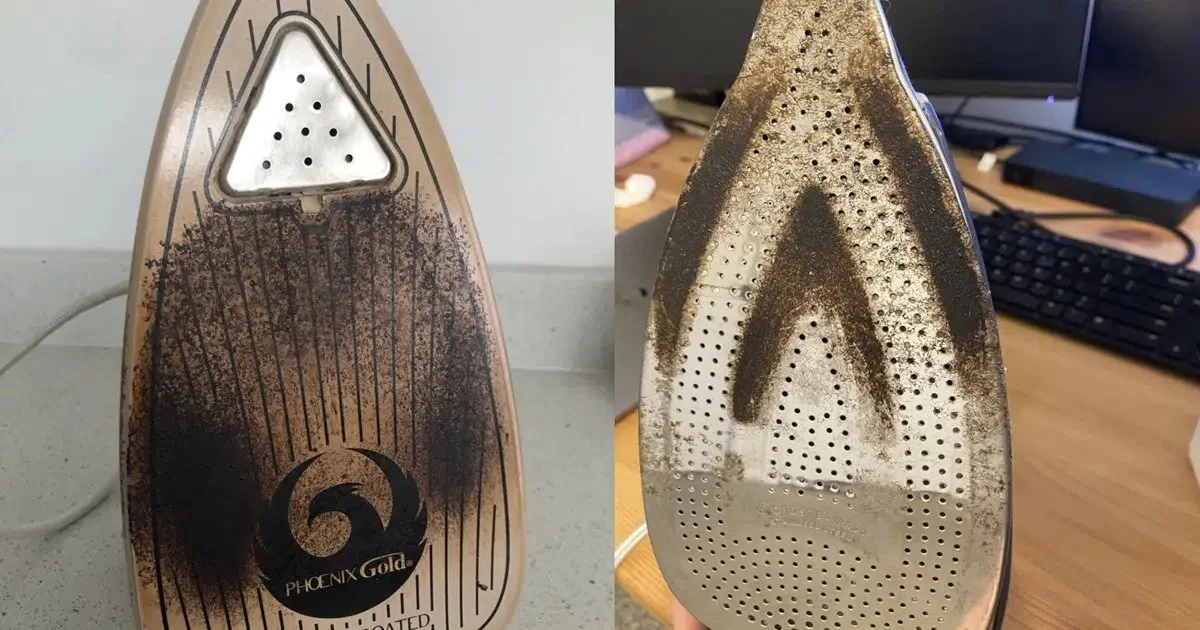
Small deposits can also accumulate around the steam holes.
A cotton swab can help remove visible residue around the openings.


Work gently rather than forcing anything deep into the vents.
Why Distilled Water Can Help
If your area has hard water, minerals can accumulate inside steam appliances.
Using distilled or demineralized water when your iron’s manufacturer recommends it can reduce mineral buildup.
Don’t automatically assume distilled water is required for every iron, though. Some models are specifically designed to work with ordinary tap water.
The manufacturer’s instructions should always take priority.
Keep Your Iron Cleaner Between Uses
A little maintenance can prevent a bigger cleanup later.
Empty the Reservoir
After ironing, empty leftover water if your manufacturer’s instructions recommend doing so.
Store It Upright
Store the iron securely in an upright position once it has cooled.
Keep the Soleplate Clean
If you notice residue developing, clean it before it transfers onto clothing.
Don’t Overfill the Reservoir
Only fill the water tank to the indicated maximum level.
Avoid These Cleaning Mistakes
When cleaning an iron, don’t:
- Scrub the soleplate with abrasive materials.
- Use a knife to scrape away residue.
- Pour cleaning chemicals into the reservoir without checking the manual.
- Clean a hot or plugged-in iron.
- Push objects deep into the steam holes.
- Use vinegar if the manufacturer specifically prohibits it.


How Often Should You Clean an Iron?
There’s no universal schedule.
If you iron frequently or use hard water, your iron may need attention more often.
A good rule is to clean it whenever you notice:
- White flakes coming from the steam holes
- Reduced steam output
- Water leaking
- Dark residue on the soleplate
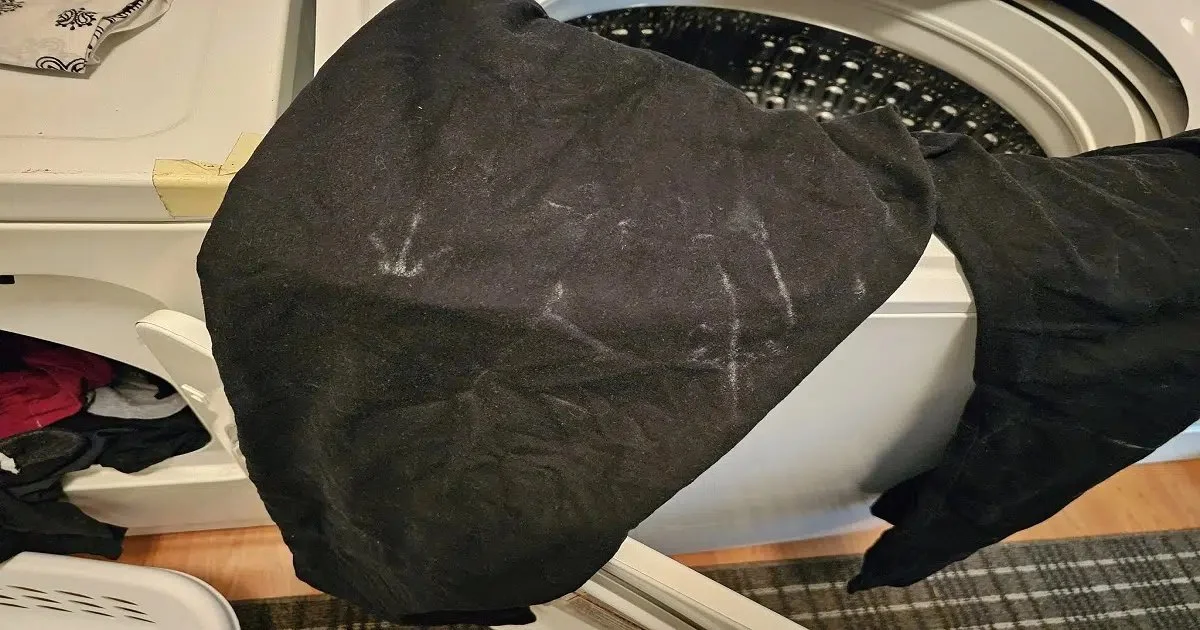
- Marks appearing on clothing
Don’t wait until buildup becomes severe.
Final Thoughts
A dirty iron can turn a simple ironing job into a frustrating one, especially when mineral deposits or residue start appearing on your clothes.
Start by unplugging the iron and allowing it to cool completely. Then clean the soleplate and steam vents carefully, and follow your manufacturer’s instructions for cleaning the internal water system.
The original guide recommends a vinegar-and-distilled-water steam treatment, followed by a clean-water rinse, but manufacturer guidance should take priority because some irons do not permit vinegar inside the reservoir.
With a little regular maintenance, your iron can stay cleaner, steam more consistently, and be much less likely to leave unwanted marks on your freshly washed clothes.