
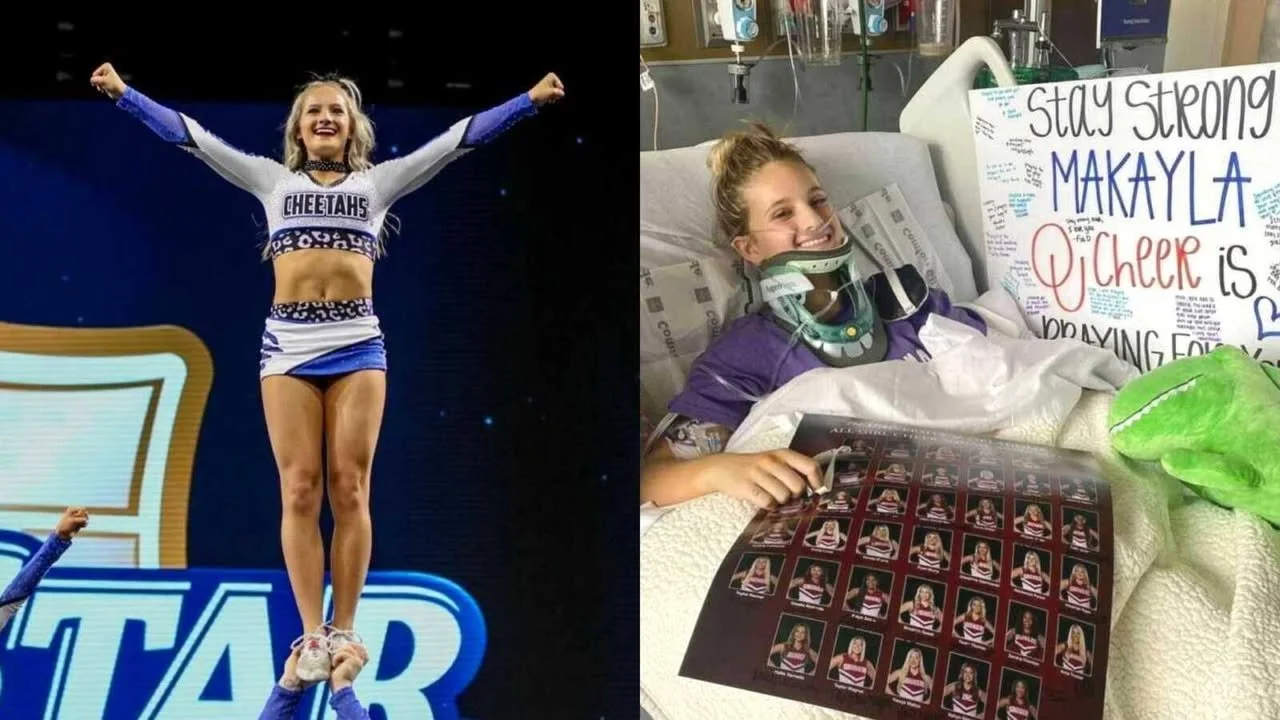
PART 2
The next morning, rehabilitation started.
I hated it.
Every movement was exhausting.
Things that had once taken seconds now required concentration, equipment, and help from other people.
A therapist asked me to try moving one finger.
Just one.
I stared at my hand.
“Come on.”
Nothing.
I tried again.
Nothing.
Again.
Still nothing.
I wanted to scream.
Instead, I laughed.
The therapist looked surprised.
“Why are you laughing?”
“Because this is ridiculous.”
She smiled.
“That’s one way to look at it.”
I looked at her.
“No.”
I took a breath.
“I’m going to learn how to do this.”
That became my new mindset.
Not tomorrow.
Not someday.
Today.


6
Every day brought another challenge.
Sitting upright.
Balancing.
Strengthening my arms.
Learning how to transfer from one surface to another.
Some days I left therapy exhausted and angry.
Some days I cried before I even started.
But I kept showing up.
Because I remembered who I had been before the accident.
I had spent years pushing my body to its limits as an athlete.
Now I had to train it in a completely different way.
My parents never treated me like I was fragile.
They encouraged me.
They challenged me.
And when I said I couldn’t do something, my mom would look at me and say:
“Maybe not today.”
Then she’d smile.
“But let’s find out.”
So I started documenting my recovery.
I filmed the difficult days.
The embarrassing moments.
The small victories.
The days when I needed help getting dressed.
The days when I couldn’t stop crying.
And the days when I accomplished something that doctors once told me might never happen.
I wanted people to see the reality.
Not just the inspirational photographs.
Not just the smiling wheelchair pictures.
I wanted them to understand that disability wasn’t the end of my life.
It was a completely different life.
And I was learning how to live it.
Then something unexpected happened.
People started messaging me.
A teenager told me she had been struggling after an accident.
A mother told me her son had recently suffered a spinal cord injury.
Someone else said my videos had given them enough courage to start physical therapy again.
I read every message.
And suddenly my recovery wasn’t only about me.
One afternoon, my therapist asked me what my ultimate goal was.
I didn’t hesitate.
“I want to walk.”
She nodded.
“Then we’ll work toward that.”
I knew there were no guarantees.
I knew the statistics.
I knew what the doctors had told me.
But I also knew something they couldn’t measure.
How badly I wanted it.
So I kept training.
One repetition.
One movement.
One painful day at a time.
And then, months after the accident, my hometown announced something I never expected.
They wanted to honor me.
Not because I had already walked again.
Not because my recovery was finished.
But because they had watched me refuse to give up.
And on that day, surrounded by the people who had carried me through the darkest chapter of my life…
I realized something.
Maybe strength wasn’t about proving I could walk again.
Maybe strength was refusing to let one terrible moment decide who I would become.