

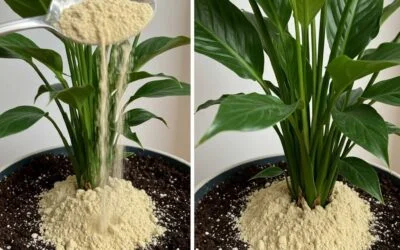
If your peace lily has plenty of green leaves but refuses to produce those beautiful white blooms, you may have come across the claim that one simple ingredient can keep it flowering for years.
That sounds appealing—but there’s an important detail that viral plant tips often leave out.
There isn’t a single household ingredient proven to make a peace lily bloom continuously for 10 years. What does make a real difference is getting the plant’s light, watering, soil, and nutrition right. With proper care, peace lilies can produce flowers year after year.
And if you’re wondering whether that popular “one ingredient” trick is actually worth trying, here’s what you need to know before putting anything in your plant’s soil.


The Real Secret Isn’t a Kitchen Ingredient
Peace lilies, or Spathiphyllum, are tropical houseplants that can flower repeatedly when their growing conditions are suitable.
According to University of Florida IFAS guidance, indoor peace lilies do best with bright, indirect light, consistently moist but well-drained soil, and relatively modest fertilizer applications. Under good care, they may bloom year after year.
That matters because a plant sitting in a dark corner may not respond to fertilizer—or any homemade “bloom booster”—the way you expect.
In fact, light is one of the first things to check when a healthy-looking peace lily isn’t flowering.
So What About the “One Ingredient” Trick?
Many viral plant-care posts recommend things such as banana peels, coffee grounds, rice water, eggshells, or other kitchen scraps as a secret flowering ingredient.
The problem is that putting a random kitchen ingredient directly into potting soil doesn’t guarantee that your peace lily will receive nutrients in a form or amount it can use.
For an indoor peace lily, a properly formulated, diluted houseplant fertilizer is a much more predictable way to provide nutrients.
University of Florida guidance recommends a low dose of liquid fertilizer for indoor peace lilies, while other professional growing guidance also warns against excessive fertilizer because peace lilies are sensitive to salt buildup.
So if the “one ingredient” you’re hearing about is simply a homemade kitchen remedy, don’t treat it as a magic formula.
Why Your Peace Lily May Not Be Blooming
Before adding anything to the soil, check these four basics.
1. It May Need More Light
Peace lilies tolerate relatively low light, which is one reason they’re popular houseplants.
But tolerating low light isn’t the same thing as producing lots of flowers in low light.
A bright room with indirect light is generally a better environment for flowering than a dim corner.
Avoid putting the plant directly against a window where intense sunlight can scorch its leaves. University of Florida recommends bright, indirect light rather than direct sun.
2. You May Be Watering Too Much
This is one of the easiest mistakes to make.
A peace lily likes moisture, but that doesn’t mean its roots should sit in water.
If the pot stays constantly soggy, the roots can suffer, and the plant may begin showing yellowing, wilting, or other signs of stress.
Use a container with drainage holes and allow excess water to drain away rather than leaving the pot sitting in a saucer full of water.
3. You May Be Feeding Too Much
More fertilizer does not automatically mean more flowers.
Excess fertilizer can cause salt buildup in the potting mix and may burn leaf tips and margins. Professional Spathiphyllum production guidance specifically warns against over-fertilizing.
If you see brown leaf tips along with a crusty white buildup on the soil surface, adding even more fertilizer is probably the wrong direction.
4. The Plant May Simply Need Time
Peace lilies don’t all flower at exactly the same rate.
Cultivar, age, growing conditions, and environmental factors can affect flowering. University of Florida research on Spathiphyllum flowering found that different cultivars can have different flowering responses, including age- and season-dependent patterns.
So a plant that isn’t blooming today isn’t necessarily a plant that is unhealthy.
If You Want to Fertilize, Keep It Gentle
If your peace lily is actively growing and has good light, a diluted liquid houseplant fertilizer can be a reasonable part of its routine.
University of Florida’s indoor-care guidance recommends applying a low dose of liquid fertilizer according to the manufacturer’s directions three times per year.
Another important point: don’t improvise a concentrated mixture.
A weak, properly measured fertilizer is much safer than thinking, “If a little helps, more must help more.”
It doesn’t.


What About Banana Peels?
Banana peels are one of the most frequently promoted homemade plant fertilizers.
They’re not a magic flowering treatment for peace lilies.
A banana peel contains nutrients, including potassium, but simply burying a peel in an indoor plant pot doesn’t give you precise control over how much nutrition reaches the roots. It can also create an unpleasant environment as organic material decomposes.
For a houseplant where you want predictable feeding, a properly labeled fertilizer is easier to measure and apply.
What About Coffee Grounds?
Coffee grounds are another popular internet recommendation.
But adding them directly to a peace lily pot isn’t a reliable substitute for balanced plant nutrition.
Fresh grounds can alter the growing environment, and excessive organic material in a small indoor pot can contribute to moisture and pest problems.
If your goal is simply to help a peace lily bloom, fix the light and watering first rather than experimenting with several kitchen scraps at once.
A Simple Routine for More Reliable Blooms
Instead of chasing a secret ingredient, try this approach:
Give it bright, indirect light.
Place the peace lily somewhere bright without exposing it to harsh direct sunlight.
Water thoroughly when needed.
Keep the potting mix appropriately moist, but don’t let the roots sit in standing water.
Make sure the pot drains.
Poor drainage can turn a simple watering routine into a root problem.
Feed modestly during active growth.
Use a suitable houseplant fertilizer according to its label rather than making a strong homemade mixture.
Watch the leaves.
Brown tips, yellow leaves, wilting, or a plant that stays wet for a long time are clues that something in the care routine may need to change.
Give it time.
A healthy peace lily doesn’t need to be forced into flowering every few weeks.
What If the Leaves Look Great but There Are No Flowers?
This is one of the most frustrating situations.
You have a plant with beautiful green foliage, but no white blooms.
In that case, don’t automatically assume it needs more fertilizer.
Light is a particularly important factor to investigate. University of Minnesota Extension lists peace lilies among indoor plants that can grow in medium-to-low light conditions, while University of Florida specifically recommends bright, indirect light for indoor Spathiphyllum.
So if the plant is healthy but flowering is disappointing, gradually moving it to a brighter spot with filtered or indirect light may be more useful than adding another homemade remedy.
Can a Peace Lily Really Bloom for 10 Years?
A peace lily can certainly remain a long-lived houseplant and produce blooms repeatedly over many years with appropriate care.
But the claim that one ingredient will make it bloom for 10 consecutive years is too absolute.
Flowering depends on several factors, including:
- Plant maturity
- Cultivar genetics
- Light
- Temperature
- Watering
- Root health
- Nutrition
- General plant condition
University of Florida research specifically describes flowering as being influenced by photoperiod, temperature, plant age or maturity, and cultivar genetics.
That’s why there isn’t a single ingredient that can replace good overall care.
A Common Mistake: Trying to “Force” Flowers
If a peace lily isn’t flowering, it’s tempting to keep adding things to the pot.
One week it’s banana peel.
Then coffee grounds.
Then a homemade fertilizer.
Then something else from a social-media video.
This can actually make the situation harder to diagnose.
Change one thing at a time.
Start with light and watering. If those are appropriate and the plant is actively growing, then consider a modest, properly formulated fertilizer.
That gives you a much clearer idea of what is actually helping.
Frequently Asked Questions
What is the best fertilizer for a peace lily?
A balanced houseplant fertilizer used at an appropriate dilution can be suitable. University of Florida recommends low-dose liquid fertilizer for indoor peace lilies rather than heavy feeding.
How often should I fertilize a peace lily?
There isn’t one universal schedule for every home, but University of Florida’s indoor-care guidance recommends a low dose three times per year. Always follow the specific fertilizer label and avoid overfeeding.
Why does my peace lily have leaves but no flowers?
Insufficient light is one possibility. Plant maturity, cultivar, temperature, watering, and overall growing conditions can also affect flowering.
Can I put banana peels in my peace lily?
It’s better not to rely on banana peels as a fertilizer. They don’t provide controlled nutrition, and decomposing organic material can create problems in a small indoor pot.
Should I put coffee grounds in my peace lily?
Coffee grounds aren’t a dependable replacement for a formulated fertilizer. If the plant needs nutrients, a properly measured houseplant fertilizer gives you much more control.
How long can a peace lily live?
With appropriate care, peace lilies can remain healthy houseplants for many years. Their ability to flower repeatedly depends on the plant and its growing conditions rather than one special ingredient.
The Bottom Line
That viral “one ingredient” promise makes for a great headline, but your peace lily doesn’t need a magic trick to stay healthy and produce flowers.
The better approach is surprisingly simple: bright indirect light, appropriate watering, good drainage, modest nutrition, and patience.
And if your plant is green and healthy but isn’t blooming, don’t immediately reach for another kitchen remedy. Check the light first. That small change may be far more useful than any secret ingredient.
The goal isn’t to force a peace lily to bloom for a guaranteed number of years. It’s to give the plant the conditions it needs to keep growing—and, when its cultivar and conditions allow, producing those beautiful white blooms again and again