

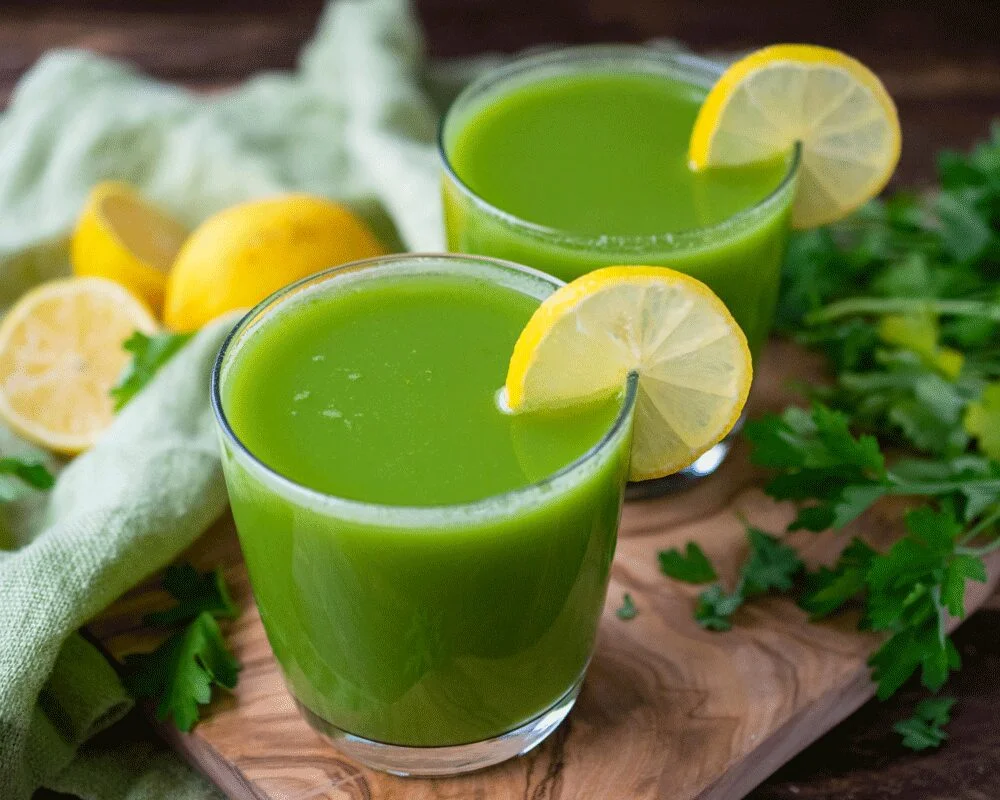
1. Wash the celery well.
Rinse the stalks thoroughly and remove any visible dirt.
2. Chop the celery.
Cut the stalks into smaller pieces so your blender doesn’t have to work as hard.
3. Blend.
Add the celery and water to a blender and blend until smooth.
4. Add lemon if you like.
A little fresh lemon can brighten the flavor, but it isn’t necessary for the drink to be useful.
5. Strain—or don’t.
Straining gives you a thinner juice. Leaving the pulp in gives you a thicker drink and retains more of the vegetable’s fiber.


Is It Better to Drink Celery Juice on an Empty Stomach?
There’s no good reason to believe that drinking celery juice on an empty stomach suddenly gives it special liver-cleansing powers.
You can drink it with a meal or between meals if you enjoy it and it fits comfortably into your diet.
The important thing is not to confuse timing with proof.
A drink doesn’t become a liver treatment simply because it’s consumed first thing in the morning.
What About Bile Production?
You may see claims that celery juice “stimulates bile” and therefore helps detoxify the liver.
The liver does produce bile, which plays an important role in digestion and helps carry certain waste products away from the liver.
But that doesn’t mean celery juice has been shown to “flush toxins” from your liver.
That’s an important distinction.
Bile is a normal part of liver function. It isn’t evidence that a particular juice is cleansing the liver.
Should You Drink It Every Day?
You don’t need to drink celery juice every morning to support your health.
If you enjoy it, a reasonable serving can be part of a varied diet. But it shouldn’t replace balanced meals or become the foundation of a restrictive cleanse.
And there’s another reason not to overdo juicing: when vegetables are juiced and their pulp is discarded, you lose much of the fiber. The National Kidney Foundation notes this as one of the drawbacks of juicing compared with eating whole fruits and vegetables.
For that reason, eating celery as part of a meal is perfectly worthwhile too.
Who Should Be Careful With Celery Juice?
This is the section worth paying attention to if you’re older, take several medications, or have an ongoing medical condition.
People with kidney disease
Celery contains potassium, and people with reduced kidney function may need to manage their potassium intake depending on their individual condition and blood levels.
The National Kidney Foundation explains that impaired kidneys may have difficulty removing excess potassium, which can allow levels to build up in the blood.
That doesn’t mean everyone with kidney disease must avoid celery.
It means don’t start drinking large amounts of concentrated vegetable juice without checking whether it fits your individual diet plan.
People taking medications
If you’re taking prescription medications—especially medications that affect fluid balance, blood pressure, or potassium—it’s worth asking your healthcare professional whether regularly drinking concentrated vegetable juices makes sense for you.
Don’t stop or change medication because of a detox recipe.
People with diabetes
Juicing can change the way you’re consuming carbohydrates compared with eating the whole vegetable, and detox-style diets can sometimes involve major changes in eating patterns.
NCCIH advises people with diabetes to follow the eating plan recommended by their healthcare team and consult their providers before making major dietary changes.
What If You Have Liver Disease?
This is where a celery drink should not be treated as a treatment.
If you’ve been diagnosed with fatty liver disease, hepatitis, cirrhosis, or another liver condition, a homemade juice should never replace medical care.
The American Liver Foundation emphasizes that the liver does not require special detox diets or drinks. Instead, overall dietary quality, physical activity, appropriate medical care, and addressing the underlying causes of liver disease matter far more.
If you have an existing liver condition, ask your healthcare professional what dietary changes are actually appropriate for you.
The Mistake to Avoid: Turning One Drink Into a “Cure”
This is where many wellness recipes go too far.
Celery juice can be:
- refreshing
- low in calories
- a way to consume a vegetable
- part of a balanced eating pattern
But it isn’t a proven treatment for liver disease.
It hasn’t been established as a way to:
- remove accumulated toxins
- repair liver damage
- cure fatty liver disease
- replace medical treatment
- “flush” the liver
The difference may sound small, but it matters.
A nutritious food doesn’t have to be a miracle cure to be worth eating.
A Better Way to Support Your Liver
Instead of looking for one drink that supposedly does all the work, focus on the habits that actually matter.
That means following a balanced diet, maintaining a healthy weight when appropriate, being sensible with alcohol, staying physically active, and getting medical advice when you have liver-disease risk factors.
Johns Hopkins notes that preventing liver disease involves practical measures such as moderating alcohol, maintaining a healthy weight, and getting appropriate screening when risk factors are present.
That’s much less exciting than a “three-day liver cleanse.”
But it’s far more useful.
Frequently Asked Questions
Can celery juice detox your liver?
There isn’t good evidence that celery juice detoxifies or cleanses the liver. Your liver already has its own detoxification processes, and major medical sources do not recommend juice cleanses as a way to remove toxins.
Is celery juice healthy?
Celery is a nutritious vegetable and can be part of a healthy diet. Whether you drink it or eat it whole, it shouldn’t be treated as a cure or substitute for a balanced diet.
Should I drink celery juice first thing in the morning?
You can if you enjoy it, but there is no established evidence that drinking it on an empty stomach gives it special detoxifying effects.
Does adding lemon make it a better detox?
Lemon can improve the flavor, but there isn’t evidence that adding lemon transforms celery juice into a liver cleanse.
Is celery juice safe for people with kidney disease?
Not necessarily for everyone. Celery contains potassium, and people with kidney disease may have individual potassium or fluid restrictions. Check with your healthcare professional or kidney dietitian before making concentrated vegetable juice a regular habit.
Is whole celery better than celery juice?
Whole celery provides fiber that can be reduced or lost when the vegetable is strained. Juicing can still be one way to consume vegetables, but it shouldn’t replace a varied diet.
The Bottom Line
There’s nothing wrong with enjoying a fresh glass of celery juice.
Just don’t ask it to do a job it hasn’t been proven to do.
Celery juice can be a refreshing way to include a vegetable in your diet—but your liver doesn’t need a special cleanse to do its job.
If your goal is better liver health, the bigger picture matters much more than one green drink: a balanced diet, sensible alcohol intake, healthy activity, and appropriate medical care when needed.
That’s a much more realistic—and much more useful—way to think about celery juice.