
When summer fades and the days get shorter, your houseplants notice it before you do. Flowering plants that looked full and energetic a few months ago may slow down, lose leaves, or stop producing buds. It can be tempting to respond by watering more or adding a strong dose of fertilizer—but that can make the problem worse.
The better approach is to treat fall as a seasonal transition. Give your plants enough light, adjust watering as growth slows, and—when the particular plant is still actively growing—use fertilizer carefully rather than assuming more nutrients will bring more flowers.


Why Fall Can Be Hard on Houseplants
The biggest seasonal change isn’t the calendar—it’s light.
As days become shorter, plants receive less energy for photosynthesis. Low light can lead to slower growth, pale or yellowing foliage, stretched stems, leaf drop, and fewer flower buds.
That means a plant that needed frequent watering and feeding during bright summer growth may need a different routine in fall.
And there’s an important distinction:
A plant that is slowing down because it has less light doesn’t necessarily need more fertilizer.
If light is inadequate, adding extra fertilizer cannot replace the energy the plant gets from light.
The “Secret” Is a Seasonal Adjustment, Not a Magic Ingredient
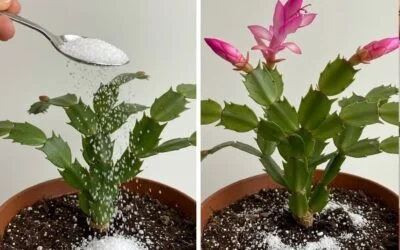
The supplied article recommends a half-strength balanced liquid fertilizer such as 10-10-10 or 20-20-20 in early fall.
That can be reasonable for an actively growing houseplant, but it shouldn’t be treated as a universal fall treatment.
Houseplants have different growth cycles and nutrient requirements. Penn State Extension notes that many indoor plants need little or no fertilizer during winter because lower light reduces growth, while some plants—such as pothos—may continue to benefit from lighter winter feeding.
So the better rule is:
Feed the plant according to its growth and light conditions, not simply because autumn has arrived.
How to Use Liquid Fertilizer Safely
If your flowering houseplant is still actively growing and the fertilizer label recommends feeding during this period, a diluted application can be appropriate.
A cautious approach is:
- Choose a fertilizer labeled for houseplants.
- Follow the product’s directions for dilution and frequency.
- If the label permits a half-strength application, start conservatively.
- Apply it to already-moist soil rather than bone-dry roots.
- Don’t fertilize a visibly stressed or unhealthy plant until you’ve figured out what’s wrong.
University of Minnesota Extension recommends balanced houseplant fertilizer at half strength every two to four weeks when plants resume active growth in spring, while warning that excessive fertilizer can cause weak growth and salt buildup.
That illustrates an important principle for fall as well: more fertilizer isn’t automatically better.


Light Comes Before Fertilizer
If you’re hoping for more flowers, check the plant’s location before reaching for the fertilizer bottle.
Flowering houseplants generally need adequate light to produce the energy required for growth and flowering. University of Minnesota Extension notes that insufficient light can cause flowering plants to fail to produce flower buds.
Move the plant closer to an appropriate bright window if necessary, but don’t suddenly expose a shade-loving plant to harsh direct sunlight.
For plants that need more light than your home provides, supplemental grow lighting can help.
A Simple Fall Light Check
Look at your plant during the brightest part of the day.
Ask:
- Is it still receiving the same amount of natural light?
- Has a nearby building or seasonal change reduced the light?
- Are the stems becoming unusually long or thin?
- Are the leaves becoming pale?
- Has flowering slowed?
Those signs may point toward a light issue rather than a fertilizer deficiency.
Adjust Watering as Growth Slows
This is another place where fall care differs from summer care.
Plants growing under lower light generally grow more slowly and use less water. University of Minnesota Extension specifically advises avoiding overwatering low-light plants and checking the soil instead.
So don’t continue a summer watering schedule automatically.
Before watering, check the soil and consider:
- How much light the plant receives
- Whether the plant is actively growing
- The type of pot and drainage
- How quickly the soil is drying
- The particular plant’s normal moisture requirements
A calendar reminder can be useful, but the plant and its soil should determine when you water.


Don’t Assume Yellow Leaves Mean “Needs Fertilizer”
Yellow leaves have many possible causes.
Penn State Extension lists possibilities including:
Continue Reading For More Helpful Tips →
Continue Reading →