
- Too much fertilizer
- Too little fertilizer
- Overwatering
- Low light
- Root problems
- Cold damage
- Natural aging
That’s why adding fertilizer immediately can be the wrong response.
Instead, Check the Basics First
1. Look at the soil.
Is it constantly wet, or extremely dry?
2. Check the light.
Has the plant been moved into a darker location?
3. Inspect the roots and pot.
Make sure excess water can drain away.
4. Look for pests.
Check both sides of the leaves and along stems.
5. Consider the plant’s normal cycle.
An occasional older yellow leaf isn’t necessarily a nutrient deficiency.
What About Flowering Plants Specifically?
Flowering plants can be more demanding than foliage plants because producing flowers requires sufficient energy and appropriate environmental conditions.
For example, University of Minnesota Extension notes that hibiscus needs very bright light to flower well indoors, with a sunny west- or south-facing window being ideal.
So if a hibiscus stops flowering in fall, fertilizer alone isn’t necessarily the answer.
Light, temperature, watering, and the plant’s natural flowering cycle all matter.
A Special Case: Holiday Cacti
Not every flowering houseplant should receive the same fertilizer routine.
Holiday cacti are a good example.
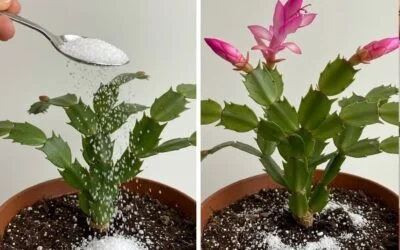
University of Minnesota Extension recommends balanced fertilizer at half strength during June through August, then a lower-nitrogen, higher-phosphorus-and-potassium formulation when flower buds are forming in fall.
That means the idea of simply giving every flowering houseplant a balanced 10-10-10 fertilizer in fall is too broad.
Know the plant before choosing the fertilizer.
7 Fall Care Steps That Actually Matter
1. Move Plants Toward Better Light
If summer shade or seasonal changes have left your plant in dimmer conditions, find a brighter suitable location.
2. Clean Dust From Leaves
Dust can interfere with the amount of light reaching foliage. A gentle wipe with a damp cloth can help keep sturdy leaves clean.
3. Reduce Watering When Appropriate
Don’t water simply because it’s Tuesday. Check the soil and the plant’s needs.
4. Fertilize Only When the Plant Is Still Actively Growing
If growth has essentially stopped because of low light or the plant’s natural winter rest, fertilizer may be unnecessary.
5. Inspect for Pests
Plants brought indoors after spending summer outside can carry pests with them. Check leaves, stems, and the soil surface.
6. Protect Plants From Cold Drafts
Keep tropical plants away from cold windows, exterior doors, and sudden temperature changes.
7. Consider Supplemental Lighting
If natural light is inadequate, a suitable grow light can provide additional energy for continued growth and flowering.


Common Fall-Care Mistakes
Mistake #1: Adding More Fertilizer Because the Plant Looks Weak
Why it can fail: The underlying problem may be insufficient light, excess water, pests, or root damage.
Better approach: Diagnose the problem first.
Mistake #2: Continuing the Summer Watering Schedule
Why it can fail: Lower light and slower growth can reduce water use.
Better approach: Check the soil before watering.
Mistake #3: Putting a Plant in the Darkest Corner for Winter
Why it can fail: Low light can reduce growth and flowering.
Better approach: Give the plant the amount of light appropriate for its species.
Mistake #4: Treating Every Flowering Plant the Same
Why it can fail: Different plants have different flowering triggers and fertilizer requirements.
Better approach: Follow care recommendations for the specific plant.
Mistake #5: Using a Stronger Fertilizer to “Wake It Up”
Why it can fail: Excess fertilizer can contribute to salt buildup and plant stress.
Better approach: Correct light, watering, temperature, and other growing conditions first.
What If Your Plant Has Already Stopped Blooming?
Don’t assume you’ve lost the plant.
First determine whether the plant is simply entering a normal slower-growth period.
Then check:
- Light
- Soil moisture
- Temperature
- Drainage
- Pests
- Fertilizer history
- The plant’s normal flowering season
Some plants need specific day-length or temperature conditions to initiate flowers. University of Minnesota Extension, for example, notes that holiday cacti need shorter days and/or cooler nights to form flower buds.
In other words, you can’t always force a bloom with fertilizer.
Frequently Asked Questions
Should I fertilize all my houseplants in fall?
No. Fertilizer needs vary by plant, growth rate, and light level. Many houseplants need little or no fertilizer during winter because lower light slows growth.
Is 10-10-10 fertilizer good for houseplants?
A balanced fertilizer such as 10-10-10 can be appropriate for some houseplants, but the correct product and dilution depend on the plant. Follow the fertilizer label and the care requirements of the species.
Will fertilizer make my flowering plant bloom?
Not necessarily. Adequate light is essential for flowering, and different plants have different flowering requirements.
Should I fertilize a plant with yellow leaves?
Not automatically. Yellowing can result from several problems, including overwatering, low light, nutrient issues, root problems, and pests.
Should I water houseplants less in fall?
Often, yes—but not according to a fixed schedule. Lower light can slow growth and reduce water use, so check the soil and the plant’s requirements before watering.
Can a grow light help a flowering houseplant?
Yes. Supplemental lighting can make up for inadequate natural light, and appropriate light levels are important for healthy growth and flowering.
The Real Fall “Secret”
The most useful fall adjustment isn’t a secret fertilizer recipe. It’s paying attention to what changed.
Shorter days mean less light. Less light can mean slower growth and lower water use. Some plants may still be actively growing and benefit from carefully diluted fertilizer, while others are better left alone until brighter conditions return.
So before reaching for the fertilizer, give your houseplants a quick fall check:
More appropriate light → correct watering → stable conditions → fertilizer only when the plant actually needs it.
That simple shift is much more reliable than trying to force a tired plant into bloom. And if you get those basics right, your indoor garden has a much better chance of coming through the darker months healthy and ready for its next season of growth.